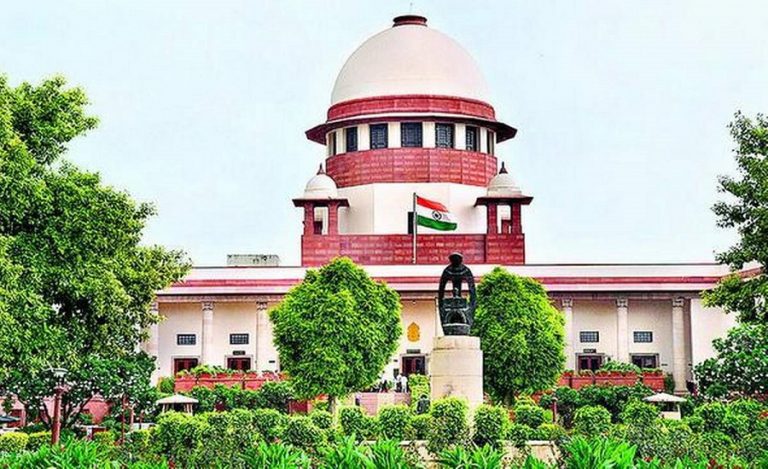
New Delhi: The Vande Mataram Case came under the spotlight in the Supreme Court on September 22, 2026, when a hearing on a petition filed by Carnatic vocalist T.M. Krishna witnessed a heated exchange between Solicitor General Tushar Mehta and Senior Advocate S. Muralidhar.
The case concerns the constitutional validity of recent amendments and government directions related to the singing of the National Song, Vande Mataram. The Bench indicated that it would examine whether refusing to sing the song could attract penal consequences under the law.
Details of The Vande Mataram Case
The petition was filed by renowned Carnatic musician T.M. Krishna. He has challenged a 2026 amendment to the Prevention of Insults to National Honour Act, 1971, along with directions that require the complete six-stanza version of Vande Mataram to be sung at specified government, ceremonial, and cultural events.
Read also: Explained: Why The Supreme Court Is Seeking A New Law For Court Deposits
The matter was heard by a Bench comprising Chief Justice Of India Surya Kant, Justice Joymalya Bagchi, and Justice V. Mohana.
Why Is The Amendment Being Challenged
According to the petition, the law introduces the term “National Song” but does not clearly define it in the statute. The plea argues that imposing criminal penalties without a clear statutory definition may create legal uncertainty and raise constitutional concerns.
The petition also contends that the later stanzas of Vande Mataram contain references to Hindu deities and that compulsory participation may affect the rights of individuals who object on religious or conscience-based grounds. These are arguments made by the petitioner and are yet to be finally decided by the Court.
Vande Mataram Case: Supreme Court’s Initial Observations
During the hearing, the Court indicated that the issue of penal consequences for not singing Vande Mataram may require judicial examination. However, the Bench did not agree at this stage that the song’s religious references automatically violate the principle of secularism.
Justice Joymalya Bagchi referred to the Supreme Court’s 1986 judgment in Bijoe Emmanuel v. State of Kerala, which protected individuals who respectfully stood during the National Anthem but did not sing it due to religious beliefs.
Court Focuses On Conscientious Objections
The Bench emphasized that constitutional protections available to conscientious objectors remain important. The judges observed that the question of whether a person can face punishment for refusing to sing the National Song deserves closer examination.
Heated Exchange Over ‘Naxalite’ Remark
The hearing became tense when Solicitor General Tushar Mehta used the term “Naxalite” while responding to arguments regarding the legislative process.
Senior Advocate S. Muralidhar strongly objected to the expression and stated that such terminology should not be used for a litigant or opposing side during court proceedings.
Muralidhar argued that the remark was inappropriate and placed his objection on record. In response, Mehta clarified that he was referring to an ideology and not labeling any individual personally.
Court’s Response To The Vande Mataram Case
The Bench stated that it was focused on the legal and constitutional issues arising in the case. The judges indicated that they would not place emphasis on the disputed expression and would instead concentrate on the legal questions involved in the petition.
Debate Over The National Song
The case has also reopened discussion about the history and official status of Vande Mataram. The song was written by Bankim Chandra Chattopadhyay and was adopted as India’s National Song in 1950. Historically, the first two stanzas have often been treated differently from the later verses, which contain references to Hindu goddesses.
The petitioner argues that the first two stanzas were historically accepted more broadly, while later verses became subjects of debate. These submissions remain under judicial consideration.
FAQs
Senior Advocate S. Muralidhar objected after Solicitor General Tushar Mehta used the term “Naxalite” during arguments. Mehta later clarified that he was referring to an ideology rather than any individual.
The case involves a challenge by musician T.M. Krishna to a 2026 amendment and related directions concerning the singing of the National Song Vande Mataram. The petition raises constitutional questions regarding compulsory singing and possible penalties.
The Court indicated that it would examine whether refusing to sing Vande Mataram can legally attract punishment, while referring to constitutional protections recognized in earlier judgments.