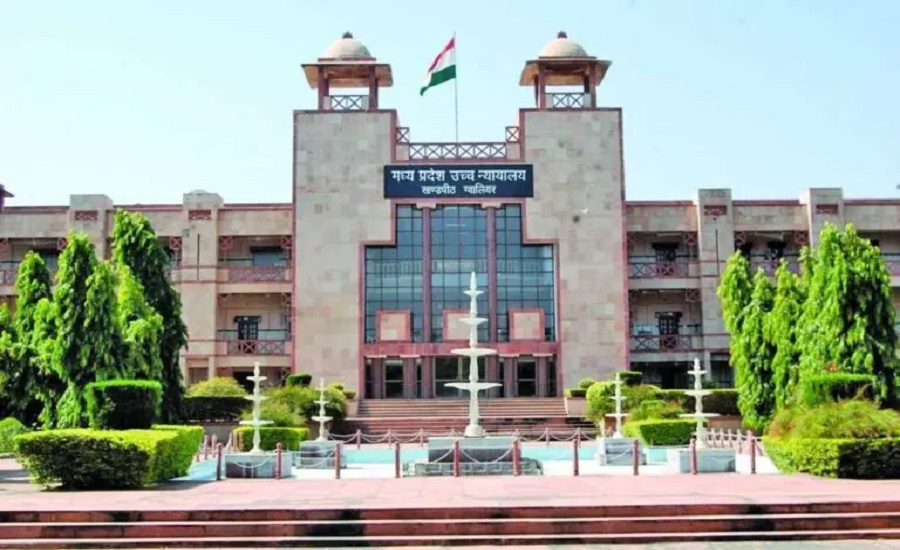
Jabalpur: Taking serious note of allegations relating to custodial deaths in Madhya Pradesh’s Chhatarpur district, the Madhya Pradesh High Court has issued notices to the state government and senior police officials, seeking their responses to a Public Interest Litigation (PIL) alleging four custodial deaths over the past few months.
A division bench comprising Justice Vivek Jain and Justice Ajay Kumar Nirankari also directed authorities to preserve CCTV footage from the police stations concerned while hearing the matter.
Notices Issued to State Government and Senior Police Officials
The High Court issued notices to the Madhya Pradesh government and several senior police officials, including:
- The Director General of Police (DGP)
- Inspector General (IG), Sagar Range
- Superintendent of Police (SP), Chhatarpur
- Station House Officers (SHOs) of Rajnagar, Chandla and Gaurihar police stations
The court has sought detailed responses from the respondents regarding the allegations raised in the PIL.
PIL Alleges Four Custodial Deaths in Chhatarpur
The PIL was filed by Khajuraho-based social worker Peeyush Dixit, who alleged that four individuals died while in police custody in Chhatarpur district in recent months.
According to the petition, the deaths were allegedly the result of police torture while the victims were under custody.
The petitioner urged the court to order an investigation by the Central Bureau of Investigation (CBI) into the incidents.
Demand for Murder Cases Against Policemen
Apart from seeking a CBI inquiry, the petition requested the registration of murder cases against police personnel allegedly involved in the incidents.
The PIL also sought directions for:
- Preservation of CCTV footage from the concerned police stations
- Preservation of call detail records (CDRs) of the deceased persons
- Independent investigation into the circumstances surrounding the deaths
The petitioner argued that these measures are necessary to ensure transparency and accountability in the investigation process.
State Government Cites Judicial Inquiries
Appearing on behalf of the state government, Deputy Advocate General Swapnil Ganguly informed the court that judicial inquiries had already been ordered in two of the deaths referred to in the PIL.
The state maintained that appropriate legal processes had been initiated in connection with the incidents.
However, details regarding the status and findings of those inquiries were not discussed during the preliminary hearing.
Petitioner Questions Police Version
Counsel for the petitioner, K.C. Childiyal, raised questions regarding the explanations provided by police authorities in all four cases.
According to the petitioner, police responses stated that the deceased individuals had either died by hanging themselves or by consuming poison while in custody.
Challenging this version, the petitioner’s counsel argued that the circumstances themselves warranted a deeper investigation.
He questioned how a person detained inside a police station—a place expected to be under constant supervision and security—could gain access to poison or materials capable of facilitating suicide by hanging.
According to the petitioner, these aspects require independent scrutiny to establish the actual circumstances leading to the deaths.
High Court Orders Preservation of CCTV Footage
After hearing preliminary submissions from both sides, the division bench directed authorities to preserve CCTV footage from the police stations where the alleged custodial deaths took place.
The order is expected to ensure that crucial evidence is not lost while the matter remains under judicial consideration.
Preservation of surveillance footage could play a key role in verifying timelines, movements and events preceding the deaths.
Matter Listed for July Hearing
The High Court has directed all respondents to file their replies and has scheduled the matter for further hearing on July 14.
The case is likely to focus on the circumstances surrounding the alleged custodial deaths, the adequacy of existing inquiries, and the petitioner’s demand for an independent investigation.
The outcome of the proceedings could have significant implications for accountability and custodial safeguards in the state, particularly if the court decides to order a wider probe into the incidents.
Read Also: Right to Trauma Care: This Supreme Court Verdict Could Change Emergency Healthcare in India Forever