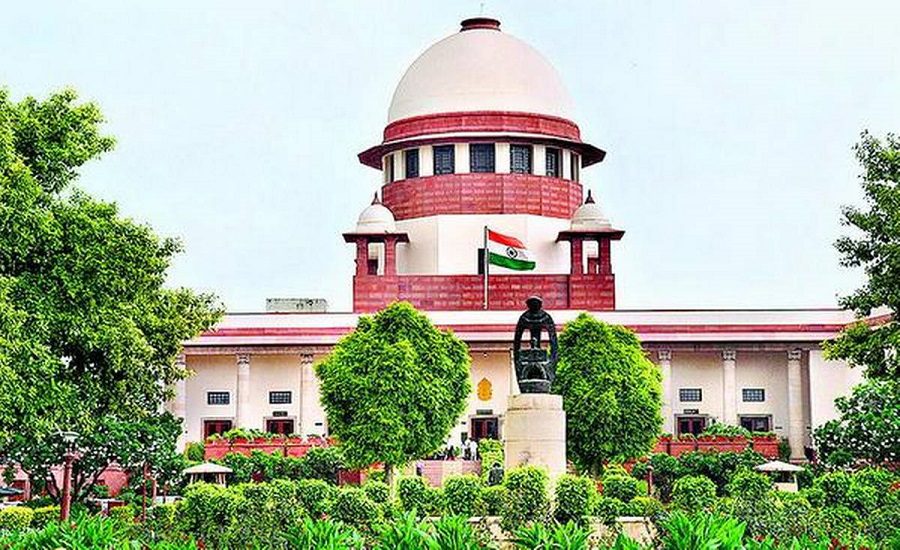
New Delhi: The Right to Trauma Care has now received major constitutional recognition from the Supreme Court of India.
In a landmark order, the apex court ruled that access to trauma care is an integral part of the Right to Life under Article 21 of the Constitution and directed all States and Union Territories to strengthen emergency medical response systems across the country.
The judgment aims to reduce preventable deaths caused by road accidents, delayed emergency response, and lack of coordinated trauma care facilities.
Details of SC Directives on Right to Trauma Care
A Bench comprising Justice J.K. Maheshwari and Justice Atul S. Chandurkar observed that timely trauma care is a constitutional obligation of the State because it directly relates to a citizen’s right to survive and receive emergency medical assistance.
The Court was hearing a petition filed by SaveLife Foundation, which sought reforms in India’s trauma care and emergency response system.
According to the Court, systemic gaps in emergency services, lack of awareness, fear among Good Samaritans, and fragmented helpline systems often result in avoidable deaths after accidents.
Right to Trauma Care: Key Directions Issued by the Supreme Court
1. All Emergency Helplines to Be Merged Into 112
The Court directed all States and Union Territories to integrate multiple emergency numbers such as:
- 100 (Police)
- 101 (Fire)
- 102 (Ambulance)
- 108 (Emergency Medical Service)
- 1033 (National Highway Helpline)
- 1091 (Women Helpline)
into a single national emergency number — 112 — within three months.
The Court also ordered governments to conduct public awareness campaigns so that citizens know that 112 is the unified emergency response number.
2. Good Samaritan Protection System Must Be Strengthened
The Supreme Court directed States and UTs to establish:
- Physical grievance redressal centers
- Online complaint systems
- State-level nodal officers
- District-level monitoring mechanisms
for Good Samaritans who help accident victims.
The objective is to ensure that citizens who assist injured persons are protected from unnecessary legal or administrative harassment.
3. PM RAHAT Scheme to Be Fully Implemented
The Court directed authorities to operationalize the PM RAHAT Scheme, which provides cashless treatment to road accident victims during the crucial “Golden Hour.”
Key features include:
- Cashless emergency treatment
- Faster hospital access
- Integration with 112 emergency services
- Support for accident victims regardless of financial status
According to official government information, victims or Good Samaritans can contact 112 to receive guidance about the nearest designated hospital and ambulance support.
4. Standard Medical Rescue Protocol
The Supreme Court allowed the Union Government, including the Ministry of Health and Family Welfare and the Ministry of Road Transport and Highways, to issue a national trauma rescue protocol within three months.
After issuance, all States and UTs must implement the protocol within another three months.
The aim is to ensure that emergency responders across India follow a uniform medical rescue procedure.
5. Mandatory Ambulance Compliance
The Court also directed States to ensure that all registered ambulances comply with AIS-125 standards and are equipped with:
- GPS tracking systems
- Vehicle Location Tracking Devices (VLTD)
- Real-time integration with 112 emergency services
Authorities must also conduct periodic audits on ambulance response times, quality of care, and treatment outcomes.
6. Trauma Care Training Reforms
The Court ordered States and UTs to adopt the Emergency Medical Technician (EMT) curriculum already notified by the National Commission for Allied and Healthcare Professionals (NCAHP).
Training institutions must align with national standards and certify personnel accordingly.
What is Importance of Right to Trauma Care
India records one of the highest numbers of road accident deaths globally. Experts have repeatedly highlighted that many fatalities occur because victims do not receive treatment within the “Golden Hour” after an accident.
The Supreme Court’s order seeks to address major challenges such as:
- Delayed ambulance response
- Lack of coordinated emergency systems
- Public confusion over multiple helpline numbers
- Fear of legal complications among bystanders
- Uneven trauma care infrastructure across states
By recognizing trauma care as part of Article 21, the Court has effectively elevated emergency medical assistance to the level of a constitutional right.
Read also: Article 19 Explained: Supreme Court Declares Mother Tongue Education a Fundamental Right