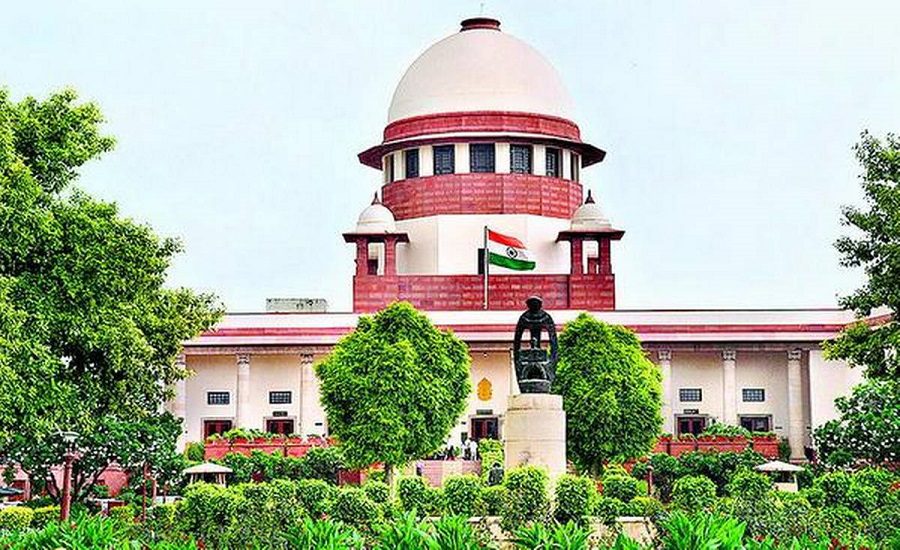
New Delhi: The Supreme Court said that every child has a fundamental right to receive primary education in their mother tongue or a language they can understand properly.
The Court linked this right with Article 19(1)(a) of the Constitution, which protects freedom of speech and expression.
The judgment came while hearing a case related to the promotion of the Rajasthani language in schools in Rajasthan.
Article 19: What Did The Supreme Court Say?
A bench of Justice Vikram Nath and Justice Sandeep Mehta observed that education becomes meaningful only when children can understand the language being used in classrooms.
Read also: Is the Right to Vote a Fundamental Right in India? Key Facts, Legal Meaning, and Impact Explained
The Court stated:
- Freedom of speech includes the right to receive information in a meaningful and understandable form.
- A child should be allowed to study in a language of their choice at the primary level.
- Language is directly connected with comprehension, thinking ability, and participation in society.
- States cannot force one language as the only medium of instruction.
Rajasthan Government Directed To Promote Rajasthani
The case was connected to demands for recognition and promotion of the Rajasthani language in schools.
The Supreme Court directed the Rajasthan government to:
- Introduce Rajasthani as a subject in schools.
- Develop policies for mother tongue-based education.
- Gradually include Rajasthani in the educational framework across the state.
The Court also noted that regional and mother tongue education is important for preserving cultural identity and improving learning outcomes.
Court Relied On Earlier Judgments
The Supreme Court referred to earlier constitutional decisions, including the 2014 ruling in the Karnataka medium-of-instruction case.
In that judgment, the Court had already ruled that:
- Parents and children have the right to choose the medium of instruction.
- Governments cannot impose only one language in primary education.
The latest ruling further strengthens that constitutional interpretation.
Why This Judgment Matters
Experts believe the ruling may influence future education policies across India.
Key impact areas:
- Stronger push for mother tongue education in primary schools.
- Support for regional and tribal languages.
- Better understanding and learning among young children.
- Greater focus on linguistic rights under the Constitution.
The judgment also aligns with parts of the National Education Policy 2020, which encourages teaching young children in their home language wherever possible.
Constitutional Articles Discussed By The Court
The Court referred to multiple constitutional protections:
- Article 19(1)(a) – Freedom of speech and expression.
- Article 21A – Right to education.
- Article 350A – Facilities for instruction in mother tongue for linguistic minorities.
According to the Court, meaningful education is impossible if a child cannot properly understand the language being taught.