Bhopal: Madhya Pradesh Chief Minister Dr. Mohan Yadav has reaffirmed that ensuring uninterrupted drinking water supply across the state remains the government’s top priority, directing officials to strengthen monitoring systems and ensure that no region faces water shortage during peak summer demand.
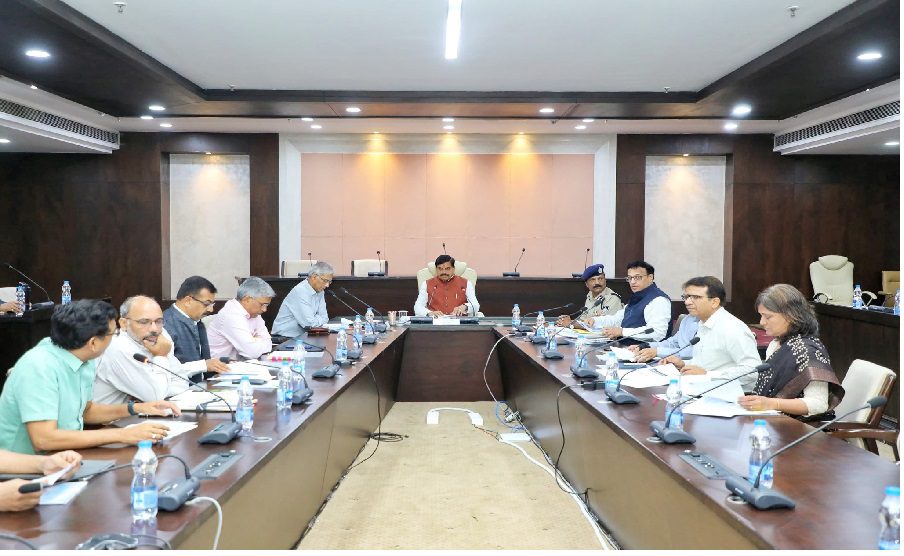
The Chief Minister chaired a detailed review meeting of the Public Health Engineering (PHE) Department in Bhopal, where key updates on ongoing water supply schemes, Jal Jeevan Mission progress, and infrastructure expansion were discussed.
Uninterrupted Drinking Water Supply a Top Priority
CM Dr. Yadav emphasized that citizens must receive adequate and continuous potable water supply, instructing officials to:
- Ensure immediate arrangements in water-stressed areas
- Continuously monitor supply systems during summer
- Activate alternative water sources wherever required
- Conduct checks of dried or underperforming drinking water sources
He stressed that no administrative or technical delay should affect public water supply.
Jal Jeevan Mission Target: Completion Before March 2028
The state government informed that the flagship Jal Jeevan Mission is progressing rapidly, with:
- Around 80% work already completed in Madhya Pradesh
- 11 districts achieving 100% coverage
- Full completion target set before March 2028
The mission aims to provide “Har Ghar Jal” (tap water to every household) across rural areas.
Officials also stated that over 1.11 crore families in the state are now receiving tap water supply, covering nearly 75% of households.
₹5,000 Crore Expected from Central Government
CM Yadav informed that Madhya Pradesh is expected to receive approximately ₹5,000 crore from the Union Jal Shakti Ministry to strengthen water infrastructure under the Jal Jeevan Mission.
He added that Union Jal Shakti Minister has already given consent for the release of funds, which will further accelerate ongoing projects.
Focus on Sustainable Water Sources Beyond Borewells
The Chief Minister directed officials to reduce dependence on borewells and instead focus on sustainable water conservation systems, including:
- Construction and rejuvenation of ponds and reservoirs
- Rainwater harvesting and groundwater recharge systems
- Long-term water storage infrastructure
He stated that these measures will improve water table levels and ensure sustainable supply for rural schemes.
Madhya Pradesh Becomes First State to Enact Borewell Safety Law
The government highlighted that Madhya Pradesh has become the first state in India to implement a Borewell Act, aimed at preventing accidents and deaths caused by open borewells.
This law strengthens safety regulations and ensures stricter compliance for borewell usage and management.
Digital Monitoring and Renewable Energy Push
The PHE Department informed that:
- Water supply systems are being monitored in real time
- The state is adopting solar and wind energy for pumping operations
- Efforts are underway to reduce operational costs of group water schemes
- IoT-based sensors and command-control centers are being proposed for better monitoring
Additionally, a digital platform called “Jal Darpan” portal has been developed for grievance redressal and feedback collection from beneficiaries.
Expansion of Rural Water Infrastructure
According to officials:
- Over 16.5 lakh new functional household tap connections added since December 2023
- More than 15,238 new tube wells and handpumps installed
- Around 14,200 villages declared “Har Ghar Jal” compliant
- NABL certification achieved for 155 water testing laboratories
Water testing, operator training, and quality monitoring are also being actively implemented under ongoing water conservation campaigns.
Water Conservation Through “Jal Ganga Samvardhan Abhiyan”
Large-scale work is being carried out under Jal Ganga Samvardhan Abhiyan, including:
- Water source testing in rural and urban areas
- Maintenance of handpumps
- Training of water supply operators
- Restoration of local water bodies
Officials reported major progress in Dindori and Mandla districts, where thousands of single-village water schemes have been completed.
Recognition and Incentives for Better Performance
CM Yadav directed that villages and panchayats successfully managing water supply systems should be recognized and rewarded to encourage better governance and community participation.
He also emphasized linking water conservation initiatives with public awareness programs and mass participation campaigns.
About Madhya Pradesh Water Mission
Public Health Engineering Department, Madhya Pradesh is responsible for planning, implementing, and monitoring rural and urban drinking water supply schemes across the state, including Jal Jeevan Mission projects, groundwater management, and water infrastructure development.