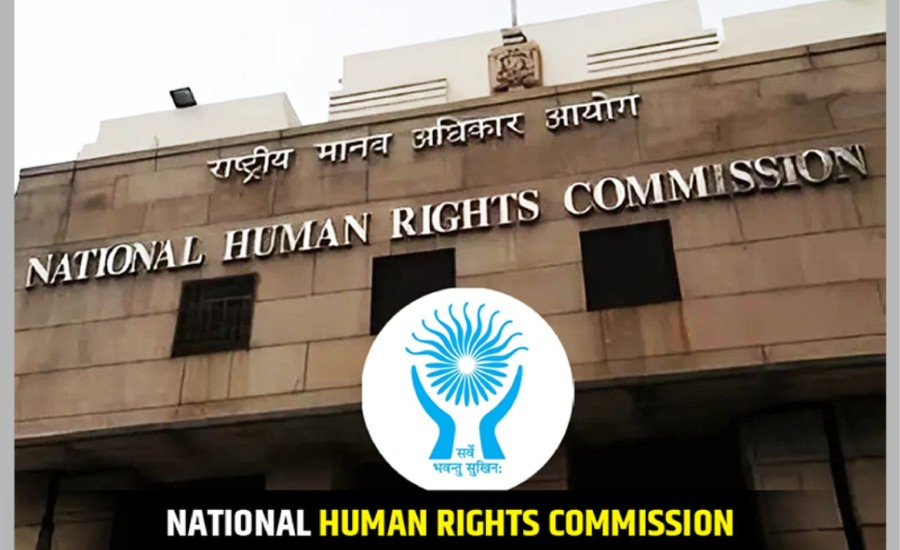
New Delhi: The National Human Rights Commission (NHRC) has issued a third notice to the Chief Secretary of the Government of NCT of Delhi, Rajeev Verma (IAS: 1992: AGMUT), in connection with the death of a newborn at the Institute of Human Behaviour and Allied Sciences (IHBAS).
The Commission has sought an explanation on why ₹2 lakh compensation should not be recommended for the infant’s mother and why remedial measures proposed by an External Inquiry Committee should not be implemented.
The latest notice, a show-cause notice dated June 16, 2026, issued in Case No. 4430/30/0/2025. The Delhi government was given four weeks, up to July 30, to respond.
NHRC Seeks Response After Earlier Notices
The latest action follows two earlier communications from the Commission that did not receive a response from the Delhi government.
The sequence of NHRC action is:
- September 18, 2025: Initial notice issued following suo motu cognisance.
- November 28, 2025: Reminder sent after no response was received.
- June 16, 2026: Third communication issued as a show-cause notice.
The Commission had earlier indicated that it could exercise its powers under Section 13 of the Protection of Human Rights Act, 1993, including summoning the Chief Secretary in person, if the required report was not submitted.
Newborn Died After Delivery at IHBAS
The case relates to the death of a newborn following an incident at IHBAS in September 2025.
According to the NHRC notice, the mother, described as a destitute woman, had been admitted to IHBAS on September 4, 2025, following a court order. She was around 26 weeks pregnant at the time.
On September 7, she reportedly delivered the baby in a hospital washroom. The notice states that staff were unable to find a clamp to cut the umbilical cord. The mother and newborn were subsequently taken by ambulance to Swami Dayanand Hospital, where the baby died.
The NHRC had taken suo motu cognisance of a news report published on September 10, 2025, concerning alleged negligence in connection with the newborn’s death.
External Inquiry Finds Gaps in Treatment Protocol
Following the Commission’s intervention, the Head of the Department of Psychiatry at IHBAS informed the NHRC in a letter dated December 22, 2025, that an External Inquiry Committee had been constituted.
The inquiry identified several gaps in the treatment protocol and recommended remedial measures.
However, the NHRC observed that the inquiry report did not address the question of compensation for the child’s mother. This prompted the Commission to issue the fresh show-cause notice seeking an explanation from the Delhi government.
NHRC’s latest notice seeks clarity on:
- Whether ₹2 lakh compensation should be recommended for the mother.
- Whether the remedial measures recommended by the External Inquiry Committee should be implemented.
- The government’s response to the Commission’s earlier communications.
- Compliance with the recommendations arising from the inquiry.
IHBAS Under Delhi Government
IHBAS is a government institution under the Government of NCT of Delhi and is based in Dilshad Garden. Its official website identifies it as an autonomous institution funded jointly by the Ministry of Health and Family Welfare and the Delhi government.
The institute provides psychiatric, neurological and allied healthcare services and also undertakes training and research.
NHRC Continues to Seek Accountability
The third notice places renewed emphasis on the Delhi government’s response to the findings of the external inquiry.
The Commission’s action also highlights the importance of implementing corrective measures when an institutional inquiry identifies gaps in treatment protocols, particularly in cases involving vulnerable patients and maternal and newborn care.
The NHRC has sought the government’s response within the stipulated period, with further action dependent on the explanation and compliance submitted by the Delhi authorities.
Background: NHRC
The National Human Rights Commission (NHRC) is a statutory body established in 1993 under the Protection of Human Rights Act. It works to protect and promote human rights in India by investigating complaints of alleged violations, reviewing safeguards and recommending remedial measures to governments and authorities.