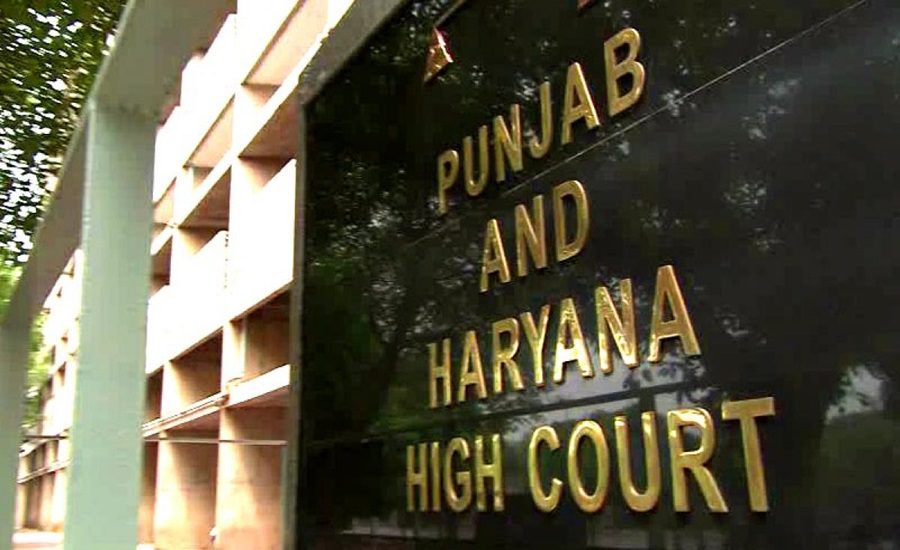
Chandigarh: The Punjab and Haryana High Court has directed Punjab Chief Secretary K.A.P. Sinha, a 1992-batch IAS officer, to remain personally present before it after observing prima facie non-compliance with its earlier directions on the payment of pending Dearness Allowance (DA) and Dearness Relief (DR) to state government employees and pensioners.
A Division Bench comprising Chief Justice Ashwani Kumar Mishra and Justice Rohit Kapoor issued the direction while hearing applications related to alleged non-compliance with the court’s August 3 judgment, which directed Punjab and the Punjab State Power Corporation Limited (PSPCL) to release pending DA/DR instalments at the applicable Central Government rates.
High Court Flags Lack of Compliance Affidavit
During the latest hearing, the Bench noted that the Chief Secretary had still not filed the compliance affidavit required under the August 3 order.
The court had directed the Chief Secretary to ensure compliance and submit an affidavit confirming the implementation of its directions. The Bench observed that despite repeated opportunities, the required compliance had not been placed before it.
The court also noted that the earlier single-judge order had given the State three months to release the arrears. The Division Bench subsequently modified the timeline to a fortnight while dealing with appeals against that order.
Read Also: Centre Appoints Manoj Prasad, Akhil Kumar and Ram Sharma as Judges of Jharkhand High Court
What Did the August 3 Order Say?
The dispute relates to pending DA and DR instalments claimed by Punjab government employees and pensioners.
On August 3, the High Court directed the State and PSPCL to release all up-to-date pending instalments at the rates applicable to members of the All India Services serving in Punjab, following the Central Government pattern.
The court had also provided that if the payment was not made within the prescribed period, the unpaid amount would carry simple interest at 6 per cent per annum from the expiry of the deadline until actual payment.
The order also directed the Chief Secretary to ensure “scrupulous compliance” and file the required affidavit.
Punjab’s Appeal Before Supreme Court
The State has challenged the August 3 judgment before the Supreme Court.
According to the High Court proceedings, the State filed its appeal or Special Leave Petition on September 1. However, the petition had defects pointed out by the Registry, and the court was informed that these defects had not yet been removed.
The petitioners argued that the State should pursue its legal remedy promptly rather than allowing the High Court proceedings to remain pending.
The High Court, however, made it clear that it recognises the State’s right to challenge the judgment. The issue before the Bench was whether that right could be used to indefinitely delay compliance with the existing order.
Court: Right to Appeal Must Be Exercised Fairly
The Bench observed that the State has every right to pursue an appeal but said the remedy must be exercised fairly.
The court recorded that proceedings could not be adjourned indefinitely for the purpose of pursuing the appeal. It also noted that the State had been given repeated opportunities to comply with the directions.
The latest direction for the Chief Secretary’s personal appearance followed the Bench’s finding that, prima facie, its earlier orders had not been complied with and no compliance affidavit had been filed.
The personal appearance requirement will not apply if the State obtains protection from the Supreme Court in the meantime.
Dispute Over Government Advertisement Spending
During the hearing, the petitioners also brought newspaper advertisements issued on Independence Day to the court’s attention.
They alleged that full-page advertisements amounted to “surrogate” publicity and were inconsistent with the earlier court direction concerning expenditure until the DA/DR dues were cleared.
The High Court had earlier directed that, until the pending dues were cleared, the State should not resort to unproductive expenditure such as large-scale advertising campaigns in print or social media.
The latest proceedings therefore included arguments not only about payment of the arrears but also about compliance with the court’s directions on government expenditure.
DA Dispute Remains Important for Employees and Pensioners
The case has a direct financial significance for Punjab government employees and pensioners because it concerns pending DA/DR instalments and the manner in which those dues are to be released.
The dispute has also continued alongside negotiations between the State government and employee and pensioner organisations. On September 18, Punjab announced an 8 percentage-point increase in DA for around eight lakh employees and pensioners, with the revised rate taking effect from October 1.
However, the latest High Court proceedings concern compliance with the earlier judicial directions on pending DA/DR dues and remain a separate legal issue.
What Happens Next?
The High Court’s latest direction puts the focus on the State’s compliance with the August 3 judgment and the status of its Supreme Court challenge.
The Chief Secretary’s personal appearance has been ordered because the Bench found prima facie non-compliance and noted that the required affidavit had not been filed.
The State’s legal challenge before the Supreme Court remains part of the proceedings. If the Supreme Court grants interim protection, the personal appearance direction will not operate as stated by the High Court.
The case highlights the continuing legal process over Punjab’s pending DA/DR payments, with the High Court now seeking direct accountability from the State administration while also recognising the government’s right to pursue its legal remedies.