Bahrain: Indian festivals are not merely occasions for celebration but also moments for reflection, joy and humanism, said Dr Raju Narayana Swamy, an IAS officer of 1991 batch and Kerala’s well-known anti-corruption crusader and firebrand civil servant.
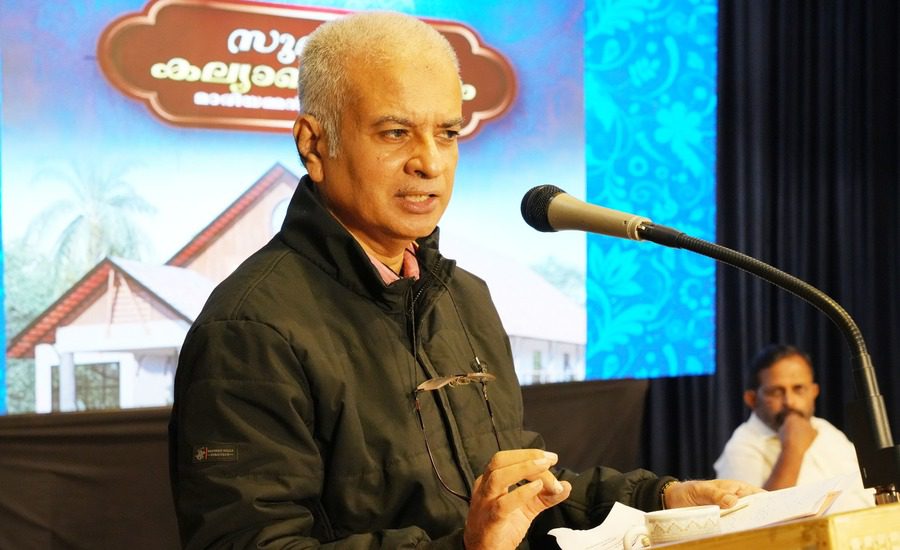
Dr Swamy was addressing an Onam celebration at Crown Plaza in Bahrain, organised by the Indian Ladies Association in collaboration with the CA Chapter of Bahrain.
Speaking before the gathering, Dr Swamy reflected on the cultural and historical significance of Onam and explained how the festival brings together mythology, history and long-standing cultural traditions.
Onam Blends Mythology, History and Cultural Traditions
Dr Swamy pointed out that Onam is widely associated with colourful flower carpets, rhythmic songs and grand feasts, but its significance goes much deeper than the visible festivities.
According to him, the celebration observed today is rooted in a combination of mythological narratives, historical memories and cultural traditions that have evolved over generations.
He described Onam as a blend of agricultural, ritual and folk practices, woven together through stories centred on values such as generosity, prosperity and unity.
The festival, therefore, provides an opportunity not only to celebrate but also to reflect on the values and traditions that have shaped society.
Read also: Indian Culture Is a ‘Vast and Diverse Tapestry’, Says IAS Officer Raju Narayana Swamy
Onam and the Renewal of Nature
Dr Swamy also drew attention to Onam’s close association with nature and the agricultural cycle.
He explained that Onam is conceived as a spring festival and is celebrated at a time when the ravages of the monsoon have passed and nature appears renewed.
It is a period when flowers bloom and trees burst into fresh growth, creating a natural backdrop for the celebrations.
The renewal visible in nature, he suggested, is an important part of the symbolism associated with the festival.
The colourful flower carpets prepared during Onam celebrations are themselves closely connected with this seasonal transformation and form one of the most recognisable features of the festival.
A Festival Rooted in an Ancient Past
Reflecting on the origins of Onam, Dr Swamy said that the festival commemorates a mythical event whose origins are shrouded in the distant past.
The stories associated with Onam have continued to be passed down through generations, becoming an integral part of Kerala’s cultural identity.
While mythology forms an important part of the festival, its broader cultural meaning has evolved through the interaction of agricultural practices, rituals and folk traditions.
This combination, Dr Swamy noted, makes Onam a festival that connects the past with contemporary celebrations.
Celebration Beyond Festivities
Emphasising the wider meaning of Indian festivals, Dr Swamy said that such occasions should be viewed through the values they represent rather than only through their rituals and festivities.
For him, festivals provide an opportunity to celebrate together while also reflecting on humanism, unity, generosity and social harmony.
His remarks at the Bahrain event highlighted how Indian festivals continue to serve as a cultural bridge for the Indian diaspora, enabling communities living abroad to remain connected with their traditions and heritage.
Indian Community in Bahrain Celebrates Onam
The Onam celebrations in Bahrain brought together members of the Indian community, with the event organised by the Indian Ladies Association of Bahrain in collaboration with the CA Chapter of Bahrain.
Ms Smitha Jensen, President of the Indian Ladies Association of Bahrain, presided over the function.
The event provided an opportunity for members of the Indian diaspora to come together and celebrate one of Kerala’s most prominent festivals while reflecting on its cultural and humanistic significance.
About Dr. Raju Narayana Swamy
Dr. Swamy is a senior IAS officer from Kerala, widely respected for his integrity, anti-corruption initiatives and innovative administrative work. Over the years, he has earned a reputation as one of India’s most principled and outspoken bureaucrats.
He secured All India Rank 1 in the 1990 Civil Services Examination and belongs to the 1991 Kerala cadre of the IAS. A graduate in Computer Science from Indian Institute of Technology Madras, he completed his studies with an impressive 9.41 CGPA. Known for his uncompromising administrative style, he has reportedly faced more than 30 transfers during his career in public service.
During his administrative career, Dr Swamy has served as District Collector in five districts and held several key positions, including Director of Fisheries and Principal Secretary. He was honoured with the Satyendra K. Dubey Memorial Award for his integrity in public service. Beyond administration, he is also a prolific author with more than 30 books to his credit and has received recognition from the Kerala Sahitya Akademi for his literary contributions.
Read also: IAS Officer Dr Raju Narayana Swamy Launches 37th Book on Intellectual Property Rights in Chicago