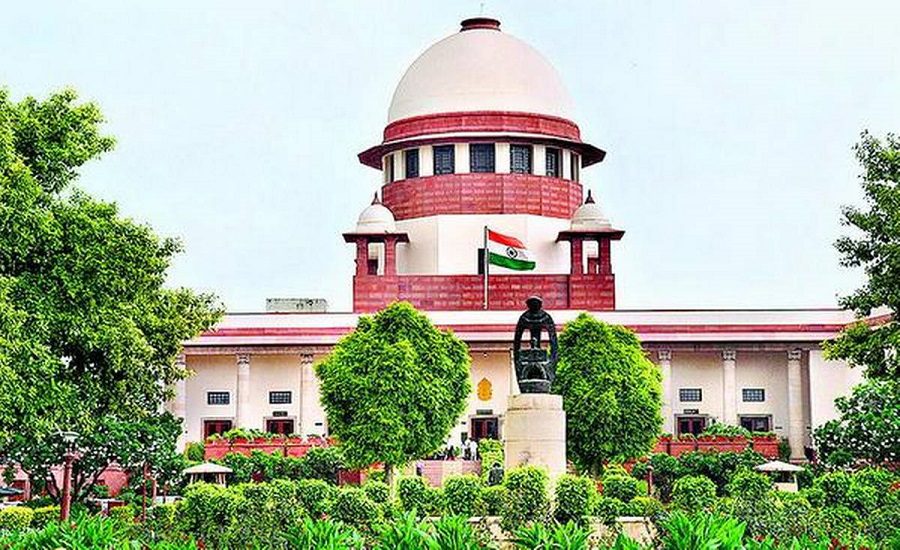
New Delhi: In a sharp and unusually stern ruling, the Supreme Court of India has expressed shock and dismay at the conduct of the Rajasthan Police, finding a strong indication of shielding a Maharashtra police officer in a criminal investigation. The Bench of Justices Ahsanuddin Amanullah and Prashant Kumar Mishra heard a petition titled SITWAT QAZI v. State (Govt. of Rajasthan), T.P.(C) No. 2623/2024.
Background of SITWAT QAZI v. State Case
The case originates from a complaint in 2017 by a woman against two respondents; one respondent, identified as respondent No.8, alleged to be stalking the complainant; and respondent No.9, a police officer from Maharashtra, allegedly assisting respondent No.8. The complainant approached the Rajasthan High Court seeking protection.
In 2018 the High Court disposed of the matter on the basis of the authorities’ submission that a negative final report was submitted (i.e., the investigation closed without charge), but simultaneously directed that the authorities must ensure that the complainant was not harassed and allowed her to come back to court in case of violation.
Subsequently, the complainant filed a contempt petition before the Supreme Court in 2024 seeking transfer of the challenge from Rajasthan to Delhi, alleging non-compliance of the High Court’s directions and misconduct in investigation.
What the Supreme Court found in SITWAT QAZI v. State Case
The Supreme Court found that the initial investigation by the Rajasthan Police culminated in a “final report” (essentially, a closure or NOC type report) submitted to the court. However, the Magistrate and/or the court did not accept that report and directed a fresh (re-investigation).
The SC observed;
> “A final report was submitted to the Court concerned and the Court differed from the same and directed for re-investigation, which means that a judicial court after applying its judicial mind has come to the conclusion that the final closure report submitted by the police could not be relied upon.”
This triggered the Court’s finding that the police force had acted in a manner “unbecoming of a police force.” The Court emphasised that there was a “strong indication that the concerned respondent … is being shielded”.
In no uncertain terms, the Bench declared itself “not only alarmed, but rather shocked by this conduct of the authorities.”
What the Court Directed in SITWAT QAZI v. State Case
In light of its findings, the Supreme Court directed the Rajasthan Director General of Police (DGP) to constitute, within two days, a high-powered Special Investigation Team (SIT) of proven competence to probe the matter afresh. The Court made clear that the DGP would be accountable for any slackness, connivance, or extraneous influence in the investigation.
Key directives;
The SIT must be “impartial” and of “proven competence”.
- A compliance report must be filed by the Rajasthan DGP by 24 November, failing which the DGP must personally appear in Court.
- The Court warned that any disobedience—“in letter or spirit”—would entail serious consequences, and any mala fides or leakages would reflect directly on the DGP.
Key Significance and implications of the SITWAT QAZI v. State Case
1. Message to police forces: This ruling sends a strong message to police authorities across states that closure reports cannot be a mere formality, especially where courts find them unreliable and order re-investigation. The Supreme Court has emphasised the primacy of justice over procedural convenience, and shown unwillingness to tolerate “shielding” of police officers.
2. Federal and inter-state policing angle: That the respondent No.9 is a Maharashtra police officer alleged to be assisting a party in Rajasthan adds a layer of inter-state policing complexity. The SC’s finding that a Rajasthan investigation may have been compromised underscores the need for transparency when investigations cross state boundaries or involve officers of one state assisting another.
3. Accountability of senior police officials: By holding the DGP accountable for the report of the SIT and any shortcomings in investigation, the Court is emphasising senior‐level accountability rather than simply letting field officers carry the burden. It signals that the buck stops at the top in police administration.
4. The complainant’s rights and victim protection: For the complainant, the High Court’s original direction (in 2018) to provide special care and allow return to court in case of harassment was meaningful. But the Supreme Court’s intervention now underscores that mere directions are insufficient if investigations are half-hearted or compromised. The decision may strengthen procedural protection for victims of stalking and harassment.
Key Challenges and potential hurdles in SITWAT QAZI v. State Case
Investigative hurdles: Forming an SIT is a start, but investigatory effectiveness will depend on selection of competent officers, independence from local influence, timely action, forensic or documentary support, and proper oversight. There is always the risk of administrative delay or internal resistance.
Inter-state coordination: Since a Maharashtra officer is involved, cooperation between Rajasthan and Maharashtra authorities may be required—exchanging evidence, statements, jurisdictional clarity. This could raise coordination challenges.
Managing public trust: Such high-profile judicial criticism of the police erodes public confidence. The Rajasthan Police leadership will need to demonstrate credible steps and results if public faith is to be restored.
Ensuring compliance: The order sets a compliance deadline of 24 November. If this is missed, the DGP must personally appear in court — a strong measure. But the real test lies in the quality of the SIT investigation and subsequent report. The Supreme Court’s language emphasises consequences for slackness or connivance.
A cautionary tale for police leadership
Police forces must remember that while they enjoy certain investigatory powers, they remain under judicial oversight. When courts perceive investigations as compromised, they will not hesitate to order independent investigations and hold senior officials accountable. The Rajasthan case may serve as a precedent for other states where investigations involving public servants or police officers undergo heightened scrutiny.
It also emphasises that the defense of procedural formality (filing a “final report”) without substantive investigation is no longer sufficient. Investigations must pass the test of judicial scrutiny—and when they fail that test, the consequences can be serious.
Contextual Perspective of SITWAT QAZI v. State Case
Indian courts have in recent decades grown less tolerant of police investigations that appear to favour certain persons, especially when courts—that is, judicial authorities—decline to accept closure or final reports and require fresh probes.
The present scenario fits into that trend; when the investigating agency’s closure is rejected, it indicates serious doubts about the investigation’s integrity.
The broad societal and legal context includes rising concerns about stalking, harassment, protection of victims, and the role of police in delivering prompt, impartial investigation. Courts have emphasised the duty of the state (ie. police + investigative machinery) to protect victims and to conduct investigations free of any bias or shielding.
The Supreme Court’s scathing language—“shocked”, “unbecoming of a police force”, “strong indication of being shielded”—is significant in a constitutional democracy where the police are expected to serve as the first line of defence of citizens’ rights.
Way Forward
- The Rajasthan DGP must form the SIT within two days, choose competent officers, fix terms of reference and timeline.
- A compliance report must be filed by 24 November.
- Following the SIT’s investigation, a fresh investigation report must be submitted (the previous re-investigation date was 29 November) as per the Magistrate’s earlier directive.
- The Supreme Court may monitor progress or step in again if the compliance is not found satisfactory.
- If the investigation finds wrongdoing or the shielding allegation is substantiated, charges may follow against respondents including the Maharashtra officer and possibly those in Rajasthan Police who worked the flawed investigation.
- For the complainant, there remains a path for seeking relief or further court action in case the outcome is again unsatisfactory.