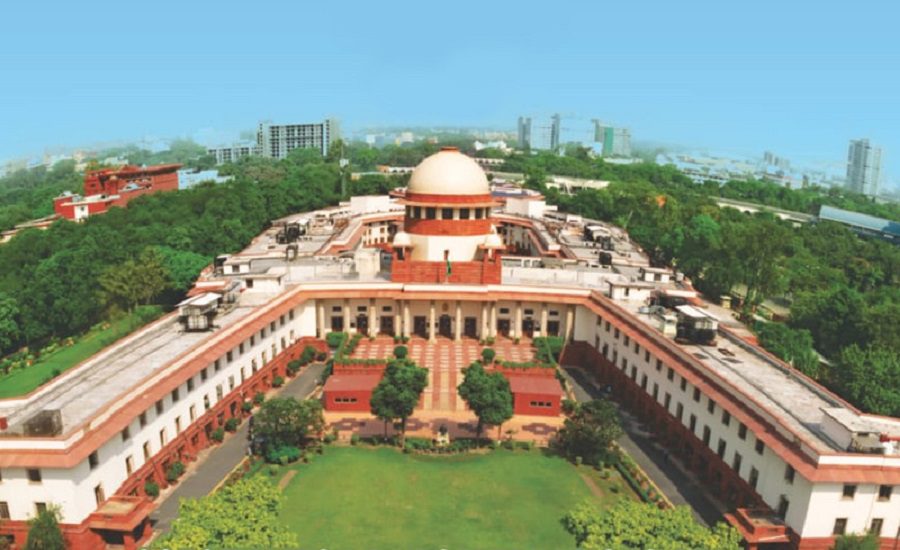
New Delhi: The Supreme Court Collegium, headed by Chief Justice of India Surya Kant, has recommended five names for appointment as judges of the Supreme Court of India following an increase in the sanctioned strength of the court to 38 judges, including the CJI.
The recommendations have been sent to the central government for approval.
Five Judges Recommended for Supreme Court Elevation
The Collegium has recommended the following names for elevation to the Supreme Court:
- Justice Sheel Nagu, Chief Justice of Punjab and Haryana High Court
- Justice Shree Chandrashekhar, Chief Justice of Bombay High Court
- Justice Sanjeev Sachdeva, Chief Justice of Madhya Pradesh High Court
- Justice Arun Palli, Chief Justice of Jammu & Kashmir and Ladakh High Court
- Senior Advocate V Mohana
These recommendations aim to strengthen the judicial strength of the apex court.
Read also: Supreme Court Orders Fresh Review of IPS Officer Abdur Rahman’s VRS Plea
Push for Greater Women Representation in Supreme Court
The elevation of senior advocate V Mohana is seen as a step toward improving gender representation in the Supreme Court.
At present, the Supreme Court has only one woman judge, B V Nagarathna, making gender diversity a key consideration in the recommendations.
Current Strength and Upcoming Vacancies in Supreme Court
The Supreme Court is currently functioning with 32 judges, against a sanctioned strength of 34 judges prior to the recent expansion to 38.
Two additional vacancies are expected to arise in June 2026 following the retirement of:
- Justice J K Maheshwari
- Justice Pankaj Mithal
The new appointments are expected to fill existing gaps and strengthen the judicial system.
Collegium Process and Next Steps
The recommendations of the Collegium will now be examined by the central government. Once approved, the appointed judges will take oath and join the Supreme Court bench.
The move is part of ongoing efforts to ensure adequate judicial strength and efficient functioning of the country’s highest court.
Next Step: Government Notification
The recommendations of the Supreme Court Collegium will now be considered by the Centre, which is responsible for issuing the final appointment notifications.
Once approved, the new judges will be sworn in to the Supreme Court of India, further strengthening the judicial framework at the national level.
Read also: NEET-UG 2026 Paper Leak Case: Future of NEET in Question? Supreme Court Demands These Major Changes