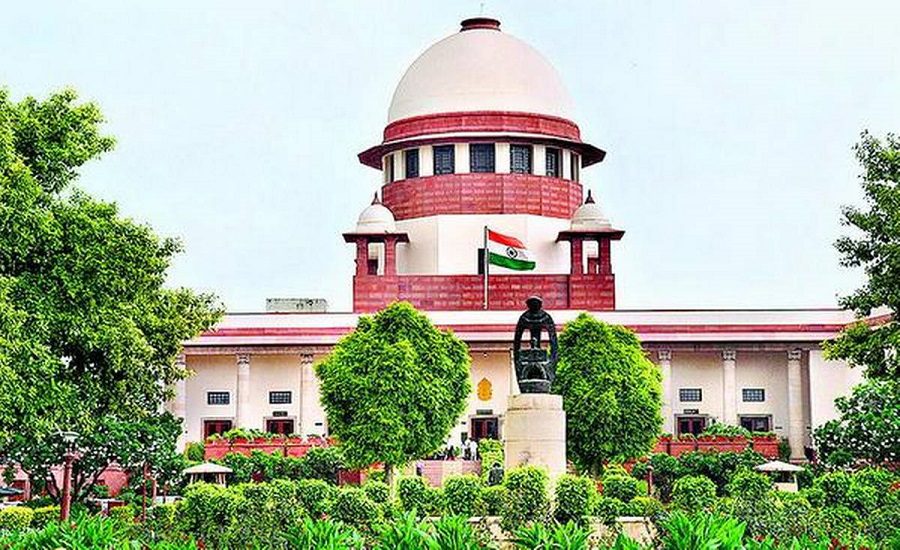
New Delhi: The Per Incuriam judgment doctrine was explained again by the Supreme Court of India in a recent ruling. The Court said that a judgment can be declared per incuriam only in very limited situations. It stressed that courts should follow earlier binding decisions to maintain consistency in the legal system and should use this exception only when the law clearly allows it.
What Is a Per Incuriam Judgment
The Latin term per incuriam means “through lack of care.” In law, it refers to a judgment that was delivered without considering an important legal provision or a binding earlier judgment. The Supreme Court said this doctrine is an exception to the legal principle of stare decisis, which requires courts to follow previous binding judgments.
When Can a Judgment Be Declared Per Incuriam
The Bench of Justice Sanjay Karol and Justice N. Kotiswar Singh explained that a judgment may be treated as per incuriam if:
- Its legal reasoning (ratio decidendi) cannot be matched with an earlier judgment of a Bench of equal or larger strength.
- The Court delivered the judgment without considering an important law, statute, rule, or regulation that should have been examined.
When a Judgment Is Not Per Incuriam
The Court also clarified that a judgment cannot be called per incuriam simply because:
- It considered an earlier judgment but reached a different or even incorrect conclusion.
- A conflict with earlier decisions is not obvious from a normal reading of the judgment. Courts should avoid treating such judgments as per incuriam without clear reasons.
Per Incuriam Judgment: Important Principles Laid Down by the Court
The Supreme Court highlighted several key rules:
- The doctrine must be used sparingly.
- It applies only to the ratio decidendi (the legal principle of the judgment), not to obiter dicta (additional observations).
- If a Bench of equal strength disagrees with an earlier ruling, it should refer the matter to a larger Bench instead of giving a conflicting decision.
- A smaller Bench cannot overrule or ignore the decision of a larger Bench.
Why This Case Matters
The ruling came while the Supreme Court examined remission policies in State of Haryana v. Raj Kumar (2021) and found that decision inconsistent with the earlier three-judge Bench ruling in State of Haryana v. Jagdish. The Court held that the 2021 judgment was per incuriam because it conflicted with the binding precedent of a larger Bench.
Read also: Justice for Aspirants: SC Affirms That Studying Core Subjects Is More Important Than Degree Titles