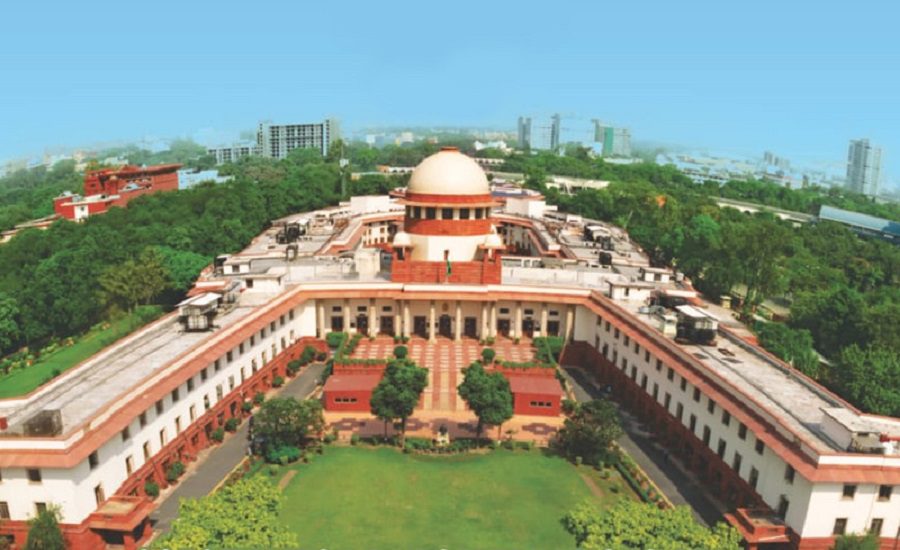
New Delhi: The Supreme Court recruitment ruling has clarified an important principle in public employment. The Court held that a procedural mistake made at the final stage of appointments cannot automatically cancel an entire recruitment process if the selection itself was conducted fairly, transparently, and without fraud.
The judgment came in a case involving appointments made by a cooperative society in Haryana, where employees had already served for more than 10 years.
Background of the Supreme Court Recruitment Ruling
The case involved appointments made in 2014 by the Thanesar Cooperative Marketing-cum-Processing Society in Kurukshetra, Haryana.
Read also: Big Relief for Child Victims: Supreme Court Restricts Routine Psychological Assessments
Several candidates were selected for posts such as:
- Clerk-cum-Salesman
- Peon-cum-Chowkidar
The recruitment process included:
- Public advertisement of vacancies
- Submission of applications
- Interviews
- Selection of successful candidates
After selection, the candidates joined service and continued working for more than a decade.
Why Were the Appointments Challenged?
The appointments were challenged because certain officials who were required to be present during the Board of Directors (BOD) meeting were absent when the final appointment decision was approved.
Under Rule 3 of the Primary Cooperative Marketing-cum-Processing Societies Ltd. Staff Service Rules, 2003, the following officials were expected to participate:
- Assistant Registrar Cooperative Societies
- Inspector Cooperative Societies
- District Manager of HAFED
Their absence was cited as a violation of the recruitment rules.
What Did the Punjab and Haryana High Court Directed?
Earlier, the Punjab and Haryana High Court had upheld the cancellation of these appointments. As a result, the selected employees approached the Supreme Court seeking relief.
Supreme Court Recruitment Ruling: What Did the Supreme Court Decide?
A bench comprising Justice Sanjay Karol and Justice N. Kotiswar Singh overturned the High Court’s decision.
The Supreme Court observed the following:
- The recruitment advertisement was valid.
- Eligible candidates were allowed to apply.
- Interviews were conducted properly.
- No allegations of fraud, favoritism, manipulation, or mala fide actions were made.
- No ineligible candidate was shown to have been selected.
Therefore, the recruitment process itself remained fair and transparent.
Three Stages of Recruitment Identified by the Court
The Court divided the recruitment process into three separate stages:
1. Advertisement Stage
Vacancies are publicly advertised, and applications are invited.
2. Selection Stage
Candidates are assessed through interviews or examinations.
3. Appointment Stage
The competent authority formally approves and issues appointments. According to the Court, the defect in this case existed only in the third stage. The first two stages were not found defective.
What Is a “Curable Irregularity”?
The Supreme Court described the defect as a “curable irregularity.” In simple terms, this means:
- The mistake can be corrected.
- The error does not destroy the entire recruitment process.
- The defect is procedural rather than fundamental.
The Court explained that only serious violations affecting fairness, transparency, or equal opportunity would justify cancelling the entire recruitment process.
When Can an Entire Recruitment Be Cancelled?
The judgment highlights situations where cancellation may be justified:
- Fraud in the recruitment process
- Manipulation of results
- Selection of ineligible candidates
- Lack of proper advertisement
- Violation of constitutional principles of equality and fairness
In such cases, the defect goes to the root of the recruitment and may invalidate the entire process.
Relief Granted by the Supreme Court
Instead of cancelling the appointments, the court directed the cooperative society to:
- Reconvene the board of directors’ meeting.
- Ensure the required officials are present.
- Reconsider the recommendations of the selected candidates.
The court also made it clear that
- The advertisement process cannot be reopened.
- The interview process cannot be questioned again.
- Only the final appointment stage may be reviewed and corrected.
Why Is This Judgment Important?
This ruling is significant because it balances the following:
- Compliance with recruitment rules
- Protection of employees selected through a fair process
The judgment prevents employees from losing their jobs due to procedural mistakes committed by authorities, especially when they have served for many years without any wrongdoing on their part.
Read also: Girls Deserve Equal Rights: Supreme Court Pushes for Stronger PCPNDT Act Enforcement