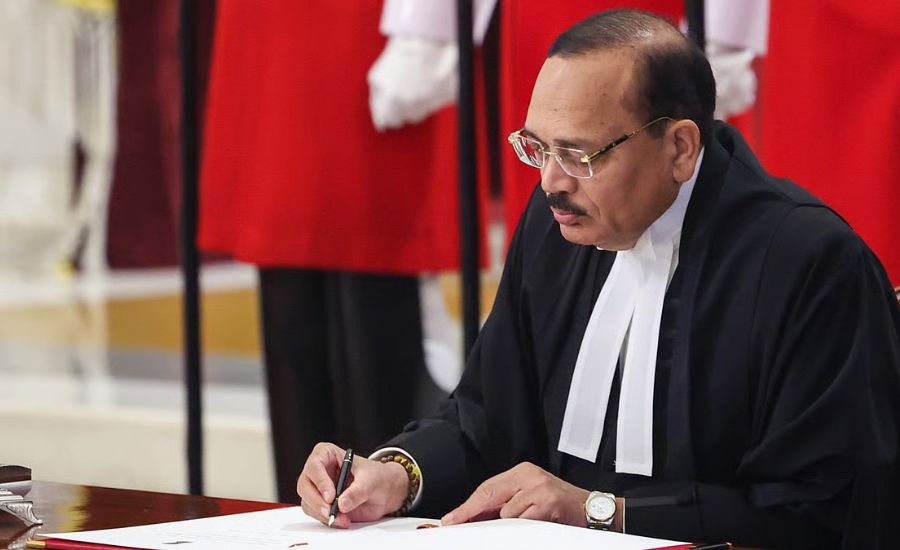
New Delhi: On Friday, during a felicitation organised by the Supreme Court Bar Association, the newly appointed Chief Justice of India Surya Kant, announced that the Supreme Court will implement reforms to how cases are listed — starting Monday.
These reforms are being introduced as a pilot project, aimed at reducing uncertainty in the scheduling of cases — a much-criticised aspect of court procedure that causes unpredictability for advocates and litigants alike.
What Are the Supreme Court Listing Reforms
Here’s a breakdown of the key changes being introduced:
Streamlined Cause List Process: Under the new pilot, listing of matters — not just for the day, but more broadly the generation of the “cause list” — will follow a more structured mechanism to reduce ad-hoc or last-minute scheduling.
No More Same-Day Oral Mentions (Except Emergencies): On his first day itself, CJI Surya Kant cancelled the practice of same-day mentions via oral requests.
Now, urgent listing will require a formal written “mentioning slip,” except in cases concerning personal liberty or imminent execution.
Pilot Approach with Possible Hiccups: The CJI acknowledged that the reform is a “pilot project” and that there may be initial difficulties. He appealed to the Bar for cooperation, calling this a collaborative effort.
Phase-wise Implementation: The listing reforms are just the beginning. Other issues flagged by the Bar — such as infrastructure, facilities for litigants, and logistical matters — will be addressed in phases.
Importance of Supreme Court Listing Reforms
The reforms are not just procedural — they have the potential to significantly improve the functioning of India’s highest court.
Some benefits are as follows;
Reduced Uncertainty for Lawyers and Litigants: Frequent last-minute changes in case listings have long been a major problem. With a structured cause list system, advocates and parties will have better clarity, reducing wasted time and resources.
Better Court Efficiency: By eliminating rushed oral mentions every morning, the Court can preserve time for actual hearings and decisions — which can improve throughput. As CJI Surya Kant himself said, priority is to ensure the Court’s time is spent on substantive justice, not procedural hustle.
Predictability & Fairness: A transparent listing system helps level the playing field; advocates with fewer resources or connections will no longer be forced to stand in oral-mention queues daily. This can improve access to justice.
Institutional Reform Mindset: The pilot signals that the top court under the new CJI intends to tackle deeper structural issues — not just ad-hoc fixes. The phased approach promises ongoing improvements in court administration, facilities, and overall judicial delivery.
Key Challenges & What Could Go Wrong
No reform of this magnitude is without challenges. Some potential hurdles:
Initial “Hiccups”: The CJI warned of some initial difficulties. This might include backlog in processing “mentioning slips,” confusion among advocates used to old ways, or delays in hearing urgent cases.
Resistance from Stakeholders: Lawyers accustomed to the old oral-mention system might resist change, especially those who rely on spur-of-the-moment listing for strategic advantage.
Balancing Flexibility and Formality: While written slips bring structure, there may be a risk that genuine urgent pleas get delayed if procedures are rigid — notably for issues needing immediate listing beyond personal liberty/death-penalty cases.
Administrative Burden: The registrar’s office and Court administration will be under pressure to promptly vet and act on mentioning slips. During the pilot phase, this could lead to bottlenecks.
Maintaining Transparency in the Cause List System: The effectiveness will heavily depend on how transparently and fairly the “cause list” scheduling system works. Any opacity may defeat the purpose.
What to Watch Over the Coming Months
- Whether the pilot succeeds: Will listings truly become more predictable, or will new problems arise?
- Feedback from the Bar: The SCBA and other lawyer associations’ response will be crucial. Cooperation from the Bar was emphasized by CJI.
- Expansion of reforms to infrastructure and other systemic issues: The listing reform is just the first phase. Other pending needs — space, facilities, logistical improvements — remain.
- Impact on case pendency and court efficiency: Over time, this could lead to faster resolution of cases, reduce backlog, and improve access to justice for litigants.
- Institutionalization of periodic progress reports: CJI Surya Kant promised periodic (tri-monthly or monthly) update reports to the Bar on what has been done and what remains.
Broader Significance: What It Says About Judiciary in India
- The reforms under CJI Surya Kant reflect a broader shift in mindset — from purely reactive adjudication to proactive administrative reforms. The Supreme Court is signalling that improving access to justice isn’t just about judgments, but also about procedure, structure, and fairness.
- In a country where case pendency runs into crores, such structural reforms — if executed sincerely — can slowly transform the way justice delivery works. It’s a welcome sign of institutional introspection and seriousness.
Read also: Supreme Court Orders UP to Amend Laws Allowing Officials’ Wives in Key Cooperative Roles