https://indianmasterminds.com

ADVERTISEMENT
ADVERTISEMENT

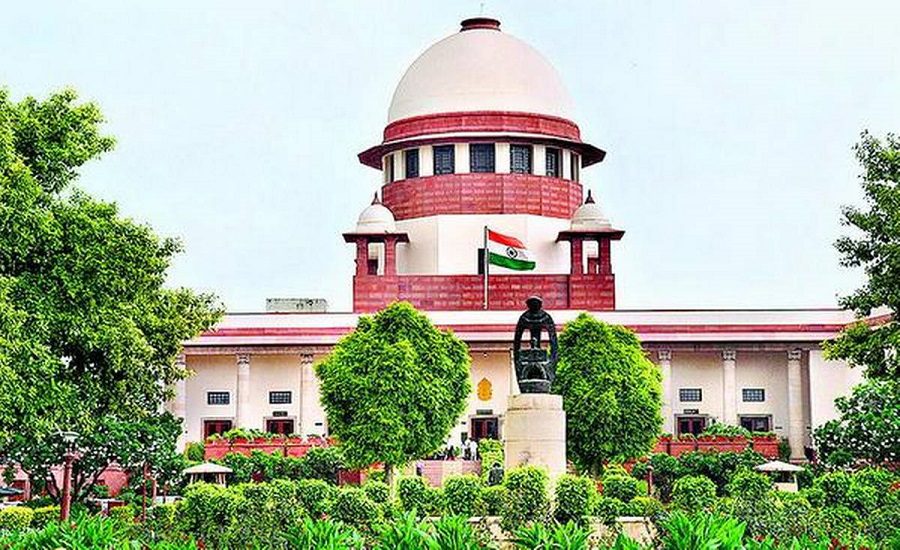
Governors on Notice: SC Says Courts Can’t Fix Timelines for Bills Assent — But Warns Against Delays!

The Supreme Court of India has ruled that courts cannot dictate fixed deadlines for governors or the President to act on bills. However, it warned against indefinite delays that undermine democracy.
Gujarat District Judge Recruitment Results
Indian Masterminds Stories

New Delhi: In a much-anticipated decision on 20 November 2025, the Supreme Court of India ruled that it cannot impose rigid timelines on the President or governors to grant assent to bills passed by state legislatures.  This fresh ruling locks in a key point for India’s legislative and constitutional process: fixed deadlines are off the table—but delays still matter.

Timelines for Bills Assent: What the Court Actually Said

The Court made clear that courts cannot set a straight-jacket timeline for assent by the President under Article 201, or by a Governor under Article 200 of the Constitution.

  • The concept of “deemed assent”—where a bill automatically becomes law after a deadline—was rejected as inconsistent with the doctrine of separation of powers.
  • At the same time, the Court warned that indefinite inaction by a Governor would undermine democracy.
  • In such cases, a court may issue a limited direction to decide the bill without delving into merits.

Read also: Who is IAS Siddharth Shiv Jaiswal? The Young Bureaucrat Setting New Benchmarks in Tripura’s Governance, Honored by President Murmu

The decision came via a Presidential reference under Article 143 of the Constitution, in which the President asked whether timelines could be imposed.

Importance of Timelines for Bills Assent

1. Protecting the Separation of Powers: By refusing to prescribe fixed deadlines, the Court maintains the independence of the executive (President/Governor) and judiciary. It signals that courts cannot assume tasks meant for constitutional offices.

2. Guarding Legislative Functioning: Bills passed by state legislatures need assent to become law. But lengthy delays can stall the will of the people. The verdict sends the message: status-quo of endless delay isn’t acceptable—even if deadlines aren’t preset.

3. Legal Clarity for States and Centre: State governments often complain that Governors or the President sit on bills for months, even years. Now there is recognition that while no checklist timeline applies, prolonged latency is subject to legal scrutiny.

Key Points to Remember

No universal time-limit: Each situation is different, so courts cannot prescribe one size fits all.

No “deemed assent”: A bill won’t automatically become law simply because of non-action.

Delay can trigger review: If a Governor sits on a bill unreasonably long, judicial intervention is possible.

The President/Governor retains discretion: They can grant assent, withhold it, return a bill for reconsideration, or reserve it (where allowed).

Practical impact: State governments must stay vigilant and engaged in dialogue if they face delays; legal remedy is there but not automatic.

Way Forward 

  • State legislatures, chief ministers and ministers will analyse how this judgment affects their bills-process. They may now document every step carefully—when a bill was sent for assent, any advice given, reasons for withholding, etc.—to guard against accusations of inaction.
  • Governors and the President’s secretariats will likely update protocols to ensure timely decision-making and proper documentation. Although no deadline is fixed, the pressure of potential judicial review means that “reasonable timeframe” now has legal weight.

Why This Is Good for Democracy

This ruling is good news for citizens because it reaffirms that legislative will cannot be blocked by silence. It safeguards that bills do not languish indefinitely.

At the same time, it respects the roles and discretion of constitutional offices—thus preserving democratic structure.

Read also: Child Trafficking India Crisis: Supreme Court Shocked As A Child Goes Missing Every 8 Minutes, Ordered Center for Urgent Action by December 9


Indian Masterminds Stories
Join our WhatsApp Channel
ADVERTISEMENT
ADVERTISEMENT
Related Stories
ADVERTISEMENT
ADVERTISEMENT
NEWS
ONGC Shell Energy
ONGC and Shell Energy India Sign MoU to Expand Deepwater Exploration and Explore LNG Sourcing Opportunities 
Solar-Power-Plant
India Crosses 300 GW Non-Fossil Power Capacity, Reaches 60% of 2030 Target
Trial Advocacy Event
Delhi CM Rekha Gupta Highlights Modern Judicial Infrastructure, Next-Gen Talent at Trial Advocacy Event 
PAIMANA-Feature
PAIMANA Tracks 1,847 Infrastructure Projects Worth ₹40.54 Lakh Crore, Adds 165 Performance Indicators
IPS Uday Krishna Reddy
Ex-CBI Chief Flags Encounter Threat to Trainee IPS Uday Krishna Reddy, Seeks CB-CID Probe
L Khiangte
Who Is Ex-IAS L Khiangte? Former JPSC Chairman Arrested Amid Protests Over Exam Paper Leak
cm rekha
CM Rekha Gupta Distributes Bicycles to 200 Girl Students to Support Education Under Vidya Vahini Yojana 
Project Bright Horizon
HPCL, Assam Rifles and Antogattva Foundation Sign MoU to Launch Project Bright Horizon in Northeast
ADVERTISEMENT
ADVERTISEMENT
Videos
Sumit Ramteke tn
IPS Sumit Ramteke on the Cases That Changed His Career and Shook Organized Crime | Video Interview
How NAFED is Strengthening Farmers, Markets and Food Security
Piyusha Jagtap
How IFS Piyusha Jagtap Is Changing Conservation Through Stories, Communities and Compassion | Video Interview
ADVERTISEMENT
UPSC Stories
How Family Sacrifices Helped Pradip Bhandare Achieve His IFS Dream
After seven Civil Services Mains, three Indian Forest Service Mains, five UPSC interviews and years of...
IAS Subhankar Bala
How IAS Subhankar Bala Cracked UPSC Without Coaching: The Story of AIR 79 and His Five Practical Preparation Tips
IAS Subhankar Bala secured AIR 79 in UPSC CSE through self-study after failing his first mains. He shares...
sandeep sahu
Why Sandeep Kumar Sahu Believed in Plan B Before Chasing Plan A
Working full-time for nine years, supporting his family and preparing through self-study, Sandeep Kumar...
CSR NEWS
Project Bright Horizon
HPCL, Assam Rifles and Antogattva Foundation Sign MoU to Launch Project Bright Horizon in Northeast
Project Bright Horizon aims to directly impact 1,500 people and benefit 2,500 more through better learning,...
CMPDI CSR
CMPDI Partners with Frontline Global Services to Train 60 Jharkhand Youth Under CSR Initiative
 CMPDI will invest ₹73.62 lakh to provide residential Phlebotomy Technician training, helping unemployed...
GRID-INDIA ALIMCO
GRID-INDIA Signs MoU with ALIMCO to Provide Assistive Devices to Persons with Disabilities
The CSR partnership aims to promote accessibility, independence and social inclusion by providing assistive...
ADVERTISEMENT
ADVERTISEMENT
ADVERTISEMENT
Latest
ONGC Shell Energy
ONGC and Shell Energy India Sign MoU to Expand Deepwater Exploration and Explore LNG Sourcing Opportunities 
Solar-Power-Plant
India Crosses 300 GW Non-Fossil Power Capacity, Reaches 60% of 2030 Target
ADVERTISEMENT
ADVERTISEMENT
ADVERTISEMENT
ADVERTISEMENT
ADVERTISEMENT
ADVERTISEMENT
ADVERTISEMENT
Videos
Sumit Ramteke tn
How NAFED is Strengthening Farmers, Markets and Food Security
Piyusha Jagtap
ADVERTISEMENT
ADVERTISEMENT