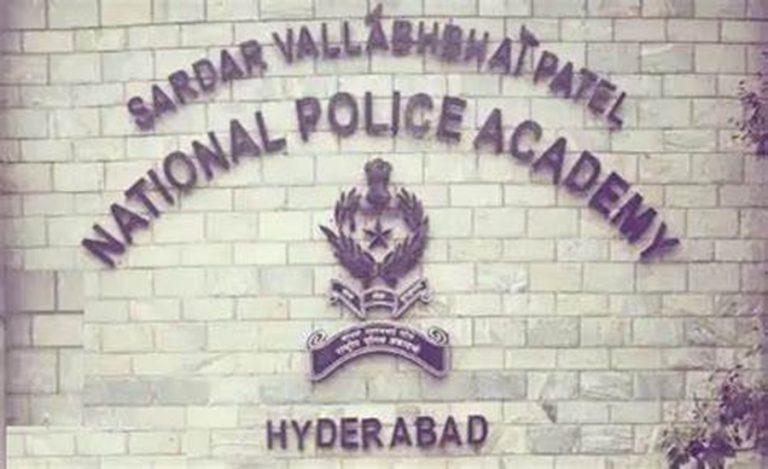
Hyderabad: Training for Indian Police Service (IPS) officers is evolving to address emerging challenges such as cybercrime, artificial intelligence (AI), machine learning, digital evidence collection, protest management and crowd psychology. At the Sardar Vallabhbhai Patel National Police Academy (SVPNPA) in Hyderabad, 135 IPS probationers and 16 foreign officers are set to complete Phase I training at the Dikshant Parade on Saturday.
The 78th Regular Recruit batch includes 37 women among the Indian probationers, along with foreign officers from Nepal, Bhutan and the Maldives. The training programme has focused on combining traditional policing values with technological knowledge and practical skills to prepare officers for the changing demands of law enforcement.
SVPNPA Emphasises AI, Cybersecurity and Modern Policing
SVPNPA Director Sujeet Pandey said cybersecurity, machine learning, big data analytics, illegal immigration and the changing nature of protests were among the key areas emphasised during the training of the 78th Regular Recruit batch.
Speaking at a curtain-raiser event on Thursday, Pandey said IPS officers must understand the principles of traditional policing while also developing the technological expertise required to address modern challenges.
He also highlighted the importance of crowd management and dealing with external forces seeking to disrupt the country. The training aims to equip probationers with the knowledge and skills needed to handle complex law-and-order situations while maintaining professional standards.
Training Focuses on Crowd Psychology and Minimal Use of Force
The academy has also emphasised people-centric policing, particularly in situations involving public gatherings and protests.
B Shivachandran, an IPS probationer from Tamil Nadu who cleared the Civil Services Examination on his fifth attempt, said the central principle of instruction was to treat every person with dignity and as a fellow citizen.
He explained that the training focused on managing crowds with minimal force while recognising that members of the public may have genuine grievances.
This approach aims to help future officers balance law enforcement responsibilities with sensitivity towards public concerns, particularly during protests and other potentially tense situations.
IPS Probationers Trained in Digital Evidence Collection
Digital investigation and electronic evidence management have emerged as important components of the IPS training programme.
Probationer Kuhoo Garg said the training covered the collection and preservation of digital evidence, including call detail records (CDRs), tower dumps, hash values and certificates under Section 63 of the Bharatiya Sakshya Adhiniyam.
These skills are intended to prepare officers to guide investigation teams in handling electronic evidence appropriately and maintaining its integrity during investigations.
As cybercrime and technology-enabled offences become increasingly significant policing challenges, knowledge of digital evidence procedures is expected to help officers strengthen investigations and support evidence-based law enforcement.
Field Training with Greyhounds, CRPF and the Army
Alongside classroom instruction, the probationers have received practical exposure to specialised security operations.
As part of the field training, they spent a week with Telangana Police’s Greyhounds, observing jungle operations and gaining insights into specialised field policing.
The probationers will also undergo training with the Central Reserve Police Force (CRPF) in areas affected by left-wing extremism. In addition, they will train with the Indian Army in the northern and eastern sectors.
These field experiences are designed to familiarise future IPS officers with operational challenges, specialised security strategies and coordination between different security forces.
What Happens After the Dikshant Parade?
Following the Dikshant Parade, the IPS probationers will begin 29 weeks of district practical training, where they will gain hands-on experience in policing and district administration.
After completing this phase, they will return to the academy for a nine-week Phase II training programme scheduled for June 2027.
The next phase will build on their foundational training and field experience, further preparing them for their responsibilities as police officers.
Preparing IPS Officers for Emerging Law Enforcement Challenges
The training programme at SVPNPA reflects the changing requirements of policing in India, where officers must address conventional law-and-order issues alongside cybercrime, digital investigations, technology-driven offences and complex crowd situations.
By combining technological instruction, practical field exposure and an emphasis on people-centric policing, the academy aims to prepare the next generation of IPS officers to respond effectively to emerging security challenges while upholding public trust and professional accountability.