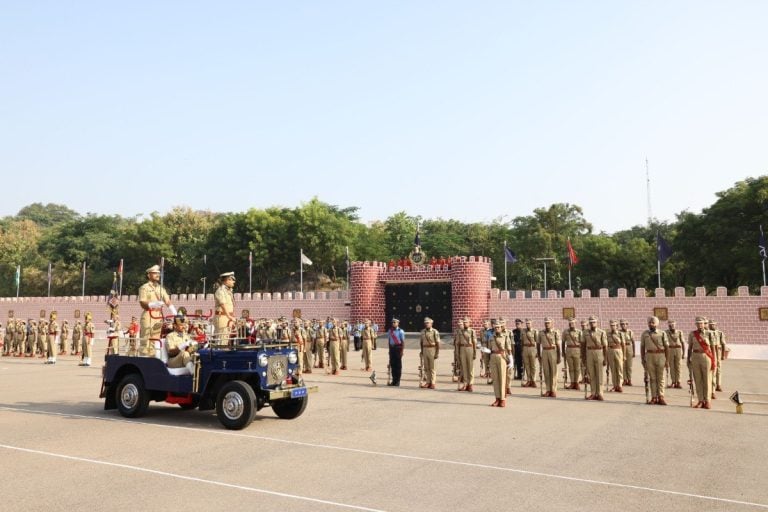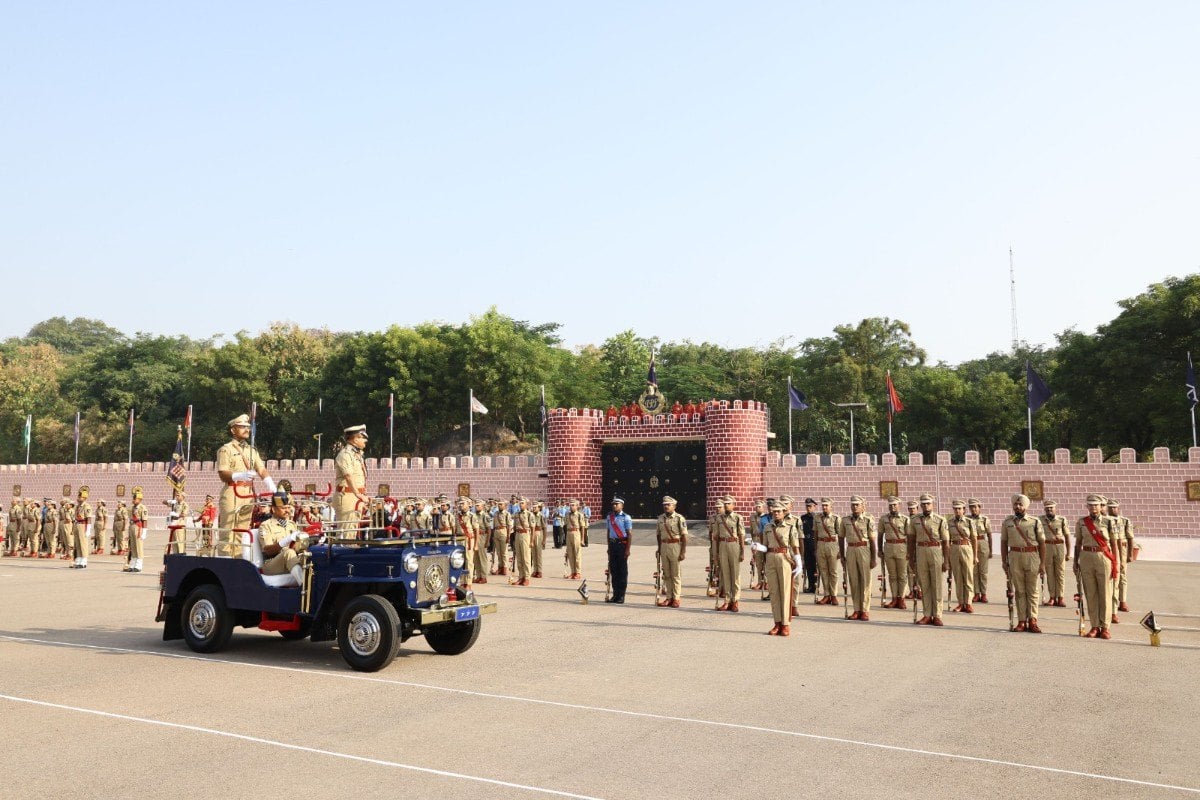
Hyderabad: The Sardar Vallabhbhai Patel National Police Academy (SVPNPA) in Hyderabad will host the Dikshant Parade of the 78th batch of Indian Police Service (IPS) trainee officers, also known as Regular Recruits, on October 17.
A total of 151 trainee officers from the 2025 batch will participate in the parade. The group comprises 135 IPS probationers and 16 foreign officers from Nepal, Bhutan and the Maldives. Among the trainees are 35 women officers.
Union Home Secretary Govind Mohan, a 1989-batch IAS officer of the Sikkim cadre, will attend the ceremony as the chief guest and review the parade.
The event marks a significant milestone in the training journey of the probationers, who are preparing to take up policing responsibilities in their respective cadres.
From Foundation Course to Specialised Police Training
After completing a 15-week Foundation Course at the Lal Bahadur Shastri National Academy of Administration (LBSNAA) in Mussoorie, the probationers joined SVPNPA on December 8, 2025.
According to the academy’s Director, the trainees underwent an intensive training programme covering conventional policing responsibilities as well as emerging challenges confronting law enforcement agencies.
Their 45-week training at the academy focused on areas such as cybercrime, cryptocurrency-related fraud, financial crimes, drug trafficking, the darknet, artificial intelligence and threats posed by drones.
The curriculum also covered the implementation of India’s three new criminal laws, investigation techniques, forensic science, internal security, public order, information technology, criminology, police management, ethics and human rights.
Practical Exercises and Outdoor Training
Alongside classroom instruction, the probationers received practical training designed to prepare them for real-world policing situations. This included investigation and riot-control simulations, mock court proceedings, case studies and exercises involving investigative tools.
Outdoor training formed another important component of the programme. It covered weapons handling, firing, unarmed combat, fieldcraft, tactical operations, map reading, physical fitness, yoga and equitation.
The probationers have completed their final examinations in indoor and outdoor subjects. They will undertake additional qualifying examinations in cadre languages, driving, swimming, first aid and other subjects during the second phase of training.
Exposure to Police Operations and Security Arrangements
The trainees also visited police stations to understand the functioning of the Crime and Criminal Tracking Network and Systems (CCTNS), along with other operational procedures followed by police units.
Their field exposure included learning about security arrangements during Ganesh idol immersion processions, cricket matches and Assembly elections in Assam and Kerala.
Under the specialised attachments programme, the probationers received jungle survival training at Greyhounds in Telangana, rock-climbing instruction with the Indo-Tibetan Border Police (ITBP), and advanced weapons training at the Border Security Force’s Central School of Weapons and Tactics.
The programme also provided exposure to Army operations in the northern and eastern sectors, as well as Central Reserve Police Force (CRPF) operations in areas affected by Left-Wing Extremism.
These attachments are intended to familiarise the probationers with the operational requirements of different security organisations and the challenges involved in maintaining law and order in varied environments.
Four-Week Attachment in Delhi to Follow the Parade
Following the Dikshant Parade, the trainees will travel to Delhi for four weeks of attachments with central police organisations, armed police forces and other institutions. This will complete the 49-week first phase of their training.
They will subsequently undergo 29 weeks of district practical training in their allotted cadres, gaining first-hand experience of police administration, field duties and district-level law enforcement.
The probationers are scheduled to return to SVPNPA on June 21, 2027, for the nine-week second phase of training.
The final phase will conclude with specialised attachments at the National Forensic Sciences University, providing further exposure to forensic science and its application in criminal investigation.
The structured training programme is designed to equip the incoming IPS officers with the professional knowledge, operational skills and ethical grounding required for policing in an increasingly complex security environment.
Read also: SVPNPA Writes to MHA for AGMUT IPS Officers to Strengthen Faculty Diversity