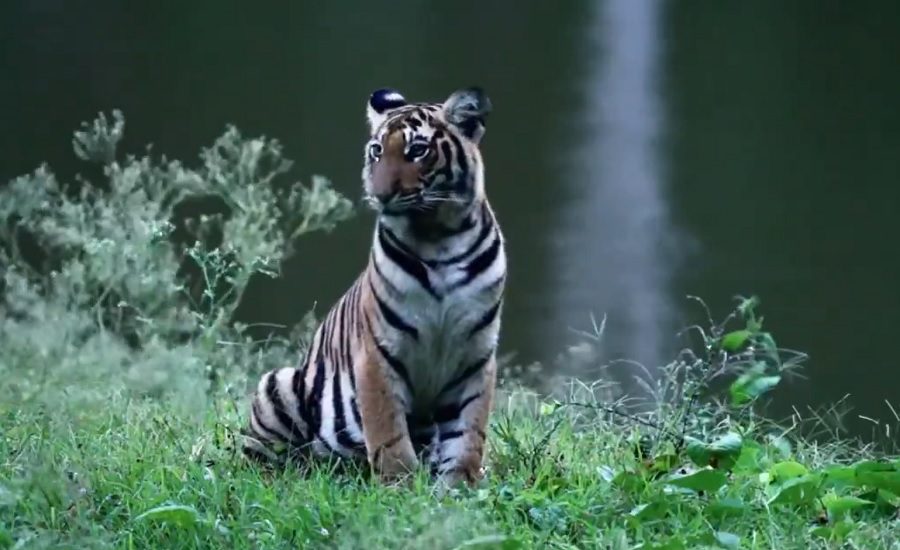
Lucknow: Uttar Pradesh has recorded a steady increase in its tiger population, with the number of big cats rising to 205 in the latest 2022 tiger census, up from 173 in 2018. The Yogi Adityanath-led government has intensified conservation measures, strengthened habitat management and introduced innovative initiatives such as the Bagh Mitra (Tiger Friend) programme to protect tigers while reducing human-wildlife conflict.
The state’s conservation efforts have also received appreciation from Prime Minister Narendra Modi, who praised the Bagh Mitra initiative during his Mann Ki Baat programme.
Uttar Pradesh Records Steady Rise in Tiger Population
According to Principal Chief Conservator of Forests (Wildlife) Anuradha Vemuri, Uttar Pradesh has witnessed consistent growth in its tiger population over the years.
Tiger population in Uttar Pradesh:
- 2006: 109 tigers
- 2010: 118 tigers
- 2014: 117 tigers
- 2018: 173 tigers
- 2022: 205 tigers
The latest census reflects the state’s continued focus on wildlife conservation and effective management of tiger habitats.
Read also: CM Yogi Holds Janta Darshan in Gorakhpur on Guru Purnima, Hears Grievances of Around 200 People
Uttar Pradesh Now Has Four Tiger Reserves
The state currently has four tiger reserves, highlighting its commitment to biodiversity conservation.
These include:
- Dudhwa Tiger Reserve
- Pilibhit Tiger Reserve
- Amangarh Tiger Reserve
- Ranipur Tiger Reserve
Ranipur Tiger Reserve is India’s 53rd Tiger Reserve among the country’s 58 notified tiger reserves.
Officials said the expansion of protected areas and improved habitat management have contributed significantly to the increase in tiger numbers.
Yogi Government Strengthens Tiger Conservation Measures
The Uttar Pradesh government has implemented several initiatives aimed at protecting tigers and improving wildlife management.
Key focus areas include:
- Scientific tiger habitat management.
- Strengthening wildlife protection.
- Enhancing monitoring and surveillance.
- Promoting coexistence between humans and wildlife.
- Increasing public awareness about wildlife conservation.
The government has also intensified conservation activities across Pilibhit, Dudhwa, Amangarh and Ranipur Tiger Reserves.
‘Bagh Mitra’ Programme Helps Reduce Human-Wildlife Conflict
To minimise incidents of human-wildlife conflict, the state government launched the Bagh Mitra (Tiger Friend) programme in Pilibhit in 2019 under the guidance of Chief Minister Yogi Adityanath.
The initiative aims to create a network of trained local volunteers who assist the Forest Department by reporting tiger sightings and alerting officials whenever wild animals move near human settlements.
The programme has played an important role in improving response time and preventing conflicts between wildlife and local communities.
Prime Minister Narendra Modi also appreciated the initiative during his Mann Ki Baat address.
CM Yogi Launched the Bagh Mitra App in 2023
In October 2023, Chief Minister Yogi Adityanath launched the Bagh Mitra App in Pilibhit to strengthen wildlife monitoring.
The mobile application enables trained volunteers to:
- Report tiger or wildlife sightings instantly.
- Upload photographs of animals.
- Share exact locations with Forest Department officials.
- Help authorities identify animals accurately.
- Enable quicker deployment of monitoring teams.
The app has improved coordination between local communities and the Forest Department, allowing officials to respond more effectively to wildlife movement.
Pilibhit Has 120 Trained Bagh Mitras
According to Pilibhit Tiger Reserve Divisional Forest Officer Manish Singh, a dedicated WhatsApp group has been created for 120 Bagh Mitras from villages located near the forest.
The volunteer network includes:
- 120 trained Bagh Mitras
- 118 men and 2 women
- Youth and senior citizens aged above 18 years
- Residents from villages located within 5 kilometres of the forest boundary
The Forest Department has trained these volunteers to identify wildlife movement and immediately inform officials whenever tigers or other wild animals are seen outside forest areas.
Their timely alerts help monitoring teams reach the location quickly and reduce the possibility of conflict.
International Tiger Day to Be Celebrated at Ranipur Tiger Reserve
On the occasion of International Tiger Day, the Uttar Pradesh government will organise several awareness programmes on 29 July.
The main state-level event will be held at Jagadguru Rambhadracharya Divyang State University, Chitrakoot, under the aegis of the Ranipur Tiger Reserve.
The theme of this year’s celebration is:
“Securing the Future of Tigers with Indigenous Peoples and Local Communities at the Heart.”
The programme will be inaugurated by Minister of State for Forests K.P. Malik.
Awareness Activities and Competitions Planned
The International Tiger Day celebrations will feature a range of educational and awareness activities, including:
- Wildlife awareness programmes.
- Painting and drawing competitions.
- Essay writing contests.
- T-shirt painting competitions.
- Quiz competitions.
- Debate competitions.
- Wildlife photography exhibition.
- State-level wildlife photography competition.
- Launch of the official Ranipur Tiger Reserve website.
- Unveiling of the Ranipur Tiger Reserve logo.
- Felicitation of Nature Guides.
- Prize distribution for competition winners.
The events aim to promote wildlife conservation while encouraging greater participation from students and local communities.
Uttar Pradesh Continues to Strengthen Wildlife Conservation
The steady rise in Uttar Pradesh’s tiger population reflects the state’s sustained efforts to improve habitat management, strengthen conservation practices and encourage community participation.
Initiatives such as the Bagh Mitra programme, the launch of the Bagh Mitra App, enhanced protection across four tiger reserves and awareness campaigns have contributed to better monitoring and conservation outcomes.
With tiger numbers increasing from 173 in 2018 to 205 in 2022, the state continues to reinforce its commitment to protecting India’s national animal while promoting harmonious coexistence between wildlife and local communities.