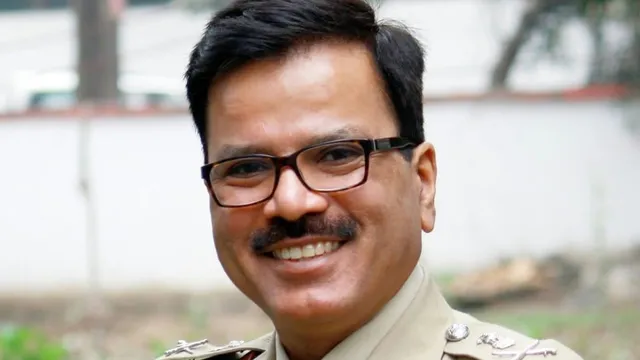
Athens/New Delhi: International Institute of Administrative Sciences (IIAS) President Voruganti Srinivas, a 1989-batch IAS officer and Chief Secretary of Rajasthan, has called for a stronger global public administration network built around ethical leadership, human-centric artificial intelligence (AI), digital transformation and closer collaboration between academics and practitioners.
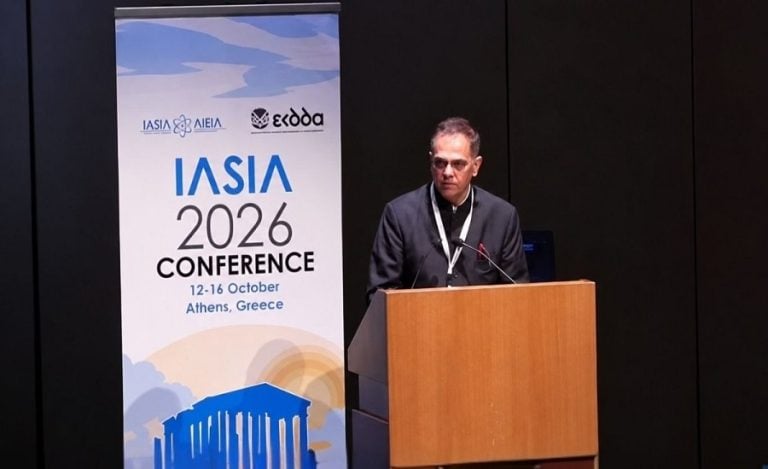
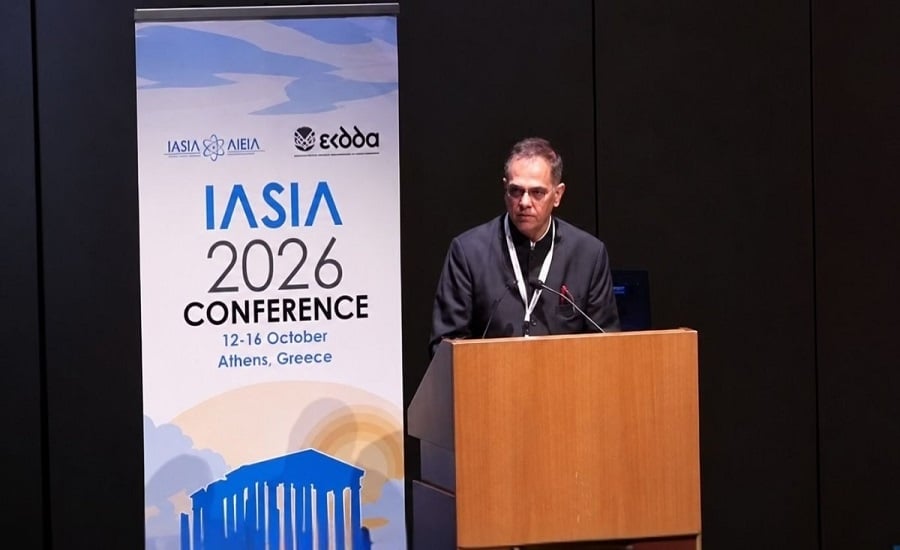
Addressing the Board of Management of the International Association of Schools and Institutes of Administration (IASIA) on the sidelines of the IASIA 2026 Conference in Athens, Greece, Srinivas outlined a strategic roadmap for strengthening public administration education, research, training and institutional capacity ahead of the IIAS centenary in 2030.
Emphasising the need to ensure that technological progress remains aligned with human values, he said technology and artificial intelligence must serve humanity, life, peace and the common good. He also called for greater attention to responsible AI, AI regulation, digital inclusion and the continuous development of civil servants’ skills.
His address connected international debates on the future of governance with India’s administrative reform agenda, including Mission Karmayogi, technology-enabled public service delivery, performance monitoring and the goal of Viksit Bharat 2047. He also highlighted Rajasthan’s governance initiatives and urged stronger participation from the Global South in international public administration research and knowledge-sharing networks.
IASIA 2026 Conference Focuses on Rethinking Governance
The IASIA 2026 Conference, held in Athens under the theme “Rethinking Governance for a Changing World,”brought together scholars, practitioners, policymakers and educators to examine how public institutions must respond to an increasingly complex and interconnected world.
The discussions covered a broad range of challenges, including digital transformation, climate pressures, changing public expectations, institutional reform and international cooperation. The conference sought to frame governance as a dynamic and adaptive system that must continuously evolve to remain effective, legitimate and responsive.
In his presidential address, Srinivas acknowledged the significance of discussing the future of administration in Greece, a country whose history has influenced political and administrative thought. He noted that the conference provided a platform for examining governance challenges across sectors, national boundaries and traditional models of government.
He commended IASIA for bringing together different sections of the public administration community through plenary sessions, thematic discussions, working groups and PhD seminars. These engagements, he said, could help move the debate beyond examining existing systems towards developing forward-looking solutions for more resilient and future-ready public institutions.
IIAS Looks Ahead to Its Centenary in 2030
Reflecting on the work of the International Institute of Administrative Sciences, Srinivas said the organisation had spent more than nine decades connecting administrative theory with practice and developing international scientific networks.
Through its relationships with international organisations and public administration associations, the IIAS has helped facilitate exchanges of information, ideas and experiences on changes in public administration across countries.
Srinivas said the IIAS centenary in 2030 should be an opportunity to build on this institutional legacy while strengthening academic excellence, multilateral cooperation and contemporary administrative thinking.
He outlined his vision of the IIAS as a digitally agile, publication-rich and resource-strong knowledge institution capable of serving governments, civil servants, researchers, academics and practitioners.
He said the organisation’s future should be guided by the principles of “collaboration without borders, knowledge without boundaries and governance without exclusion.” The objective, he explained, should be to cultivate a new generation of governance thinkers, institutional reformers and administrative scientists equipped to lead with vision, strong values and an understanding of global interdependence.
The centenary, in this context, would not simply commemorate the organisation’s history. It would also provide an opportunity to reassess its relevance and strengthen its contribution to public administration in a world being reshaped by technology, social expectations and complex policy challenges.
Indian Presidency Builds Momentum for International Collaboration
Srinivas highlighted the momentum generated during the Indian presidency of the IIAS and the international public administration community’s response to recent conferences.
He recalled that the IIAS conference held in New Delhi in February 2025 attracted more than 750 delegates from 58 countries, alongside thousands of participants online. According to him, the conference helped increase the organisation’s visibility in India and strengthened the Indian presidency’s engagement with the international community.
He also referred to the successful organisation of two major European public administration conferences during the period. The conference in Glasgow was described in his address as the largest in the history of the European Group for Public Administration (EGPA), while the conference in Rome was also highlighted as a successful gathering.
Srinivas said these events, together with the New Delhi conference and other IIAS engagements in 2026, had received substantial support from scholars and practitioners worldwide.
He also pointed to the strong response to the IIAS 2026 conference scheduled in Seoul in November 2026. His interactions with academics, practitioners and researchers across countries, he said, indicated growing interest in the organisation and its work.
He observed that interest in the IIAS was also increasing among Indian academics and public administration practitioners. The organisation’s activities had attracted attention beyond its traditional professional community, including from journalists.
Pope Leo XIV’s Message: Technology Must Retain a Human Touch
Srinivas also referred to a special audience granted to the IIAS by Pope Leo XIV, describing the engagement as a distinctive moment in the organisation’s history.
He said the audience and apostolic blessing extended to the IIAS were particularly significant, noting that the previous meeting between the organisation and the Pope had taken place 71 years earlier. More than 500 delegates representing the IIAS’s multicultural, multilingual and multi-ethnic community participated in the special audience.
According to Srinivas, Pope Leo XIV’s address emphasised the principle of Magnifica Humanitas and called for technology to be adopted with a human touch.
He said the message offered an important direction for the IIAS as it considers the future of public administration in an era of rapid technological change.
Srinivas stressed that AI and digital technologies should not be treated as ends in themselves. Instead, they must remain grounded in humanity and contribute to life, peace and the common good.
This emphasis on human values formed a central part of his argument for ethical leadership and responsible AI. As governments increasingly use technology in decision-making and public service delivery, he argued, administrative systems must continue to uphold professional standards, impartiality, accountability and respect for people.
Ethical AI, Digital Inclusion and Future-Ready Civil Servants
Srinivas said the scale of digital transformation and the growing capabilities of artificial intelligence were changing the way governments function and how public servants learn and work.
While professional, impartial and rule-based administration remains essential, increasingly complex governance challenges require greater collaboration, coordination and accountability. He called for public administration systems to combine technological innovation with strong ethical foundations.
He emphasised responsible and ethical AI, appropriate regulation, digital inclusion and skill development for civil servants as important priorities for the future.
The challenge, according to his address, is not simply to introduce new technology into government offices. Public institutions must also develop the skills, institutional capacity and ethical understanding needed to use these tools effectively.
Digital inclusion is particularly important because technological progress must translate into accessible and meaningful public services. Governments must ensure that digital systems improve citizens’ experiences rather than create additional barriers for people who have limited access to technology or digital skills.
Srinivas’s broader argument was that public administration must evolve alongside technology without losing its human and ethical foundations.
Viksit Bharat 2047 and the Principles of Good Governance
Connecting the conference theme with India’s long-term development goals, Srinivas discussed the country’s vision of Viksit Bharat 2047, marking 100 years of independence.
He referred to Prime Minister Narendra Modi’s emphasis on accountability, responsibility and transparency, describing these as essential principles of good governance.
In his address, he used the acronym “ART” to represent these three elements: Accountability, Responsibility and Transparency. He argued that effective governance depends on all three working together.
Srinivas also referred to the Panch Pran outlined by the Prime Minister in his Independence Day address on August 15, 2022. These principles, he said, provide a framework for India’s development ambitions during the Amrit Kaal and the journey towards 2047.
The Panch Pran include the goal of making India a developed nation, removing traces of a colonial mindset, taking pride in the country’s heritage, strengthening unity and encouraging a sense of duty among citizens.
Srinivas said these priorities must be supported by administrative reforms that empower citizens, improve the delivery of public services and ensure that development reaches the last mile.
He also stressed the importance of economic and infrastructure development across sectors, including agriculture and services, alongside improvements in governance. Citing the potential economic benefits of civil service reform, he said such reforms could contribute up to one percentage point to per-capita growth.
He presented administrative reform as an important part of the wider development agenda, arguing that improvements in decision-making, institutional efficiency and public service delivery can help governments respond more effectively to citizens’ needs.
Technology as a Tool for Effective and Accessible Governance
Srinivas described technology as one of the most important instruments available to governments for improving administrative efficiency and service delivery.
He highlighted the role of e-governance in making government processes more efficient, economical and accessible. He also pointed towards a future in which mobile-based governance becomes increasingly central to the relationship between citizens and public institutions.
In his address, he said governance in the age of technology was no longer merely about managing existing systems but also about managing possibilities.
He referred to the expansion of technology-enabled infrastructure and services, including smart cities, smart classrooms, smart police stations, digital public hospitals, digital secretariats and modern public infrastructure.
He also highlighted the growing use of unified mobile applications, digital public infrastructure and messaging-based service delivery models, including WhatsApp-based services. End-to-end digitisation, he said, could improve the delivery of government services and reduce the effort required from citizens.
Aadhaar-based beneficiary service platforms and single-window service systems were also cited as examples of how technology could help make public administration more accessible.
These initiatives reflect the broader objective of “maximum governance, minimum government”, which Srinivas associated with digitally empowered citizens and digitally transformed institutions.
He said bringing government and citizens closer through technology had supported efforts to improve ease of living and ease of doing business. He also highlighted quantitative and qualitative improvements in grievance redressal, stressing the importance of making complaint mechanisms accessible, meaningful and responsive.
However, he linked these technological advances to the need for stronger administrative capacity. A whole-of-government approach to policy formulation and implementation, he said, requires continuous investment in the skills and capabilities of public institutions.
Mission Karmayogi and the Transformation of Civil Services
Srinivas highlighted Mission Karmayogi as an important part of India’s efforts to build a future-ready civil service.
He described the programme as encompassing three major transitions: from Karmachari to Karma Yogi, workplace transformation, and a shift from rule-based to role-based civil servants.
The approach seeks to move beyond a system in which officials focus primarily on prescribed procedures towards one in which they also develop the competencies needed to perform their responsibilities effectively.
Srinivas explained that the Karma Yogi competency model places emphasis on identifying and assessing the skills required across the civil services, strengthening behavioural and functional capabilities, and aligning capacity-building efforts with officers’ roles.
The model, he said, can help prepare civil servants for emerging administrative challenges by ensuring that training responds to the actual requirements of their responsibilities.
This approach also connects with the wider global discussion on public administration education. As governments adopt AI, digital platforms and new methods of delivering services, civil servants must continuously update their skills and understanding.
Srinivas’s address therefore positioned capacity building as a continuing institutional responsibility rather than a one-time training exercise.
Governance Index to Support Quality Assessment and Comparison
Srinivas referred to a preview of the IASIA Governance Index during the conference, describing the broader idea of governance indices as a way to assess administrative quality and encourage improvements in public institutions.
Modern governance systems, he said, increasingly rely on periodic monitoring, quality assessments and measurable indicators to evaluate performance.
Well-designed metrics can help governments compare outcomes, identify weaknesses and encourage a competitive spirit among states and districts. Such assessments can also support more informed decision-making by highlighting areas where administrative interventions are required.
He described the proposed governance index as an initiative with the potential to support a more forward-looking analysis of governance across countries.
The wider objective is to strengthen the use of evidence and comparative assessment in public administration. By developing effective metrics and drawing lessons from different governance models, institutions can identify practices that may be adapted to their own administrative contexts.
Srinivas also underlined that effective policy implementation must remain grounded in social equity, justice, transparency and accountability.
He referred to the Indian government’s emphasis on Sabka Saath, Sabka Vikas, Sabka Vishwas, Sabka Prayas, describing equitable opportunities and inclusive development as important elements of good governance.
He also stressed the need to recognise meritocracy and give it greater importance in public administration.
Recognising Innovation and Training International Civil Servants
Srinivas highlighted India’s efforts to identify and promote innovations in public administration through the Prime Minister’s Awards for Excellence in Public Administration.
He said these awards recognise successful governance innovations and help nurture talent within the administrative system, including younger public servants who are developing new approaches to public service delivery.
He also underscored the importance of international cooperation in building administrative capacity.
According to his address, the National Centre for Good Governance (NCGG), India, has trained more than 5,000 international civil servants over the preceding five years.
Such programmes can create opportunities for countries to exchange experiences, learn from different institutional models and develop administrative practices suited to their own requirements.
Srinivas also emphasised the importance of reforms at the sub-national level. While international frameworks and national policies provide direction, the effectiveness of governance ultimately depends on how institutions implement policies and respond to people on the ground.
Rajasthan’s Digital Governance and Administrative Reforms
Drawing on his experience as Chief Secretary of Rajasthan, Srinivas outlined several initiatives undertaken in the state to improve public service delivery, grievance redressal, women’s empowerment and infrastructure monitoring.
He said Rajasthan had pursued the Viksit Rajasthan 2047 vision through a governance approach centred on inclusive development and improved administrative performance.
The Rajasthan Jan Sampark portal was highlighted as a mechanism for handling public grievances and strengthening the connection between citizens and the administration.
He also referred to Mission Rajivika in the context of women’s empowerment and the Rajkaj analytics platform as part of efforts to develop a digital secretariat.
For monitoring major infrastructure projects, Srinivas cited the Raj Unnati digital platform, through which projects can be reviewed and administrative follow-up strengthened. He said several infrastructure projects had been expedited through such digital review mechanisms.
These examples illustrated his argument that digital tools can support administrative coordination, improve oversight and help accelerate implementation when integrated into government processes.
His remarks also underscored the significance of sub-national governance models in advancing broader development goals. States and districts, he indicated, have an important role in translating policy priorities into measurable outcomes.
IASIA’s 2026–2030 Roadmap: Research, Membership and Global South Participation
Outlining the roadmap ahead for IASIA, Srinivas said the organisation’s Board of Management, under Professor Dr Liesel Lewis, had worked to strengthen professional relationships, encourage cutting-edge research and support collaboration on public-sector challenges.
He described IASIA as a major international association dedicated to advancing excellence in public administration education, training and research. Its role includes connecting schools and institutes of public administration with scholars, practitioners and institutions seeking to strengthen administrative capacity worldwide.
Referring to Professor Lewis’s vision, Srinivas said IASIA should become indispensable to global public administration events, knowledge production, collaborative projects and accreditation aligned with best-practice standards.
The strategic architecture being planned for 2026–2030 places emphasis on restructuring working groups, strengthening membership, defining strategic priorities, expanding Global South participation, developing comparative research programmes and building digital knowledge platforms.
Srinivas placed particular emphasis on the Global South, arguing that IASIA should strengthen its position as a genuinely global network for public administration rather than one dominated by a limited set of regions or institutional perspectives.
Broader participation, he said, would help bring more diverse administrative experiences and governance models into international discussions.
Proposed IASIA Practice Network to Connect Academics and Practitioners
One of the key priorities outlined by Srinivas was closer collaboration between public administration academics and practitioners.
He said a traditional divide often exists between public administration as an academic discipline and public administration as a profession. Bridging this divide is important if research and teaching are to respond more effectively to the challenges faced by governments.
Srinivas welcomed IASIA’s initiative to establish a practice network that would bring together schools of public administration and civil service academies.
The proposed network could support comparative studies of public administration models, encourage the exchange of practical experiences and strengthen the links between research, professional training and frontline administration.
He also called for the next generation of working groups to remain digitally connected throughout the year, allowing collaboration to continue beyond annual conferences.
This approach would help institutions share knowledge more consistently, develop joint initiatives and make international cooperation a continuing part of public administration education and practice.
AI, Comparative Databases and a Global Knowledge Network
Srinivas said IASIA had placed increasing emphasis on AI and the future of governance, particularly in the context of digital inclusion and the changing needs of public institutions.
He argued that the organisation could strengthen its role as a global knowledge network by expanding the resources available to educators, researchers and practitioners.
Among the forward-looking initiatives discussed in his address were case studies, comparative databases, regular policy briefs, international teaching networks and an annual State of Public Administration Education report.
These resources could help institutions assess developments across countries, compare different administrative approaches and identify lessons for improving public-sector performance.
Regular publications and comparative research would also help connect academic findings with practical policy requirements. By making knowledge more accessible across institutional and national boundaries, IASIA could support a more informed global debate on administrative reform.
Srinivas said the goal should be to build a globally connected international community capable of shaping the future of governance through research, education, training and collaborative projects.
Strengthening Public Administration for a Changing World
Srinivas’s address at the IASIA 2026 Conference brought together several connected priorities: ethical leadership, human-centric AI, digital transformation, administrative capacity building, evidence-based governance and international cooperation.
His remarks linked India’s experience with Mission Karmayogi and technology-enabled service delivery to wider questions about how governments can remain effective, accountable and inclusive as public expectations and technological capabilities evolve.
The roadmap he outlined for the IIAS and IASIA places collaboration, research, training and broader Global South participation at the centre of efforts to strengthen public administration ahead of the IIAS centenary in 2030.
The central message of his address was that the future of governance cannot be shaped by technology alone. Digital systems and AI must be supported by capable institutions, ethical public servants, inclusive policies and stronger connections between research and practice.
As governments across the world confront complex and interconnected challenges, Srinivas called for public administration institutions to evolve continuously while keeping human welfare, accountability and the common good at the centre of their work.
Read also: Rajasthan Plans Administrative Overhaul With Pilot Study Across Six Departments