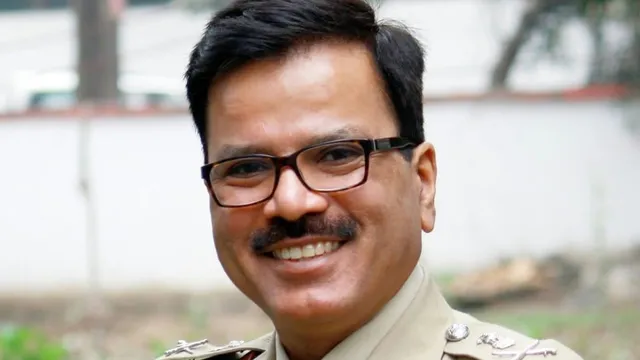
New Delhi: The Central Government has appointed senior Indian Police Service (IPS) officer Jitendra Kumar as the new Director General (DG) of the Railway Protection Force (RPF) under the Railway Board. The Appointments Committee of the Cabinet (ACC) has approved the proposal submitted by the Ministry of Railways for his appointment to the senior leadership position.
A 1993-batch IPS officer of the Bihar cadre, Kumar will assume charge of the RPF on the date he takes over the post. According to the appointment order, his tenure will continue until his superannuation on March 31, 2030, or until further orders, whichever is earlier. The post carries the pay attached to Level 16 of the pay matrix.
Kumar will succeed Sonali Mishra, a 1993-batch IPS officer of the Madhya Pradesh cadre, whose tenure as RPF Director General is scheduled to conclude on October 31, 2026. His appointment marks a transition from state-level policing and administrative responsibilities in Bihar to a key national-level leadership role in railway security.
Who Is Jitendra Kumar?
Jitendra Kumar is a senior IPS officer known for his extensive experience in policing, criminal investigation, police recruitment administration and armed police management. He belongs to the 1993 batch of the IPS and is a member of the Bihar cadre, although his home state is Uttar Pradesh.
He joined the IPS as a direct-recruit officer on September 5, 1993. Over more than three decades in the service, he has held several important assignments within the Bihar Police, including positions at police headquarters and the Criminal Investigation Department (CID).
His career has included both operational policing and institutional administration. In addition to serving in senior police leadership roles, Kumar has been associated with recruitment bodies responsible for selecting personnel for the Bihar Police. He has also headed the Bihar Special Armed Police (BSAP).
Kumar was promoted to the rank of Director General in August 2025. His subsequent appointment as RPF chief places him at the helm of a force responsible for protecting railway property, safeguarding railway infrastructure and assisting in maintaining security across the Indian Railways network.
Educational Background and Entry into the IPS
Kumar holds a Bachelor of Technology (B.Tech.) degree. He entered the Indian Police Service as a direct recruit in 1993 and formally joined the service on September 5 of that year.
His progression through the ranks reflects a career spanning investigation, police administration, recruitment oversight and senior command responsibilities. These assignments have given him experience in different aspects of policing, from criminal investigation to managing specialised police units and recruitment institutions.
Career in Bihar Police: From ADG to Director General
Before his appointment to the RPF, Kumar served in several senior positions in Bihar. He held the rank of Additional Director General (ADG) and served at the Bihar Police Headquarters as well as in the Criminal Investigation Department.
His work in the CID placed him within the state’s criminal investigation and law-enforcement administration structure. His subsequent elevation to the Director General rank in August 2025 marked a further step in his career.
Following his promotion, Kumar took charge of the Bihar Special Armed Police as its Director General. The BSAP is part of Bihar’s armed police establishment and undertakes duties related to specialised security and law-and-order requirements.
Alongside these responsibilities, Kumar also headed the Central Selection Board of Constables (CSBC), the body associated with recruitment to constable-level positions in the Bihar Police. His responsibilities therefore extended beyond command of police units to the administration of recruitment processes.
Additional Responsibilities: CSBC, BSAP and BPSSC
Before his central deputation, Kumar was handling multiple important responsibilities in Bihar. In addition to serving as Chairman of the Central Selection Board of Constables and Director General of the Bihar Special Armed Police, he was entrusted with the additional responsibility of the Bihar Police Subordinate Services Commission (BPSSC).
The additional charge of the BPSSC was assigned to him after its chairman, K. S. Dwivedi, proceeded on leave. The commission oversees recruitment to various subordinate police posts, including Sub-Inspector positions, while the CSBC is responsible for constable recruitment.
Kumar’s simultaneous responsibilities placed him at the centre of several important administrative functions within the state’s police establishment. His appointment to the RPF, however, means that Bihar will have to make fresh arrangements for the positions he currently holds.
The state government will need to decide on the officers who will take over the leadership of the CSBC and BSAP, as well as the additional responsibility of the BPSSC. These changes will be necessary to ensure continuity in police administration, armed police management and recruitment-related activities.
What Is the Railway Protection Force?
The Railway Protection Force is a specialised security force under the Ministry of Railways. It is responsible for protecting railway property and performing security-related duties across the Indian Railways network.
The RPF operates under the Railway Protection Force Act, 1957, and plays an important role in railway security. Its responsibilities include preventing offences against railway property, protecting railway assets and supporting passenger safety through security deployment and coordinated action with other law-enforcement agencies.
The force also undertakes operations against activities such as the theft of railway property, unauthorised interference with railway assets and trafficking-related offences within its operational remit. Its personnel work at railway stations, trains, railway premises and other locations associated with railway operations.
The RPF works alongside the Government Railway Police (GRP), state police and other agencies. While the RPF focuses on railway property protection and designated security responsibilities, the GRP has primary responsibility for policing and maintaining law and order within its jurisdiction on railway premises, including investigating ordinary crimes against passengers.
As Director General, Kumar will head the force’s national leadership and administration. His responsibilities will include overseeing the organisation’s operations, personnel management and coordination with railway authorities and other security agencies.
Jitendra Kumar’s Tenure as RPF Chief
According to the ACC-approved appointment, Kumar’s tenure will extend until March 31, 2030, the date of his scheduled superannuation, or until further orders, whichever is earlier.
His actual tenure in the post will begin from the date he assumes charge. The appointment order provides for remuneration at Level 16 of the pay matrix.
Kumar’s appointment follows the completion of Sonali Mishra’s tenure as RPF Director General on October 31, 2026. Mishra, a 1993-batch IPS officer of the Madhya Pradesh cadre, has been heading the force and will be succeeded by Kumar after the transition.
The appointment brings a senior state-cadre IPS officer with experience in police leadership and recruitment administration to the head of a major central security organisation.
Awards and Recognition
Kumar has received national-level recognition for his service in the police force. According to the available biographical information, his honours include:
- Police Medal for Meritorious Service — 2009: Awarded in recognition of meritorious service.
- President’s Police Medal for Distinguished Service — 2016: Conferred in recognition of distinguished service.
These honours form part of his service record spanning more than three decades in the IPS.
What Lies Ahead for the New RPF Director General?
Kumar’s appointment comes with responsibilities extending beyond the administrative leadership of the RPF. Railway security requires coordination across a vast network of stations, trains, railway installations and passenger facilities, alongside cooperation with state police and other security agencies.
His experience in senior police administration, criminal investigation and the management of armed police units will be relevant to his new assignment. At the same time, the position will require him to oversee a specialised force operating within the institutional framework of the Ministry of Railways.
The immediate administrative transition will involve his assumption of charge at the Railway Board and the reassignment of the three responsibilities he has been handling in Bihar. The Bihar government will need to ensure that recruitment administration and BSAP leadership continue without disruption.
With the ACC approving his appointment through March 31, 2030, subject to the terms of the order, Jitendra Kumar is set to lead the RPF through the remainder of his service until superannuation, unless the government issues further orders.