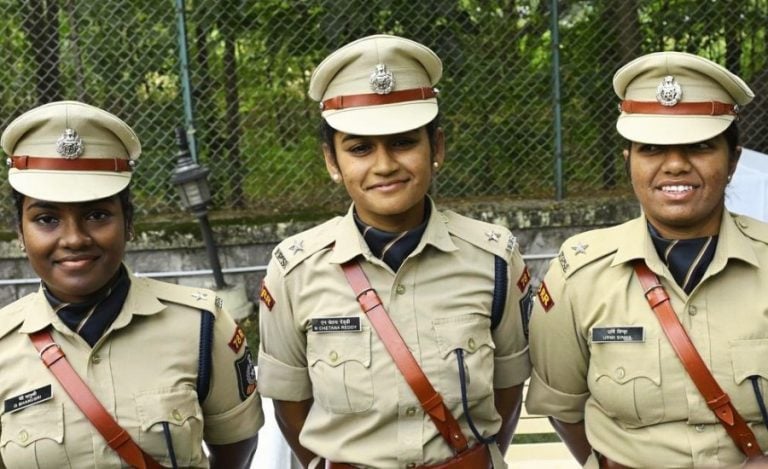
Hyderabad: From representing India on the international badminton circuit to pursuing a childhood ambition of becoming a police officer, women trainees of the 78th Regular Recruit (RR) batch at the Sardar Vallabhbhai Patel National Police Academy (SVPNPA) have taken different routes to the Indian Police Service (IPS).
The batch includes 37 women among 135 IPS probationers, alongside 16 foreign officer trainees from Nepal, Bhutan and the Maldives. As the academy prepares for its Dikshant Parade on October 17, several women trainees have drawn attention for their achievements in training and the personal journeys that brought them to the police service.
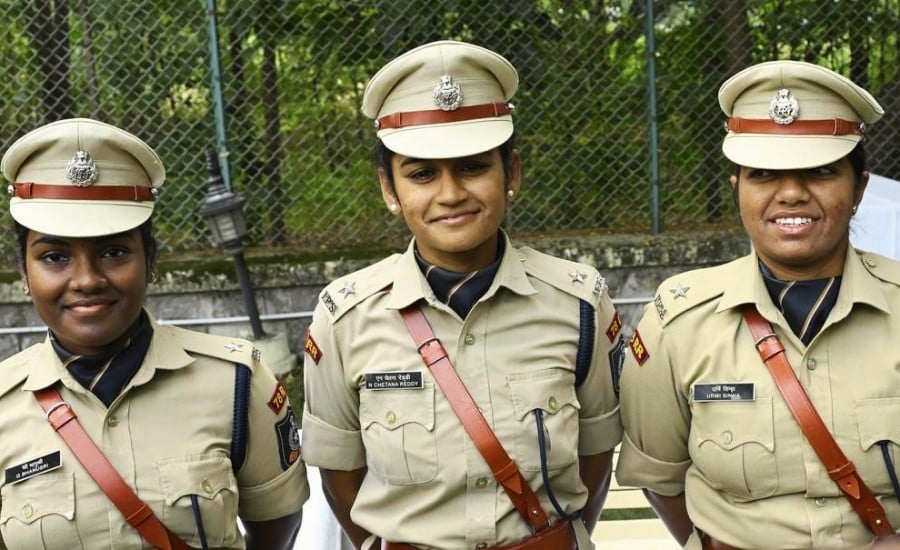
Among them is Kuhoo Garg, a former international badminton player who has received the IPS Association’s Sword of Honour for Best Outdoor Probationer. Hyderabad-born N. Chetana Reddy, allotted the Telangana cadre, is another trainee whose experience highlights how systematic academy training can help officers develop physical fitness and mental resilience.
Urmi Sinha, the youngest trainee in the batch, pursued a childhood ambition of joining the police service, while other probationers have brought academic backgrounds in psychology, political science and engineering to their new profession.
Kuhoo Garg Moves From International Badminton to Policing
Kuhoo Garg, a native of Dehradun, Uttarakhand, represented India in badminton from 2013 to 2020. She reached world No. 34 in mixed doubles and was ranked India’s No. 1 in the discipline.
The daughter of former Uttarakhand Director General of Police Ashok Kumar, she studied Economics Honours at Shri Ram College of Commerce and trained at the Pullela Gopichand Badminton Academy in Hyderabad.
Injuries and the disruption caused by the COVID-19 pandemic prompted her to reconsider her sporting career. Encouraged by her parents, particularly her father, she turned towards the civil services and cleared the examination on her first attempt.
Her sporting experience has now translated into recognition at SVPNPA. The Sword of Honour acknowledges her performance as the best outdoor probationer during Phase I of training, which assesses trainees across physical training, riding, tactics, drill and other outdoor disciplines.
Garg has been allotted the Gujarat cadre. Her transition from competitive sport to policing illustrates how the discipline and resilience developed through athletics can also be relevant to police training.
Reflecting on the academy’s role in preparing probationers for professional challenges, she said:
“The academy equips us with everything required to deal with these challenges. The training builds resilience and confidence, which will help us perform our responsibilities in the field.”
N. Chetana Reddy Builds Fitness Without a Sporting Background
For N. Chetana Reddy, who grew up in Hyderabad, joining the IPS meant adapting to a profession that demands both physical preparedness and mental strength.
With both her parents working as doctors, she did not have a sporting background and said physical fitness had not been a major part of her life before entering the academy.
Her training experience, however, changed that perspective. She described the academy’s approach as structured and systematic, emphasising that progress depends on discipline and consistent effort rather than previous athletic experience.
“The training is very scientific and systematic. Even if you are not from a sporting background, discipline and consistent effort can help you achieve the required level of physical fitness,” she said.
Chetana has been allotted the Telangana cadre. She has also encouraged more women to consider policing, pointing to the growing presence of women officers in important positions within the State’s police administration.
Urmi Sinha: A Childhood Ambition Takes Shape
Urmi Sinha, the youngest trainee in the batch, was born in 2003 and raised in Howrah, West Bengal.
She graduated in Political Science Honours from St. Xavier’s College, Kolkata, before pursuing the civil services examination. Her parents first suggested a career in the civil services, believing her energy and enthusiasm could be channelled into public service.
As a child, she found the responsibilities of the broader bureaucracy difficult to understand. The role of a police officer, however, was easier to relate to, and the idea gradually developed into a personal ambition.
She cleared the civil services examination on her first attempt and has been allotted the Andhra Pradesh cadre.
Her journey reflects how an early interest in policing can develop into a career choice through education, preparation and sustained effort.
Psychology and Engineering Graduates Bring Different Perspectives
The women trainees also represent a range of academic backgrounds that can contribute to different aspects of police work.
Aarushi Sharma, a psychology graduate from Jesus and Mary College, University of Delhi, hails from Punjab and has been allotted the Assam cadre. She received the Manipur Cup for Law during her training.
Sharma said her academic background helped her understand how psychology could be applied to public service, motivating her to pursue the civil services. She also cleared the examination on her first attempt.
K. Arpitha, from Medak in Telangana, has been allotted the Uttar Pradesh cadre. She observed that policing differs across States because of variations in crime patterns and local challenges. She said the academy’s training had helped prepare probationers to respond to these differences.
Their experiences highlight the value of combining academic knowledge with practical instruction in preparing officers for field responsibilities.
Other Trainees Receive Recognition Across Training Disciplines
Several other officer trainees were recognised for their performance in specific areas of the academy’s programme.
The honours included:
- Lekzin Pelden Lhamo: Received the BSF Trophy for proficiency in outdoor subjects and the Director’s Trophy for Best Foreign Officer Trainee in Phase I.
- B. Sivachandran: Won the National Forensic Science University Trophy for Police Sciences and the National Crime Records Bureau Trophy for Computer Studies.
- Gourav Uppal: Received the Director’s Trophy for Best Officer Trainee in Phase I.
- Rishabh Bhatt: Won the Tonk Cup for Equitation, or horse riding.
Bhatt, who completed a B.Tech. before pursuing the civil services, cleared the examination on his third attempt. He said academy training had exposed him to criminal investigation, forensic science, cybercrime and the new criminal laws, alongside practical activities such as riding, firing and swimming.
The awards recognise performance across the academic, physical and operational components of police training.
Chowhan Rajkumar Cleared the Examination on His Fourth Attempt
Chowhan Rajkumar, a native of Adilabad in Telangana, has been allotted the Rajasthan cadre.
A mechanical engineering graduate from the National Institute of Technology (NIT), Warangal, he recalled the relief of clearing the civil services examination on his fourth attempt.
Rajkumar credited his education at Jawahar Navodaya Vidyalaya and the example set by his father, a government teacher, with encouraging him to pursue public service.
His experience also illustrates the persistence required to enter the civil services through a competitive examination.
IPS Training Expands to Artificial Intelligence and Cybercrime
Alongside traditional policing skills, the academy’s curriculum is placing greater emphasis on technology-driven offences and emerging security challenges.
Chetana said the training included learning about artificial intelligence, identifying deepfakes and understanding how AI-generated material could be used to commit offences.
She also highlighted the potential use of technology in investigations, including the analysis of CCTV footage and improvements to investigative processes from the registration of a First Information Report (FIR) to the filing of a charge sheet.
“AI is definitely an emerging threat, but it is also an opportunity for police officers. It can be used to improve the efficiency of investigations,” she said.
The broader training programme covers criminal law, investigation, forensic science, internal security, public order, police management, human rights, physical fitness and weapons training. Specialised modules also address cybercrime, financial fraud and other evolving threats.
Women Trainees Prepare for Field Responsibilities
The women trainees’ journeys demonstrate the different experiences and qualifications they bring to the police service. Some have transitioned from competitive sport, while others have pursued long-held ambitions or drawn on academic backgrounds outside conventional policing.
Their training at SVPNPA is intended to prepare them for the practical and administrative responsibilities awaiting them in their allotted cadres.
The October 17 Dikshant Parade will mark the completion of Phase I of their basic training. The probationers will subsequently proceed through the remaining stages of their professional training before taking up their responsibilities in the field.
Read Also: From AI to Cybercrime: SVPNPA Modernises IPS Training to Address Emerging Policing Challenges