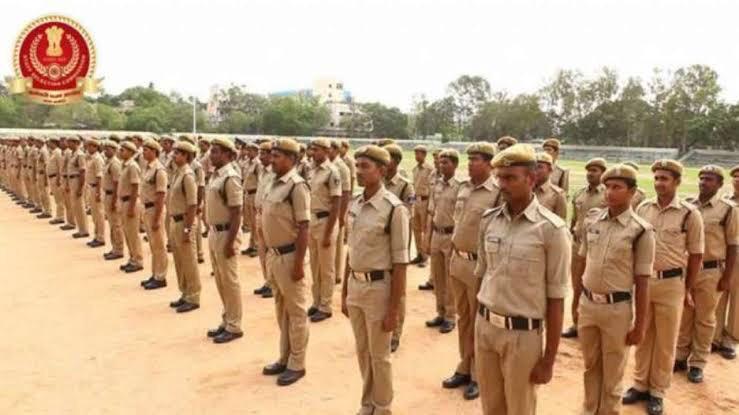
Soon after becoming Prime Minister, Narendra Modi coined the acronym SMART Police. S stood for strict and sensitive, M for modern and mobile, A for alert and accountable, R for reliable and responsive, and T for tech-savvy and trained. However, if much of the police force, which comprises the constabulary, is recruited and trained as per the norms of the colonial era, there is no way in which the seven recommendations made by the Supreme Court in 2006 will bring about the transformative moment for the SMART police as envisaged by the Prime Minister.
THE 2006 SUPREME COURT DIRECTIONS
First, let us examine the 2006 directions of the Supreme Court issued on a Public Interest Litigation (PIL) filed by two former Director Generals of Police, Prakash Singh and NK Singh in 1996. In this PIL, the Supreme Court gave directions to the government to implement the recommendations of the National Police Commission (NPC) constituted in 1977 with wide terms of reference covering police organisation, role, functions and public interface. The NPC produced eight reports between 1979 and 1981. The Supreme Court found merit in their case and gave seven clear directions to the Ministry of Home Affairs and the state governments. These included the establishment of an institutional mechanism to limit political control, ensure merit-based appointment of the DG, minimum tenure of two years for police officers on operational duty – from SHOs to DGPs, separation of the investigation function from that of law and order, and the creation of a Police Complaints Authority, Police Establishment Board and national and state security commissions.
SELECTIVE IMPLEMENTATION BY STATES
Even though some states have implemented select recommendations by nominating retired IAS and IPS officers to the Police Complaints Authority, the Police Establishment Board and Security Commission, the rules relating to the tenure of operational officers, especially the SHOs, have been breached. Most states have also not implemented the main recommendation of separating the investigation function from the law and order and protocol functions at the functional levels.
In fact, as pointed out by the Law Commission and the second Administrative Reforms Commission, state police officers often neglect this responsibility because they are understaffed and overburdened with various kinds of tasks. Moreover, crime investigation requires skills, training, time and resources besides adequate forensic capabilities and infrastructure. As such, there is frequent resort to the ‘third degree’, a legacy from the colonial past when ‘order’ took precedence over ‘law’.
This is affirmed by a magisterial study on the ham-handed methods of police investigation, The Truth Machines: Policing, Violence, and Scientific Interrogations in India by Jinee Lokaneeta, published in 2020. She points out that “torture in India is used in a range of cases, from terrorism and murder to theft, even though confessions and evidence acquired under torture are inadmissible in court and policy prevents police from legally recording confessions (a remnant of colonial practice that has often been a sore point for the Indian police). Yet Section 27 of the Indian Evidence Act allows material discovered as a result of a confession, along with the part of the confession that led to its discovery, to be admissible.”
FIRST, SECOND & THIRD DEGREES OF INVESTIGATION
This brings us to a discussion on the first and second degrees of investigation. A first-degree investigation is one in which evidence – both material and circumstantial – is collected by the investigating agency to prove conclusively that the accused is responsible for the alleged crime. The second degree is one where the accused is confronted with this evidence for purposes of corroboration. The third degree is confession obtained by the use or threat of physical force, and includes threat to a close family member. Even though India is a signatory to the United Nations Convention on Torture, our Parliament has yet to enact specific legislation on this. However, it must be acknowledged that of late, the National and State Human Rights Commissions have started taking suo motto cognisance of this.
TRAIN THE MIND, NOT JUST THE BODY
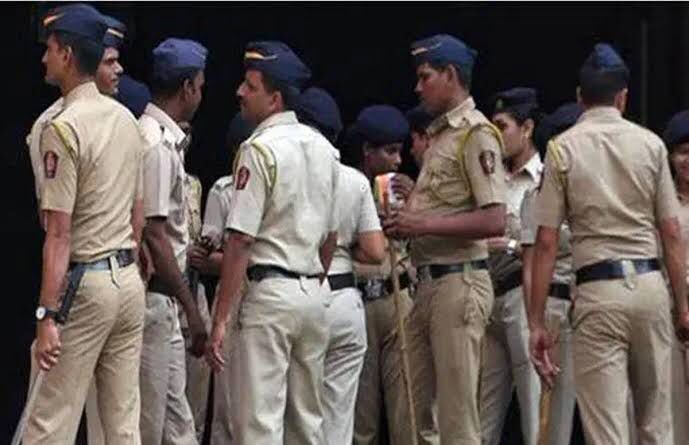
Now let us ask ourselves a question: Why have the pious resolutions by those at the helm not impacted ground reality? The answer lies in the composition of the Indian police force: As per PRS Legislative Research, 86 per cent of the force comprises constables, who are selected for their physical attributes, rather than their cerebral skills. In effect, the overwhelming majority of police personnel in the country continue to be recruited just after they have passed out of school and are trained in an almost military style with great emphasis on physical training, crossing hurdles and obstacles and taught to ‘obey orders’ unquestioningly by senior officers. However, the responsibilities entrusted to a constable are not just routine tasks but include some amount of judgement and decision-making.
Constables are often the first to witness or report to the scene of crime, but the Criminal Procedure Code (CrPC) does not authorise a constable to carry out an investigation by themselves – only a rank above the constable is entitled to be called a police officer. So, a head constable is an officer, but a constable is not. In other words, first- and second-degree investigation is not even an option available to the bulk of the police force, and the constable can therefore only resort to the third degree. It is high time that we amended the CrPC to empower the police constable, even as we take steps to recruit constables who are equipped to handle the challenges of contemporary times.
CHANGE TRAINING PEDAGOGY
As such, the need of the hour is to change the selection criterion and training pedagogy for constables. For the core policing functions, we should recruit graduates and give them two-year intensive training in law, forensics, crime detection, and sensitise them to issues relating to gender, juvenile justice and social legislation. The Model Police Bill, 2015 prepared by the NITI Aayog has also suggested that the police should make a clear distinction between its core and non-core functions and outsource/offload them to civic authorities. So far as the state armed police and India Reserve Battalions are concerned, these should henceforth be filled in by the Agniveers because they have received the training required to be the first line of protection and defence for the district administration.
The foundation of a SMART police can be laid only if we select and train our constables to understand law, forensics, and technology, and have an assured growth trajectory in their professional careers.
(This column is by Dr Sanjeev Chopra, Distinguished Fellow, USI, New Delhi, Fellow of the Royal Asiatic Society of GB & I, London, HRA, LMFSAI, Harvard University, Historian, Columnist, and Festival Director, Valley of Words: International Literature & Arts Festival, Dehradun www.valleyofwords.org)