Late Arun Jaitley was at his eloquent best when he said in Parliament, “The desire for a post-retirement job influences pre-retirement judgments”. This was stated by him in the context of Judicial Officers. However, it is perhaps equally relevant in the context of civil servants as well.
This was 2015. The discussion was on the issue of financial bonds by a couple of Public Sector Undertakings (PSU). Both of these entities belonging to different Ministries were under the same Minister and both the PSUs were flush with funds. I headed one of the Ministries.
In an informal chat with the Secretary of the other Ministry, both of us agreed that there was no need to float bonds. However, during the formal meeting, the other Secretary chose to remain silent whereas I immediately opposed the issue of such bonds by the PSU that was within the purview of the Ministry that I headed. Resultantly, this PSU was saved from this unnecessary financial burden.
REWARD FOR SILENCE
However, the other PSU falling in the purview of the other Ministry continues to suffer. On one hand, the ‘surplus’ cash was being sucked out of these PSUs by the Central Government to plug the budgetary deficit, on the other they were pushed into procuring expensive funds from the market. The Secretary of the other department was ‘rewarded’ with an assignment for his silence on an issue where he could have or should have protected the interest of the PSU.
A large number of civil servants opt for post-retirement jobs in the government itself. Most of them would have worked in the government for three decades or more. Yet they further preferred government assignments.
THE QUESTIONS
This raises a number of questions, some of which are ethical in nature:
1. Should a government servant, post-retirement, ‘apply’ for a job in the government?
2. Should a government servant, post-retirement, accept an assignment in the government?
THE ANSWERS
However, before we attempt to answer these questions, let us look at the reasons why a civil servant looks at post-retirement assignments. It could be on any or all of the following counts:
1. Having enjoyed the sheltered existence that a government job offers, a civil servant often finds it difficult to swim in the ‘open ocean’. There is a sense of insecurity that pushes him to remain in the oyster shell.
2. There are certain ‘perks’, including official accommodation, that continue to be available. Having got used to such ‘perks’ it becomes difficult for him to give them up.
3. There could be a financial need to continue in a government job as the pension is only equivalent to half of the last pay drawn.
4. Having worked in the government for so long, there is uncertainty about one’s value in the ‘open market’.
5. There is a satisfying sense of entitlement and authority within the government. It isn’t easy to give that up.
One or a combination of the above factors leads a civil servant to apply for a post-retirement assignment. There isn’t anything illegal about applying for such assignments because the government itself enables and calls for applications for such assignments. There is also an additional argument. Why should the enormous talent and experience within the civil service be wasted instead of being harnessed by the government on the superannuation of a civil servant? This indeed is a valid argument.
POSR-RETIREMENT CARROT
However, the key issue is an ethical one. Should a civil servant ‘apply’ for such assignments after having held top assignments like Secretaries to the government? Will it not affect his conduct, attitude, objectivity and performance if he has a post-retirement ‘carrot’ dangling before him?
Having seen the functioning of the government from very close quarters, I have no doubt that in a number of cases it does. There are indeed a plethora of post-retirement jobs on offer. The incentive of a post-retirement job distorts the conduct of a senior civil servant. He starts toeing the line of those who can help him obtain a post-retirement assignment in the government. It prevents officers from airing their views freely and frankly in the interest of their organisation under the apprehension that their personal interest could be adversely affected.
LACK OF OBJECTIVITY OR COLLUSION
Their lack of objectivity (in some cases collusion) results in enormous loss to the organisation, though they benefit personally and climb the bureaucratic ladder, reach the top and even end up getting post-retirement assignments.
There have been some cases where even such civil servants as have enjoyed a reasonably sound reputation begin to change as they approach superannuation. Every government is only too willing and happy to reward those that play ball. The signal to other civil servants (perhaps now to the judges as well) is clear. Toe the line and get rewarded. On a number of occasions, these rewards are bestowed irrespective of the experience or the competence of the officers concerned. These are rewards for ‘services rendered’, not very different from a ‘bakshish’.
However, as mentioned earlier, bureaucratic talent can’t be allowed to be wasted. It needs to be harnessed post-retirement. There are indeed a large number of civil servants that truly deserve to be and are indeed engaged by the government after they superannuate.
UPSC SHOULD OFFER POST-RETIREMENT JOBS
Only the methodology of post-retirement engagement needs to undergo a change. An institution like the Union Public Service Commission (UPSC) can be tasked with shortlisting the candidates for post-retirement assignments and the government can pick up one from the shortlisted candidates. The officer will then not feel beholden to the government for the assignment. It will virtually eliminate the quid-pro-quo attitude which is currently the order of the day.
It would be wrong not to use the services of such civil servants who have acquired such enormous experience and expertise during their career. However, the criteria for their selection should be their competence and integrity and not pliability, servility and / or allegiance. This can be done and should be done in the interest of better governance.
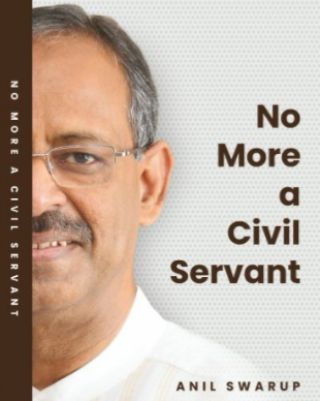
(Author is a former UP Cadre IAS officer, having served the Union Government as Coal Secretary and School Education Secretary. He has written books on his experiences in bureaucracy:- No More A Civil Servant, & Ethical Dilemmas of A Civil Servant)