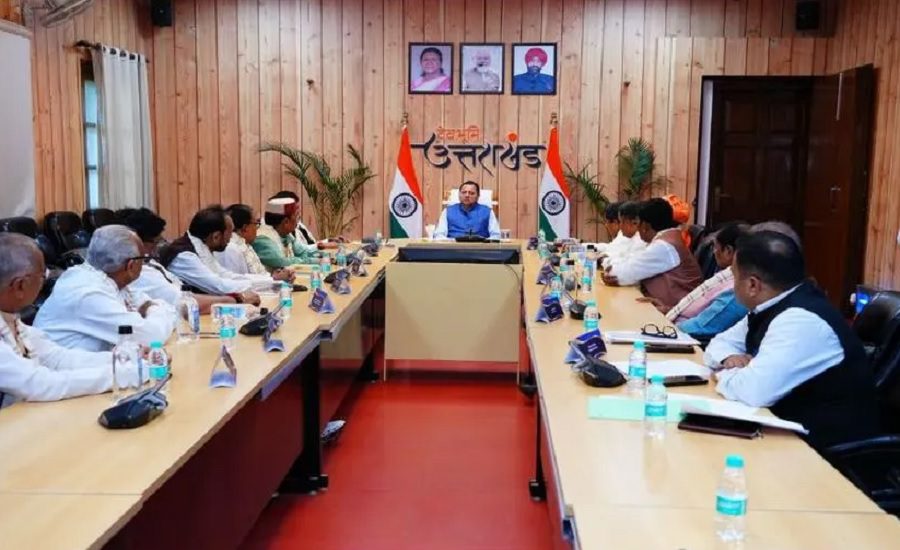
Dehradun: A delegation of the OBC Welfare Parliamentary Committee met Uttarakhand Chief Minister Pushkar Singh Dhami at the Chief Minister’s residence on Saturday. During the meeting, the Chief Minister reiterated his government’s strong commitment to the welfare and development of the OBC community in the state.
Government Committed to OBC Welfare: CM Dhami
CM Dhami said that the Uttarakhand government is fully dedicated to the welfare of OBC communities and is working with a structured legal and institutional framework to ensure their upliftment.
He emphasized that policy reviews, feedback mechanisms, and continuous follow-ups are being used to ensure that the benefits of government schemes reach every eligible OBC family.
Focus on Social Justice and Inclusive Development
The Chief Minister highlighted the important role of the OBC Parliamentary Committee in promoting social justice and inclusive development.
He stated that government policies and budgets are designed keeping in mind the welfare of poor, deprived, and weaker sections of society, ensuring balanced and inclusive growth across the state.
Welfare Schemes Reaching Beneficiaries
CM Dhami informed the delegation that nearly 90 caste and sub-caste communities are listed under the OBC category in Uttarakhand.
He added that various social security schemes, including:
- Old age pension
- Widow pension
- Disability pension
are being effectively implemented to provide direct benefits to eligible beneficiaries.
Delegation Members Present
The OBC Welfare Parliamentary Committee delegation included several Members of Parliament, such as:
- Ganesh Singh (Chairman)
- Vijay Baghel
- Dr. Swami Sachchidanand Hari Sakshi (Sakshi Maharaj)
- Vidyut Baran Mahato
- Rodmal Nagar
- Ramashankar Vidyarthi Rajbhar
- Dr. Ashok Kumar Yadav
- Girdhari Yadav
- Mastan Rao Yadav
- Rajendra Gehlot
- Shubhashish Khuntia
- Mayank Kumar Nayak
- Dr. Bhim Singh
State’s Commitment to Inclusive Growth
The Chief Minister reaffirmed that Uttarakhand’s development model is focused on social equity, empowerment of marginalized communities, and transparent governance to ensure that welfare schemes effectively reach all sections of society.