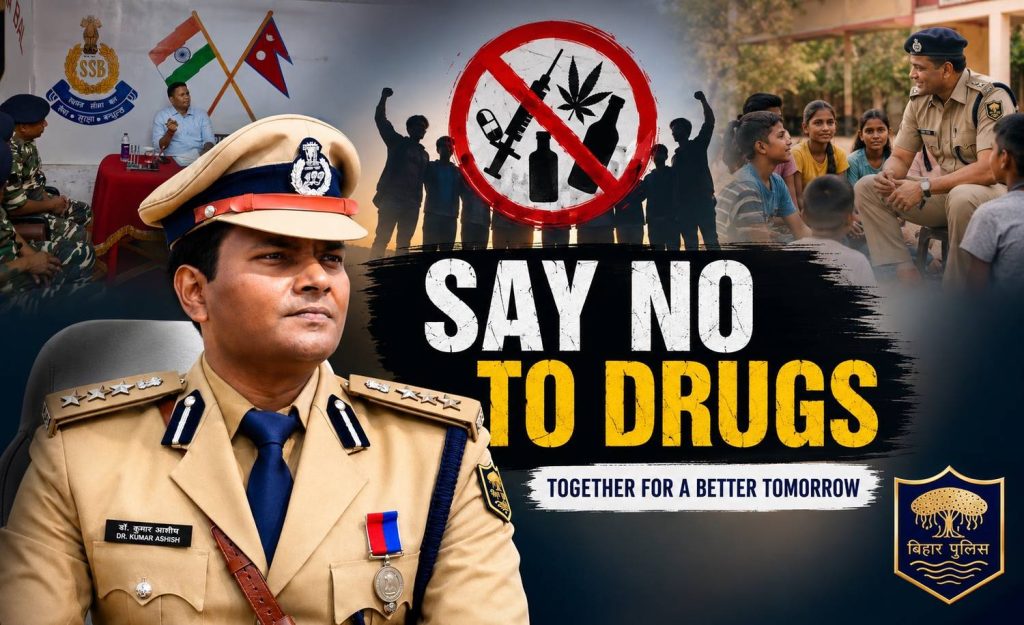
Last week, the Hon’ble Prime Minister called for renewed attention to the vision of a “Drug-Free India” and emphasised the need for collective efforts to achieve this goal. The campaign is both timely and necessary, because drug abuse is no longer merely a law-and-order challenge; it is a serious threat to our society and, more importantly, to the future of our younger generations. The growing attraction of narcotic substances among young people is particularly concerning. Various studies have highlighted the significant exposure of young people to substance abuse in one form or another. This should serve as a warning that our strategy against drugs cannot be confined to enforcement and punitive action alone. We must also address the underlying causes that draw individuals, particularly the young, towards substance abuse.
As a police officer, I firmly believe that the most effective weapons in the fight against drugs are awareness, dialogue and community participation. The police can – and do – take stringent legal action against those involved in the trafficking and distribution of narcotic substances. However, when it comes to preventing a young person from taking that first step towards addiction, the role of the family, teachers and society is far more significant.
Parents must pay close attention to even subtle changes in their children’s behaviour. A sudden change in friends, withdrawal from studies, irritability, social isolation, unusual demands for money, or persistent changes in behaviour should not be ignored. What is needed is not interrogation, but conversation. Children must be made to feel that no matter how difficult the problem may be, their family will stand by them and help them overcome it.
Schools and colleges are equally important pillars of this campaign. Teachers should remain sensitive to signs of mental stress, emotional pressure and behavioural changes among students. Encouraging young people to participate in sports, creative pursuits, skill development and constructive social activities can be an effective way of reducing the appeal of drugs and providing them with healthier avenues for expression and fulfilment.
Society, too, must recognise its responsibility. If people become aware of the sale or trafficking of narcotic substances in their neighbourhood and choose to remain silent, they inadvertently strengthen the hands of those involved in this illegal trade. Providing timely information to the police is therefore not merely a civic duty; it is a collective responsibility. At the same time, it is the responsibility of the police to ensure the confidentiality and safety of those who come forward with such information.
We must also recognise that a person struggling with addiction is not always simply a perpetrator of crime. In many cases, he or she is someone’s child, sibling or friend – an individual who needs treatment, care and rehabilitation. Therefore, firm action against those who traffic in drugs and compassion towards those who fall victim to addiction must go hand in hand. Effective enforcement and humane rehabilitation are not competing approaches; they are complementary components of a comprehensive response to the drug menace.
Let us resolve to begin the fight against drug abuse from our own homes, schools and neighbourhoods. A drug-free society cannot be created through police action alone. It can become a reality only when families, educational institutions, communities and the police join hands and accept their shared responsibility.
The fight against drugs is ultimately a fight for the well-being of our children, the strength of our communities and the future of our nation.
(About The Author – Dr. Kumar Ashish is a 2012-batch IPS officer of the Bihar cadre and currently serves as Deputy Inspector General of Police, Koshi Range, Saharsa, Bihar. He has been actively leading campaigns against drug abuse and raising awareness about the menace.)
Disclaimer – (The views and opinions expressed in this article are solely those of the author and do not necessarily reflect the views of Indian Masterminds. For feedback or queries, please write to [email protected].)