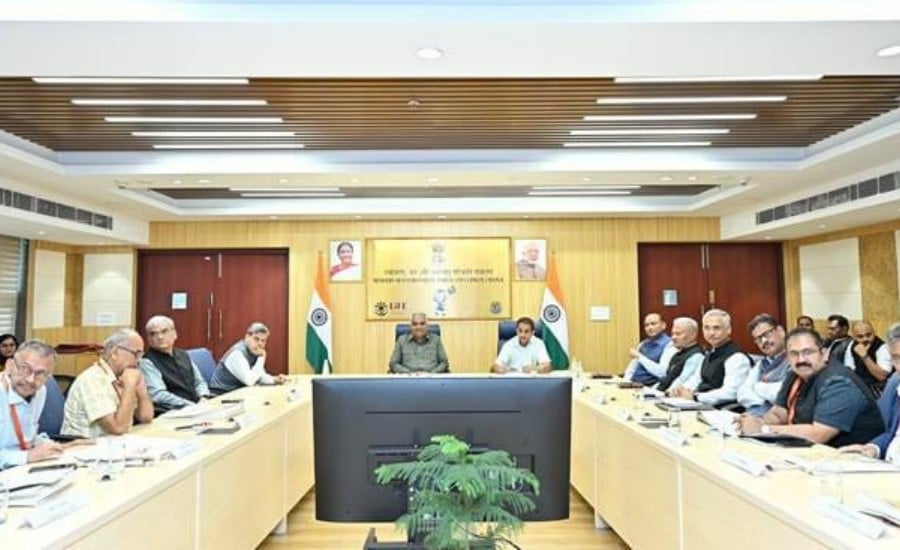
New Delhi: Union Environment Minister Bhupender Yadav on Friday launched the inception workshop for the 6th Cycle of Management Effectiveness Evaluation of Tiger Reserves (MEE-TR 2026), beginning a nationwide assessment of management practices across all 58 tiger reserves in India.
Organised by the National Tiger Conservation Authority (NTCA) in collaboration with the Wildlife Institute of India (WII), the workshop in New Delhi brought together representatives of State Forest Departments, tiger reserve management teams and wildlife experts.
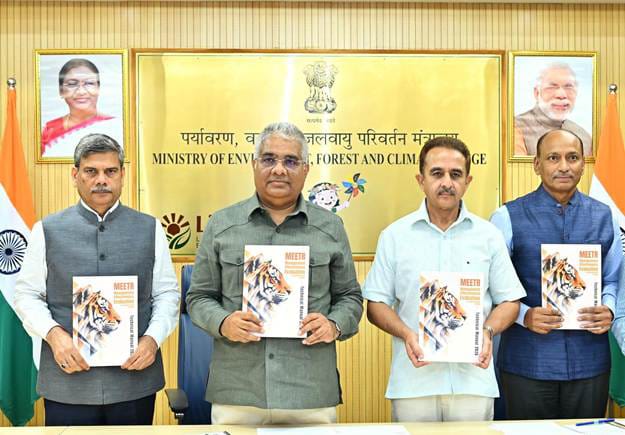
The Technical Manual for MEE 2026 was also released during the inaugural session, setting out the framework for the sixth-cycle assessment.
Solid Waste Management Added to Tiger Reserve Assessment
One of the significant changes in the sixth cycle is the introduction of Solid Waste Management as a separate evaluation criterion.
The assessment will examine waste-management practices within tiger reserves, including:
- Waste generated at forest chowkis
- Waste arising from tourism activities
- Biomedical waste generated at wildlife rescue centres
58 Tiger Reserves to Be Assessed
The 6th Cycle of MEE-TR will cover all 58 tiger reserves in the country.
The evaluation is designed as a systematic and evidence-based assessment of whether management interventions are achieving their intended conservation outcomes. It will examine management actions as well as planning, resources, systems and results.
The framework is adapted from the IUCN World Commission on Protected Areas (WCPA) Framework for Assessing Management Effectiveness and assesses six broad elements: Context, Planning, Inputs, Processes, Outputs and Outcomes.
MEE was first introduced in India in 2006. Five cycles have since been completed in 2006, 2010, 2014, 2018 and 2022, covering 28, 39, 43, 50 and 51 tiger reserves respectively.
New Cycle to Focus on Field Evidence and Emerging Threats
The sixth cycle will build on earlier assessments while placing greater emphasis on field-based evidence, management outcomes, emerging threats and digital and spatial information.
The evaluation will cover several aspects of tiger reserve management, including tiger and prey conservation, habitat management, protection and wildlife crime, wildlife monitoring and health, fire and disaster management, human-wildlife coexistence, community engagement and tourism management.
It will also examine landscape connectivity, management planning and resource availability.
Independent multidisciplinary teams will conduct the assessments to identify management strengths, gaps and areas requiring attention.
Bhupender Yadav Calls for Site-Specific Conservation
Speaking at the workshop, Bhupender Yadav highlighted the need to combine scientific methods and technology with local ecological and socio-economic considerations.
He called for area-based assessment of human-wildlife conflict and measurable conservation outcomes. He also stressed the importance of site-specific landscape management and adaptive conservation practices suited to the circumstances of individual tiger reserves.
The Minister suggested involving local ecological and sociological experts in evaluating MEE reports and said local youth could also participate in the evaluation exercise.
85,000 Sq Km Under Tiger Conservation
Yadav said India has demarcated more than 85,000 square kilometres for tiger conservation.
He emphasised that conservation assessments should combine scientific and technological approaches with engagement between forest departments and local communities.
Union Minister of State for Environment, Forest and Climate Change Kirti Vardhan Singh also addressed the workshop and highlighted the field experience of senior forest officers involved in conservation and management activities.
The launch of MEE-TR 2026 marks the beginning of the sixth national assessment cycle, with the new technical framework set to guide evaluations across India’s 58 tiger reserves.