For thousands of UPSC aspirants, Indian Art and Culture is one of the most confusing, scattered, and overwhelming subjects in the syllabus. Temples, caves, architecture, paintings, dance forms, dynasties, UNESCO sites, festivals… everything comes at once. Aspirants memorize facts, revise repeatedly, and still struggle to connect the dots.
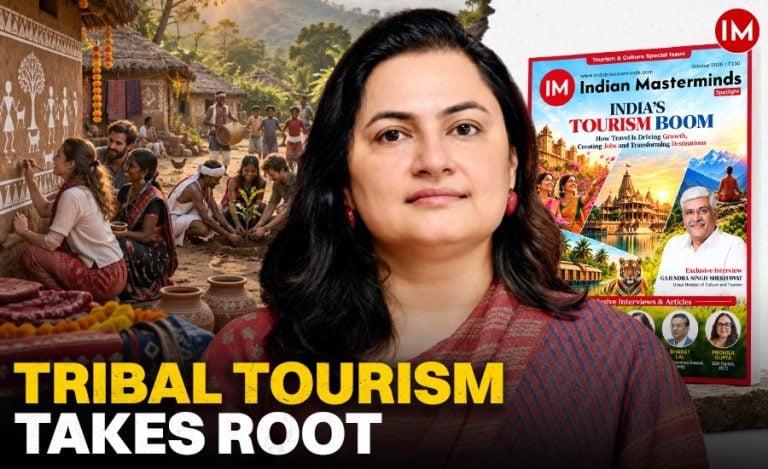
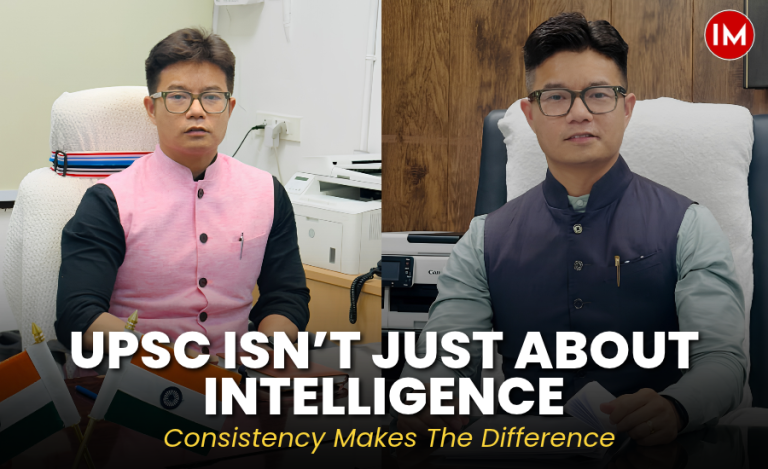
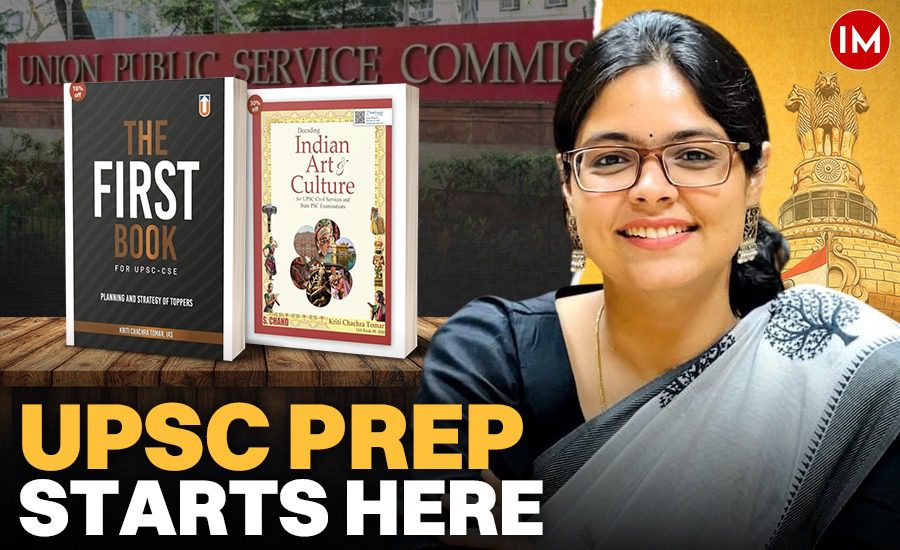
2021 batch IAS officer Kriti Chachra knows that struggle intimately. Today, she serves as the Additional Commissioner of Guwahati Municipal. But before entering the bureaucracy, she spent years battling one of India’s toughest examinations.
Her fourth attempt changed her life. And now, the lessons from that journey have become a book many aspirants may wish they had discovered earlier: Decoding Indian Art and Culture.
This is not just another UPSC book. It is born from confusion, frustration, research, and the lived experience of someone who searched for answers and couldn’t find them. So, she wrote them herself.
In an exclusive conversation with Indian Masterminds, she shared details about her journey and book.
THE FOURTH ATTEMPT THAT CHANGED EVERYTHING
Kriti’s UPSC journey was anything but easy. In fact, she did not clear Prelims in her first three attempts. It was only in her fourth attempt in 2020 that she finally crossed the first major hurdle.
That difficult phase changed how she looked at preparation forever. While studying Indian Art and Culture, she noticed a problem almost every aspirant faces, but few articulate.
The available books were fragmented. Topics were arranged in silos. Architecture was taught as one giant chapter. Paintings are another. Dance forms separately. Music separately. But history does not unfold in silos.
Kriti explained, “All the books that we find, they are in silos… You read everything together, starting from prehistoric times to modern times. But then your mind is not able to put it in a picture of historical chronology.”
That single observation became the seed of her book.
A BOOK THAT FOLLOWS HISTORY, NOT RANDOM CHAPTERS
Instead of dividing the subject by themes, Kriti decided to arrange it by time. Her book begins with the Prehistoric period. Then comes the Indus Valley Civilisation. Then the Mauryan age. And so on… moving chapter by chapter along the historical timeline.
Everything connected to that era: art, architecture, sculptures, and cultural developments, is placed together. This means an aspirant studying the Indus Valley chapter does not just learn about seals or town planning in isolation. They understand the entire cultural ecosystem of that period.
This chronological approach helps build conceptual continuity and reduces confusion. For modern topics like music and dance forms, where chronology is less relevant, she has organized them separately.
The result is a smoother mental map. A clearer story. A subject that finally begins to make sense.
MORE THAN FACTS, IT TEACHES YOU HOW TO WRITE ANSWERS
Kriti didn’t stop at simplifying content. She tackled another major gap in UPSC preparation: answer writing. Many books offer Previous Year Questions. Some provide practice questions. Very few explain how to answer them.
Kriti’s book breaks down answer writing into a structured process. She explains it in three steps:
1. Decode the Question
Understand what the examiner is asking and what they are not asking.
2. Structure the Answer
Plan the introduction, body, and conclusion.
3. Write Effectively
Present the answer clearly and logically.
“This entire process has been covered for each chapter, both for Mains practice questions and Mains PYQs,” she shared with Indian Masterminds.
For aspirants struggling with Mains, this could be one of the book’s biggest strengths.
PACKED WITH PRACTICE QUESTIONS FOR PRELIMS AND MAINS
The book includes:
- Comprehensive Prelims practice questions
- Previous Year Questions for Prelims
- Mains practice questions
- Mains Previous Year Questions
- Step-by-step answer frameworks
It is designed not just to teach, but to test. And in UPSC, practice often makes the difference.
HER FIRST BOOK ASKED A BOLD QUESTION: WHAT IF YOU DON’T CLEAR UPSC?
Decoding Indian Art and Culture is Kriti’s second book. Her first was called The First Book for UPSC CSE.
It focused on preparation strategy, not just her own, but also insights from toppers. But what made it stand out was one unusual chapter:
“What if you do not clear UPSC?”
A question many fear. Few discuss. The chapter includes real stories of people who could not clear the exam but still built meaningful, successful lives. It reminds aspirants that UPSC is a path, not the only destination.
That perspective made her first book relatable. Her second book makes her practical.
WRITING WAS NEVER AN ACCIDENT
For Kriti, writing was never a side hobby that suddenly turned serious. It has always been part of who she is. She wrote poems as a child… stories… journal entries… and thoughts.
She says, “Whenever I used to read things, I always used to feel that probably I can also write it… or there are these gaps in it, so I will try and fill it up whenever I have time in life.”
Even today, writing remains deeply personal.
“If it’s a very bad day for me, I just write it down, and it’s over.”
For her, writing is not just an expression. It is clarity. It is a release. And now, it is impact.
HOW ASSAM SHAPED HER BOOK
Kriti’s administrative career added another dimension to her writing. Posted in Assam, the region became close to her heart. And it found a special place in her book.
Her first posting was as SDO Civil, Bijni, a Sixth Schedule area with a significant Bodo tribal population. There, she witnessed traditions not commonly discussed in mainstream UPSC material.
Everyone knows Bihu. Few know Bagurumba. She saw Bagurumba performances frequently while serving in Bijni and chose to highlight them.
She also emphasised Moidams in Charaideo, recently recognised by UNESCO. She believes Northeast India’s cultural richness often gets sidelined. And she wanted to change that.
Her field experiences helped her bring first-hand authenticity into the book. Not just textbook knowledge. Lived culture. Seen culture. Felt culture.
THE RESEARCH BEHIND THE CHRONOLOGY
Creating the initial chapters, from Prehistoric to modern periods, was not easy. It required extensive research. Cross-referencing resources. Collecting scattered information. Building a seamless timeline. And yet, the process energised her.
She says she particularly enjoyed “making the chronology of these things“.
Because she was finally creating the book she had once searched for herself. That sense of purpose shines through every page.
MORE BOOKS ARE ALREADY ON THE WAY
Kriti is not done. She is already working on another book focused entirely on answer writing. And there’s more.
Her UPSC optional subject was Zoology, and she plans to write a book on Zoology as well. The writing process has already begun. She is now looking for publishers.
For an officer balancing administration and authorship, this is only the beginning.
AN OFFICER WHO SOLVED HER OWN PROBLEM AND NOW HELPS OTHERS SOLVE THEIRS
Kriti Chachra’s story is compelling because it is deeply relatable.
She struggled.
She failed.
She researched.
She improved.
She cleared.
And then she documented the journey in a way that could help thousands.
In a world full of generic UPSC material, Decoding Indian Art and Culture offers something more thoughtful.
A chronological structure.
A practical approach.
A wider cultural lens.
And the voice of someone who has actually lived the struggle.
For every aspirant overwhelmed by Indian Art and Culture, this book may not just help them study better. It may help them finally understand the story India has been telling for centuries.