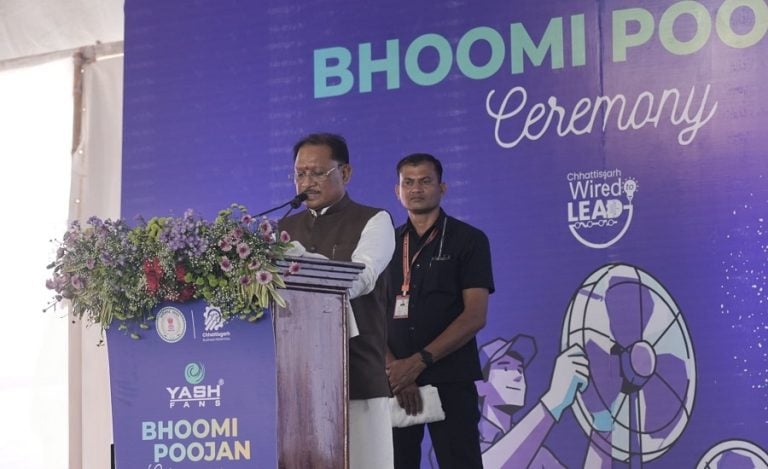
Agra is growing, and not quietly. The pressure is no longer within the city’s historic core but along its expanding edges. Families are searching for space, better infrastructure, and planned neighborhoods. The demand is massive, far beyond what the current housing supply can handle.
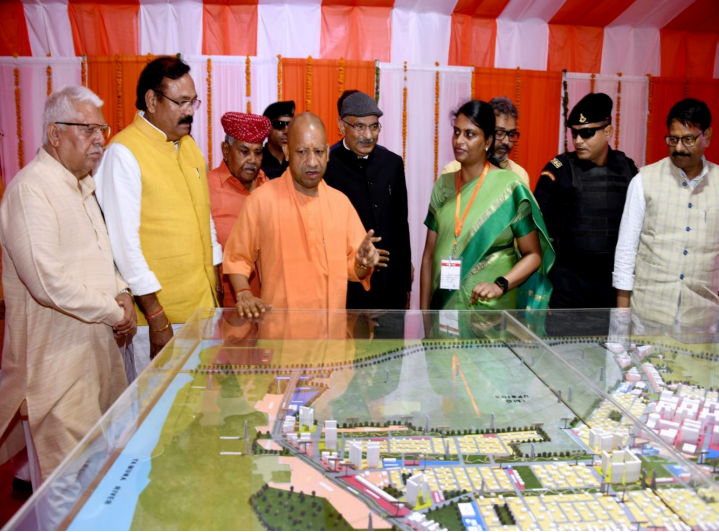
What followed is one of Uttar Pradesh’s most ambitious urban expansions: Greater Agra, a mega township project designed to accommodate over 2.5 lakh people across 449 hectares.
Arunmozhi, a 2017 batch IAS officer of the Uttar Pradesh cadre currently serving as the Vice Chairman of the Agra Development Authority, shared exclusive details about the project in an exclusive conversation with Indian Masterminds.
THE BIRTH OF GREATER AGRA
The numbers made the story impossible to ignore.
A survey revealed that while around 4,700 plots were being planned, demand in the same area had already crossed 12,000. Across Agra, the housing gap was nearly ten times the available supply.
“There is already a huge demand inside Agra city because of the population increase… That’s why we planned to start this township,” Arunmozhi explains.
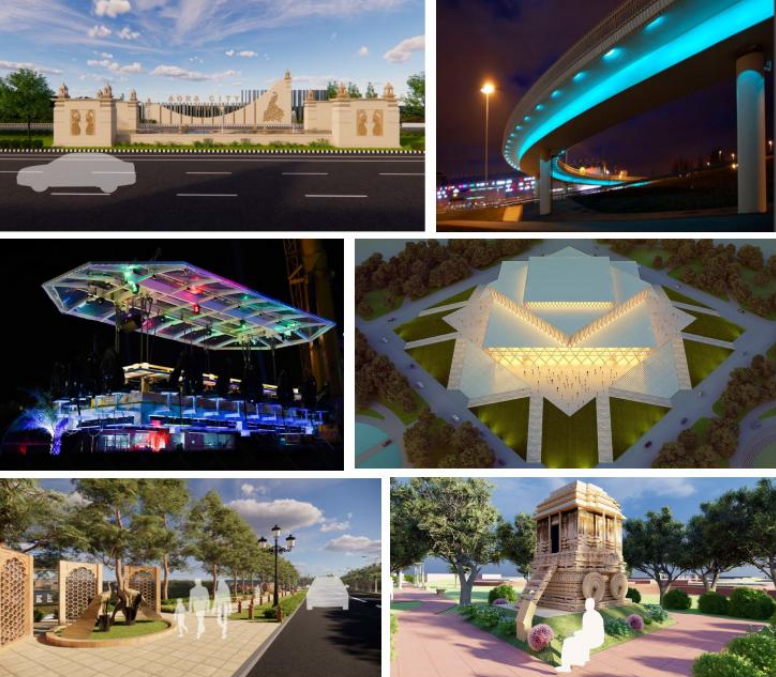
The response wasn’t incremental; it was expansive. A fully planned urban ecosystem with:
- 10 integrated townships
- A central commercial hub for jobs
- Mixed-use development
- Social infrastructure like schools, health centres, and community spaces
This wasn’t just housing. It was a new urban blueprint.
SOLVING A 15-YEAR-OLD LAND CRISIS
Before construction could begin, a deeper challenge lay buried in paperwork and promises.
The land in Raipur Rahankalan was acquired in 2010–11. But the farmers had never received compensation. For over a decade, the issue remained unresolved.
Arunmozhi’s team took a bold call: pay farmers four times the present circle rate.
“Farmers demanded four times the present circle rate. We presented the project’s financial viability to the Hon’ble Chief Minister, and approval was given,” she says.
This decision unlocked the project but also raised a crucial question: where would the money come from?
REWRITING THE FINANCIAL PLAYBOOK
The solution was as strategic as it was innovative.
Under the Mukhyamantri Shehri Vistarikaran Yojana, the state government covered 50% of land acquisition costs, contributing nearly ₹320 crore. The rest had to be arranged by the development authority.
Instead of waiting for funds, the team turned inward.
A detailed land audit was conducted. Surplus land, over 2 lakh square metres, was identified and monetised.
“From the land audit, we identified surplus land, sold it, and used that to make payments to farmers,” Arunmozhi shares.
The result:
- ₹856 crore generated through land monetisation
- Long-pending dues cleared
- Farmers finally compensated after 15 years
What was once a stalled acquisition became the foundation of a new city.
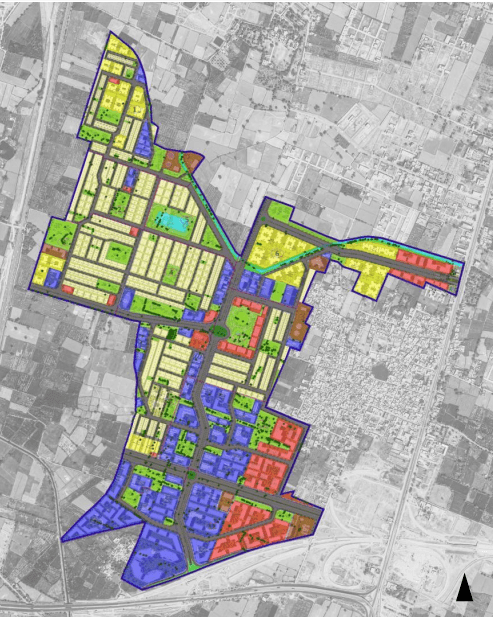
TEN TOWNSHIPS, ONE CULTURAL THREAD
When the project took shape, it wasn’t just about infrastructure; it carried an idea.
Each of the 10 townships was named after major Indian rivers:
Sindhupuram, Yamunapuram, Gangapuram, Gomtipuram, Betwapuram, Narmadapuram, Mahanadipuram, Godavaripuram, Krishnapuram, and Kaveripuram.
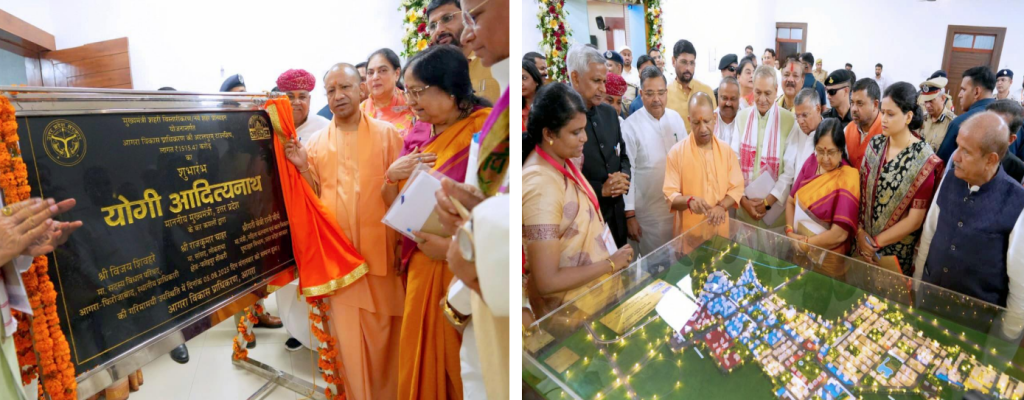
“We named them after rivers from north to south. The Hon’ble CM appreciated this concept during the bhoomi poojan,” she shared with Indian Masterminds.
It brought a cultural continuity to a modern expansion, connecting geography with identity.
A ₹5,142 CRORE LEAP FOR URBAN INDIA
On April 7, 2026, the project was formally launched, marking the largest township initiative in Uttar Pradesh so far.
Key highlights include:
- 4,712 total units
- 38 hectares dedicated to recreation
- Road network from 9m to 45m
- Smart utilities: STP, WTP, SWM systems
- Over 15% green spaces
- A central commercial hub to generate employment
The township is expected to be completed in 2–3 years, with groundwork already underway.
PARALLEL MOMENTUM
While Greater Agra grabs headlines, another project is quietly shaping the city’s housing landscape: Atalpuram.
Spread across 138 hectares, with an investment of over ₹2,200 crore, it targets around 40,000 residents and includes housing across all income groups, from EWS to Super HIG.
What sets it apart is its smart infrastructure:
- SCADA-based utility monitoring
- Convention centre with integrated 5-star hotel
- Underground power and ICT systems
- Extensive green and social infrastructure
Plot sales have already generated strong revenue, signalling high demand and confidence in planned urban living.
BUILDING MORE THAN HOMES
At its core, this is not just a story about land, numbers, or construction timelines.
It’s about:
- Unlocking stalled systems
- Addressing real housing demand
- Creating jobs through urban planning
- Ensuring fairness in compensation
- Designing cities that people actually want to live in
“This township will be mainly residential, but with commercial and mixed-use spaces to support livelihoods as well,” Arunmozhi says.
THE ROAD AHEAD
Agra, known for its past, is now actively designing its future.
With Greater Agra and Atalpuram, the city is stepping into a new phase, where planning replaces chaos, and expansion comes with structure.
And at the centre of this transformation is an officer quietly orchestrating one of the state’s most significant urban shifts.