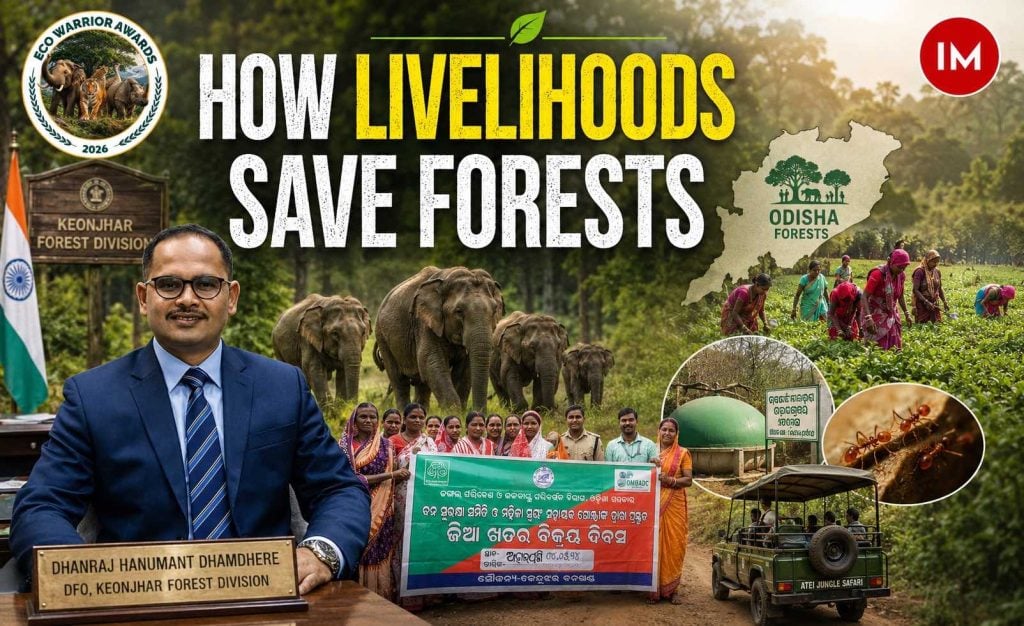
In a landscape where forests, wildlife and livelihoods are deeply intertwined, conservation cannot succeed by keeping communities at a distance. In Odisha’s mineral-rich Keonjhar district, 2016-batch Indian Forest Service (IFS) officer Dhanraj Hanumant Dhamdhere has taken this principle to the ground, making local communities active partners in protecting the forests they depend upon.
As the Divisional Forest Officer (DFO) of Keonjhar Forest Division, he has built a wide-ranging model of community-based conservation that connects livelihood generation with forest protection and human-wildlife coexistence. From vermicomposting enterprises and community-owned ecotourism to red-ant collection for pangolin conservation, biogas plants, skill development and technology-enabled elephant conflict management, his initiatives have sought to address the economic realities behind forest dependence.
The results are visible in both numbers and behaviour. Nearly 1,700 households have benefited from the Vermi-Village initiative, while community-operated ecotourism has created employment and generated local revenue. At the same time, early-warning systems, elephant-proof trenches, solar lighting and community monitoring networks have strengthened protection in conflict-prone areas.
The philosophy behind these interventions is simple: if people see tangible benefits from conservation, they are more likely to become its strongest protectors.
Indian Masterminds interacted with IFS Dhamdhere to understand how these initiatives were conceived, implemented and what impact they have created.
How It Started: Conservation in a Difficult Landscape
Keonjhar presents a particularly complex conservation challenge. The district is one of India’s major iron-ore mining regions, while its forests also support a significant elephant population.
Explaining the ground realities, Mr Dhamdhere said, “Here, mining and elephants [are major factors]. About 40–50 per cent of India’s iron ore is mined from this district, and about 150 elephants live here throughout the year.”
The combination of mining, roads, railways, highways and electricity infrastructure has increased the interface between people and wildlife.
“So, there is a lot of conflict between man and animal,” he explained.
For the Forest Division, therefore, simply responding to incidents of human-elephant conflict was not enough. The administration needed to address the larger question of how communities living around forests could develop sustainable sources of income while developing a stronger stake in conservation.
Dhamdhere said the focus was consequently on livelihoods and social acceptance of wildlife.
“That’s why, in the conflict between man and animal, to give people livelihood and to increase their social caring capacity towards elephants, we have done a lot of community programmes,” he said.
This approach became the foundation for a series of interconnected initiatives.
Vermi-Village: Turning Waste into Livelihood
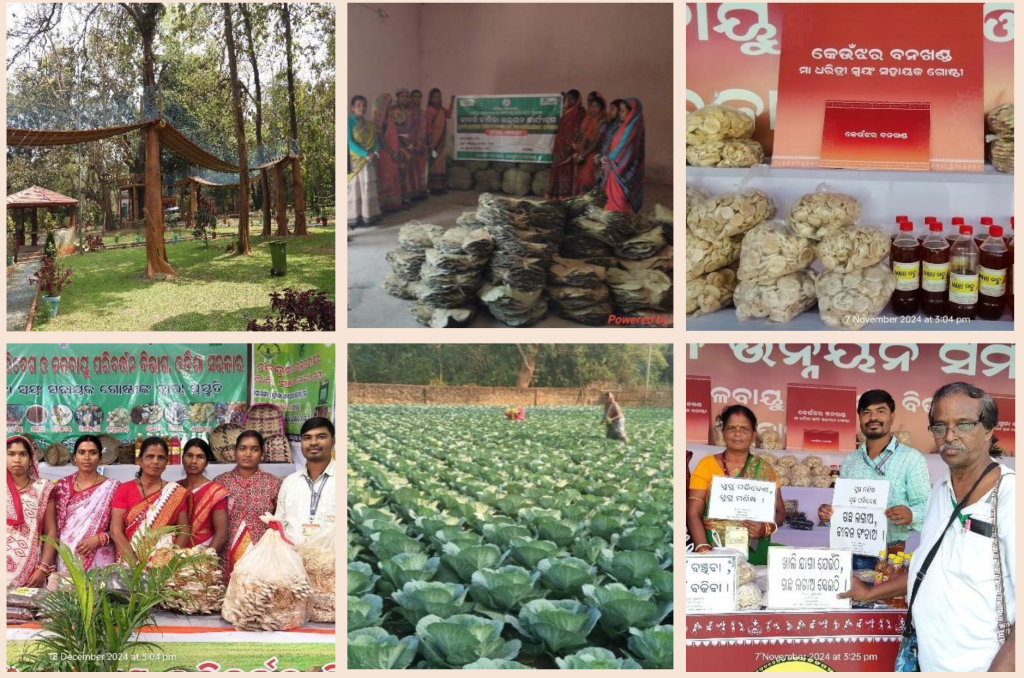
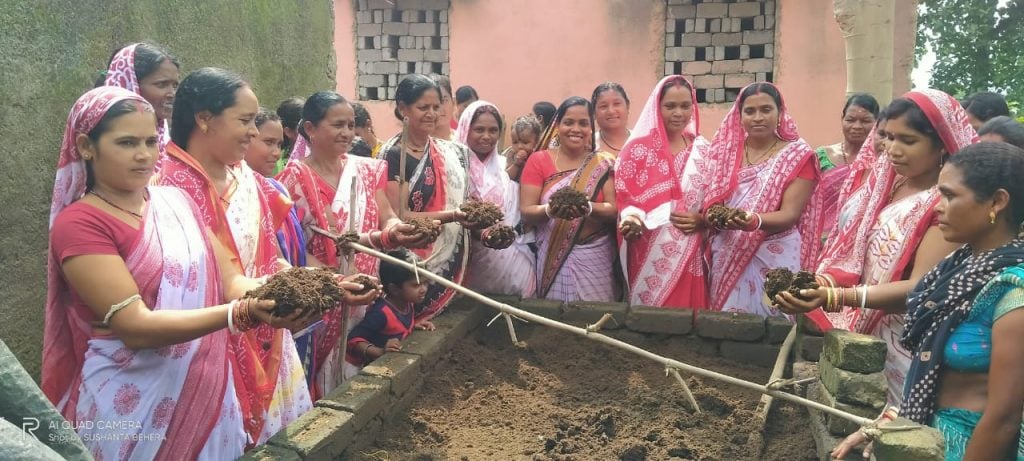
One of the flagship initiatives has been the Vermi-Village programme, launched in 2022 with a particular focus on tribal women and marginal farmers.
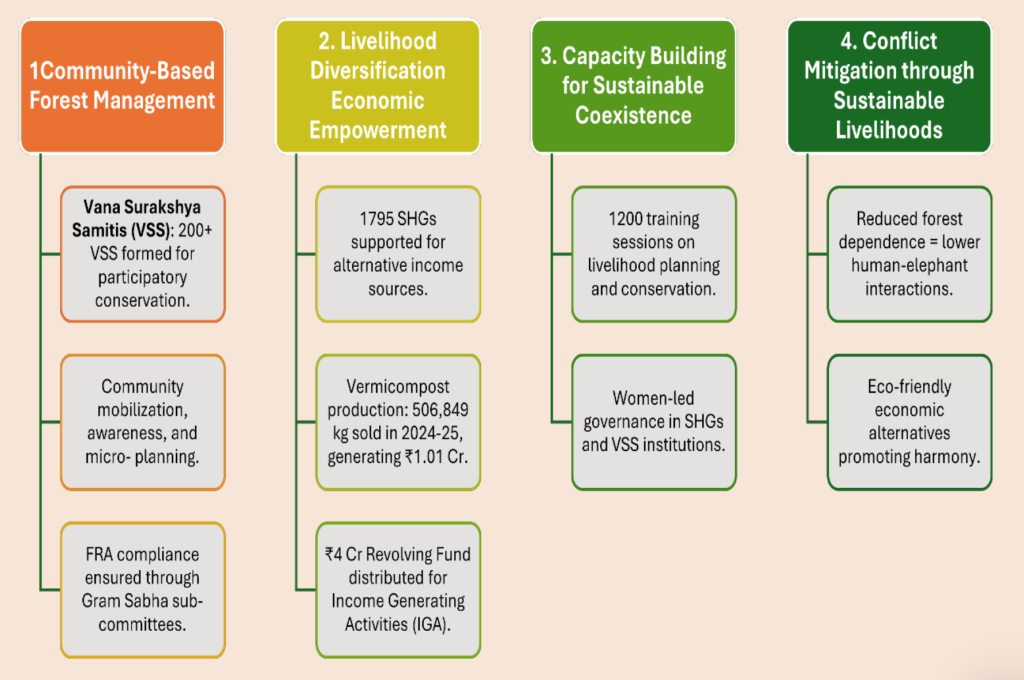
The initiative expanded across 46 Van Surakshya Samitis (VSSs) and 263 Self-Help Groups, involving nearly 1,700 households and more than 8,500 people.
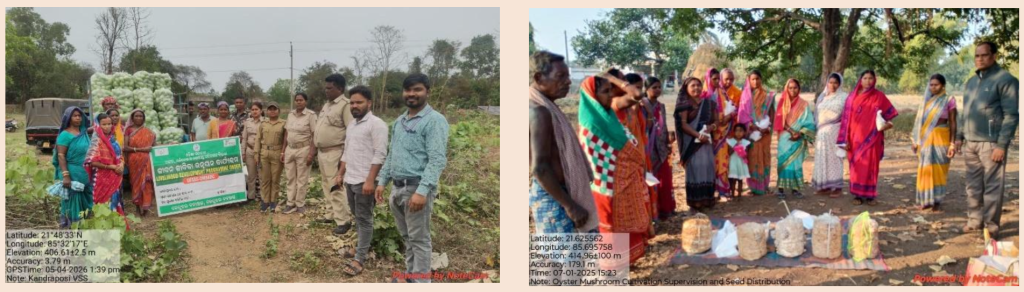
Under the programme, communities produce organic vermicompost which is purchased through a guaranteed buy-back mechanism by the Forest Division. Between 2022 and 2026, around 1,097 tonnes of vermicompost were produced and sold, generating approximately ₹2.2 crore in revenue.
Women participating in the programme have earned around ₹40,000–₹50,000 annually as supplementary income.
Dhamdhere described Vermi-Village as a unique and successful model that continues to expand.
The initiative has also helped reduce dependence on chemical fertilisers, with vermicompost being adopted in more than 120 villages.
The significance of the programme goes beyond income. By creating an economic activity within villages, it provides an alternative to extracting resources from forests.
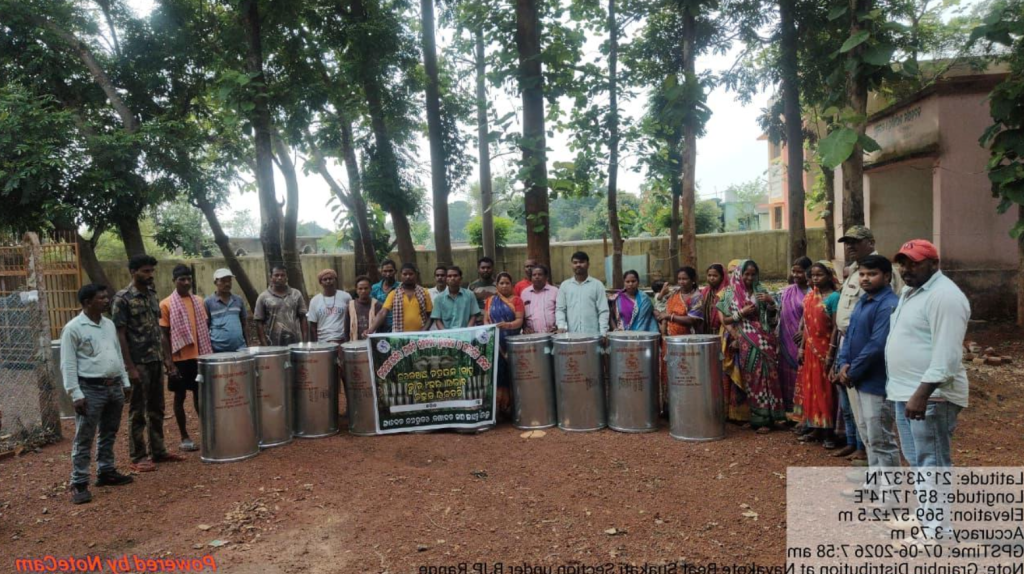
Atei Jungle Safari: When Tourism Benefits the Community
The same philosophy was applied to ecotourism through the Atei Jungle Safari, launched in January 2025 in the Atei Reserve Forest of Ghatagaon Range.
Instead of allowing tourism benefits to remain concentrated outside the local area, the Forest Division created a community-operated model involving 10 VSSs and more than 600 trained local members.
Three local safari vehicles were deployed, and the initiative attracted around 3,900 visitors by mid-2026, generating approximately ₹7.5 lakh in local revenue.
The model created employment where previously there were few opportunities.
Dhamdhere explained that families in these fringe villages could otherwise have annual incomes of around ₹50,000–₹55,000. Through such activities, their employment opportunities and earnings have increased.
“The tourists who used to come to the temple, they came here,” he said, explaining how the initiative tapped an existing visitor base and converted it into an opportunity for the local community.
The conservation impact has been equally important. As local people began benefiting directly from the forest and tourism, their incentive to protect the area increased.
According to the division, forest fires in the area have declined by around 50–60 per cent over the last three years.
“Why did it decrease? Because all these people joined us. We kept getting information about the fire. So indirectly, the forest conservation happened,” IFS Dhamdhere said.
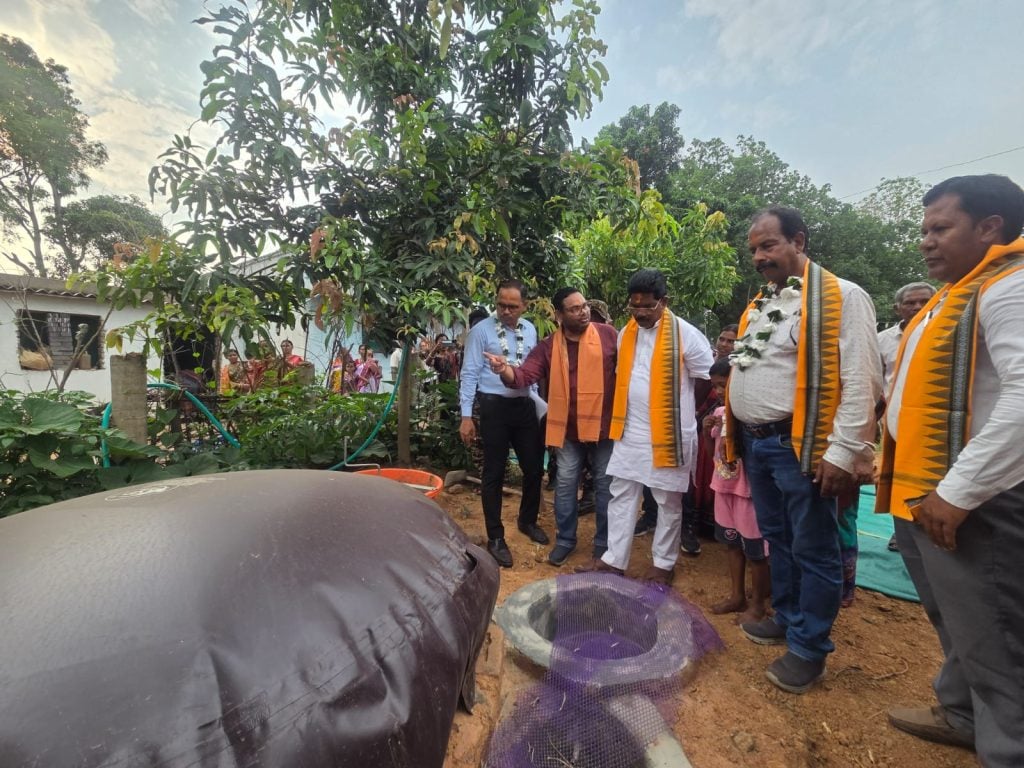
Red Ants for Pangolins: An Unusual Conservation Partnership
Perhaps one of the most innovative interventions is the community-based supply of red ants, locally known as Kai, for pangolin conservation.
From October 2023 to April 2026, members of a VSS in BJP Range were formally linked with the Nandankanan Pangolin Breeding Centre, supplying fresh red ants as feed.
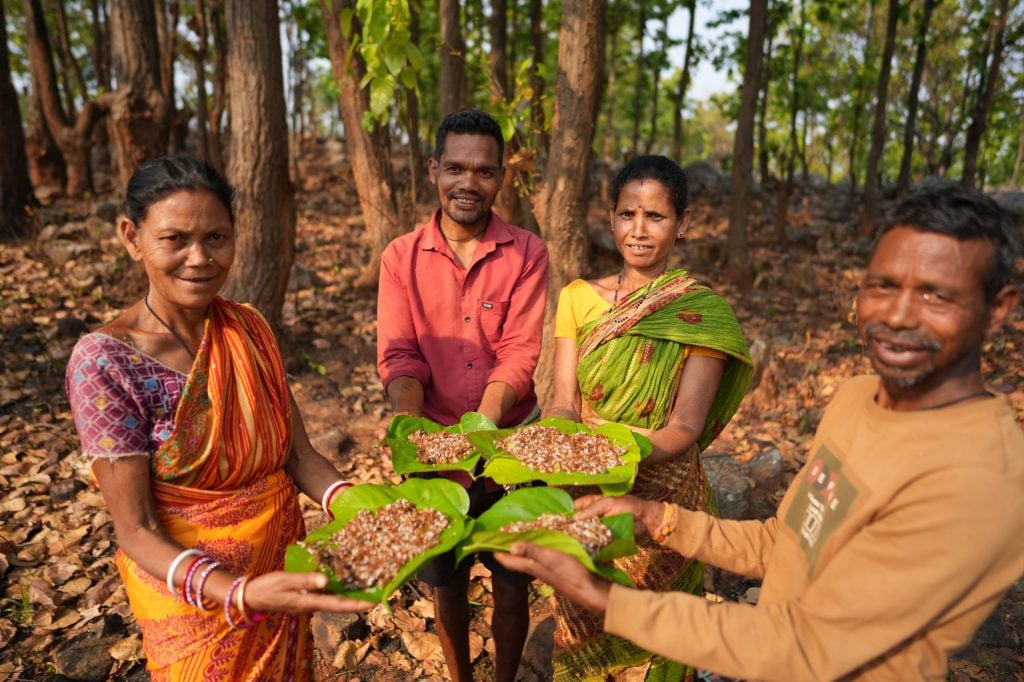
The community supplied approximately 3,518.7 kg of red ants, generating around ₹12.31 lakh in income for indigenous families during the lean season.
The initiative created a rare convergence between livelihood generation and ex-situ wildlife conservation. A resource traditionally collected from the forest was converted into a regulated livelihood opportunity while simultaneously supporting pangolin breeding efforts.
Clean Energy: Reducing Pressure on Forests
Community welfare has also been linked with clean energy.
Under the CAMPA Annual Plan of Operations, 95 prefabricated PVC balloon biogas digesters were installed across seven VSSs in Champua and Barbil ranges at a cost of around ₹38 lakh.
The units provide methane as an alternative to firewood and LPG while producing nutrient-rich bio-slurry that can be used as organic fertiliser.
The intervention addresses several concerns simultaneously—reducing pressure on forests, cutting emissions and improving household-level energy access.
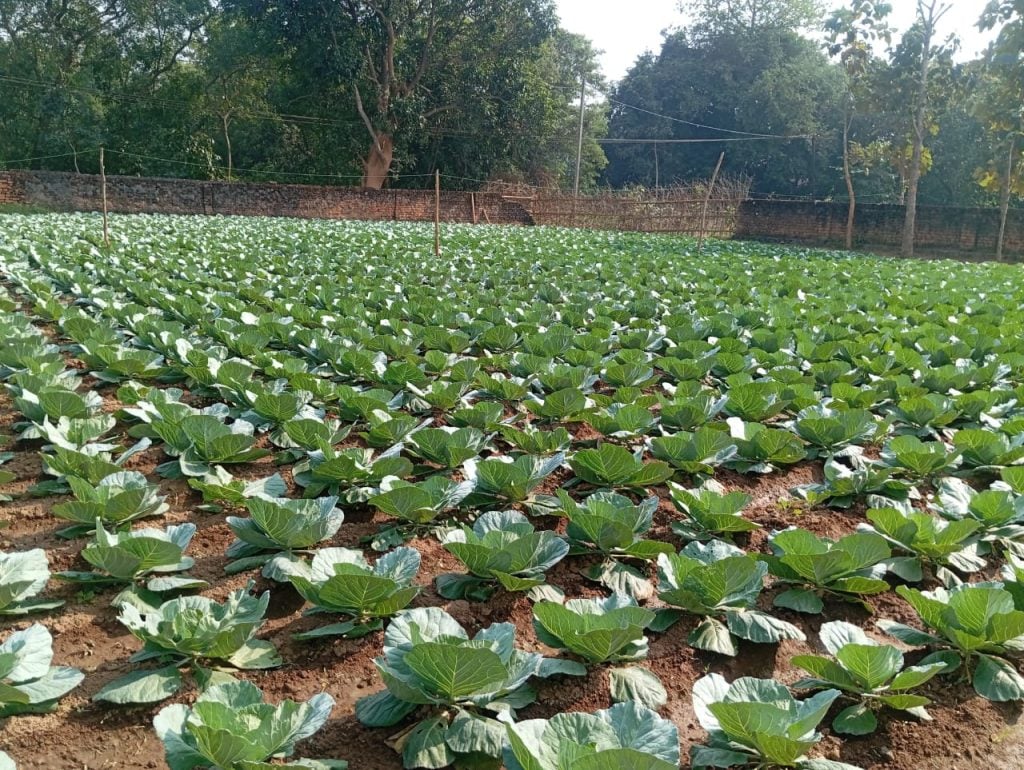
Strengthening Traditional Institutions and Youth Participation
Dhamdhere’s model does not rely only on new technology or government schemes. It also draws upon traditional tribal governance systems.
More than 200 VSSs and 1,795 SHGs have been strengthened under OFSDS-OMBADC interventions, with a revolving fund of around ₹4 crore supporting income-generating activities.
Traditional tribal leaders, including Pidhapatis and Pidha Sardars, have been brought into the governance framework, recognising the value of traditional ecological knowledge.
Young people, meanwhile, have been mobilised through the “Hati Lover” digital monitoring network, enabling them to participate in elephant monitoring and conflict prevention.
Technology at the Frontline of Human-Elephant Conflict
With around 150 elephants residing in the district throughout the year, human-elephant conflict remains a major challenge.
The Forest Division has therefore combined community participation with technology and physical infrastructure.
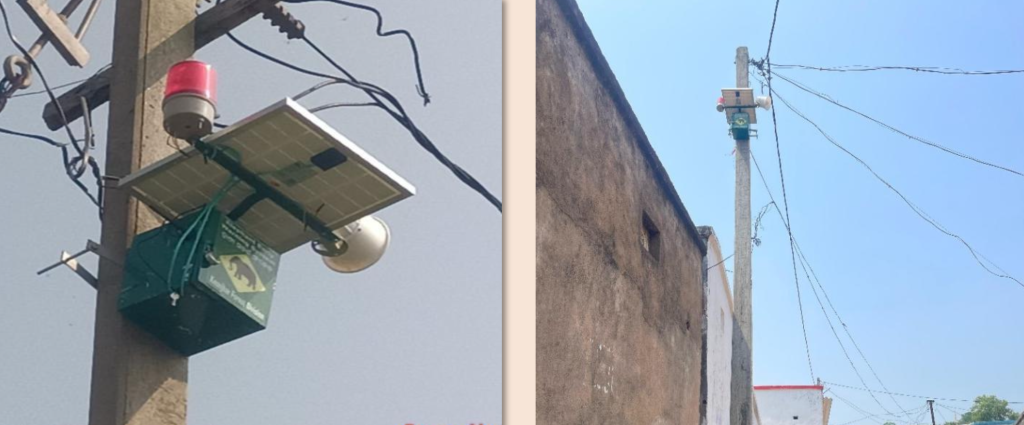
It has deployed 125 GSM SIM-based sirens at 24 high-conflict locations, with an alert range of approximately 2–3 km. The division has also installed 1,002 solar street lights, distributed 1,340 inverter bulbs, provided 3,720 wildlife-proof metal grain bins and excavated 81.29 km of elephant-proof trenches since 2021.
These interventions are designed not merely to respond to conflict after it occurs but to improve preparedness and reduce the likelihood of encounters.
Connecting Welfare with Conservation
The Forest Division has also used convergence between departments to strengthen the economic resilience of forest-fringe communities.
Through 25 interdepartmental camps covering 202 Gram Panchayats, the division facilitated registration of 14,594 workers under welfare schemes—6,201 with the Building and Other Construction Workers Welfare Board and 8,393 with the Unorganised Workers Social Security Board.
Another 666 young people were enrolled in skill-development programmes.
Such interventions recognise that conservation cannot be separated from the broader socio-economic condition of communities.
NGOs and the Last-Mile Conservation Network
To strengthen awareness and human-elephant conflict mitigation, the division has partnered with 11 NGOs across 143 elephant-corridor hotspot villages.
A network comprising 26 Development Officers and two Team Leaders supports Participatory Rural Appraisals, Elephant Response Groups, awareness campaigns, eco-clubs, street theatre and local folklore performances such as Pala.
The objective is to take conservation messaging beyond formal government meetings and embed it within local social institutions and community practices.
A Model Built on Trust and Ownership
The most significant aspect of Dhamdhere’s work in Keonjhar is perhaps the attempt to change the relationship between communities and the Forest Department.
Rather than viewing forest-fringe communities merely as beneficiaries—or potential threats to conservation—the initiatives position them as stakeholders with an economic and social interest in protecting forests and wildlife.
From women producing vermicompost to villagers operating safari vehicles, indigenous families collecting red ants for pangolins, youth monitoring elephants and VSS members responding to forest fires, the model creates multiple points of community ownership.
The experience of Keonjhar demonstrates that conservation becomes considerably stronger when it produces visible benefits for the people living alongside forests.
As Dhamdhere’s interventions show, the path to protecting wildlife does not always begin inside the forest. Sometimes, it begins by creating a better livelihood for the family living at its edge.
Read Also: When AI Entered the Forest: How Tadoba Turned Technology into a Shield for People and Wildlife