As India intensifies its efforts to fulfil its climate commitments under the Paris Agreement and move towards a sustainable future, innovative environmental governance is no longer confined to policy documents – it is taking shape on the ground. Across the country, government institutions are increasingly becoming laboratories of climate action, proving that determined leadership and scientific planning can transform even the most ambitious environmental goals into reality. One such remarkable example has emerged from Uttar Pradesh‘s Bareilly Cantonment, which has achieved what no other cantonment in the country has accomplished before.
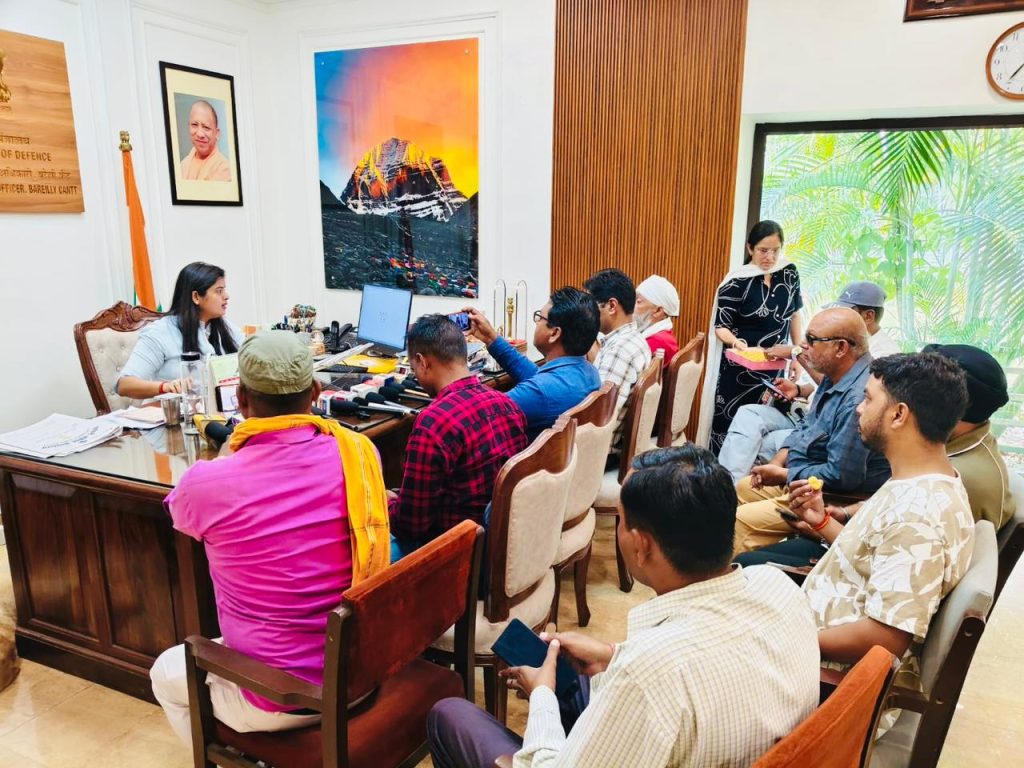
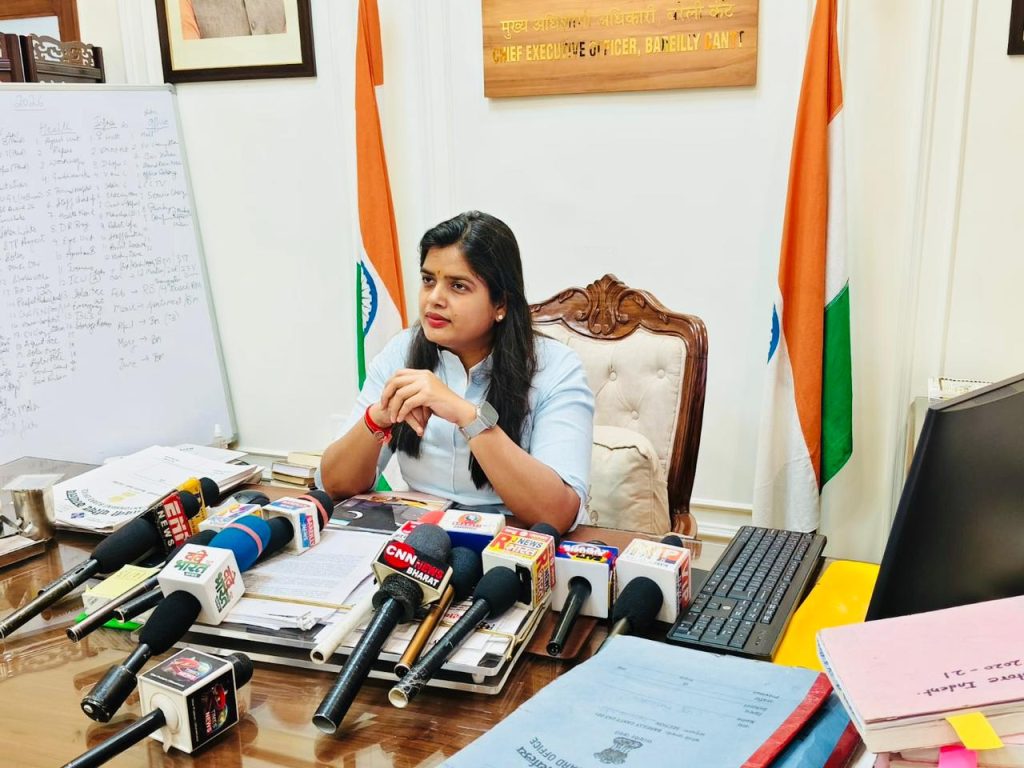
Under the leadership of Dr. Tanu Jain, a 2024 batch Indian Defence Estates Service (IDES) officer and Chief Executive Officer of the Cantonment Board Bareilly, the cantonment has become India’s first Carbon-Negative Cantonment, absorbing significantly more carbon than it emits.
What makes this achievement even more significant is that Bareilly has not merely met the target of carbon neutrality envisioned for 2030 – it has surpassed it nearly four years ahead of schedule by becoming carbon negative. The accomplishment is the outcome of a series of carefully planned initiatives ranging from renewable energy adoption and large-scale afforestation to water body restoration, energy-efficient infrastructure and cleaner fuel promotion.
To understand the journey behind this historic milestone, Indian Masterminds interacted with Dr. Jain, who explained how a vision backed by scientific planning and sustained implementation transformed the cantonment into a model for climate-resilient urban administration.
A Vision That Went Beyond Carbon Neutrality
The journey began with an ambitious vision. During Manthan-2025, Defence Minister Rajnath Singh had envisioned that Bareilly Cantonment would achieve carbon neutrality by 2030 through sustainable environmental management, renewable energy initiatives and the strengthening of green infrastructure.
Instead of waiting until 2030, the Cantonment Board under Dr. Jain decided to accelerate its efforts.
Today, Bareilly Cantonment has not only achieved carbon neutrality but has gone a step further by becoming India’s first Carbon-Negative Cantonment, setting a national benchmark in sustainable urban governance.
Read Also: The Protest Ends, But the Real Reform Must Begin
Explaining what carbon negative actually means, she clarified that the cantonment has not eliminated carbon emissions altogether. Rather, it absorbs far more carbon than it emits.
“People often think carbon negative means there are no emissions. That is not the case. It means the cantonment functions as a carbon sink and absorbs substantially more carbon than it emits. That is what makes us carbon negative,” she told Indian Masterminds.
Creating a Carbon Sink Through Scientific Planning
According to Dr. Jain, becoming carbon negative required meeting rigorous scientific standards rather than simply planting more trees. “Our entire station now acts like a carbon sink,” she explained.
To achieve this, the Cantonment Board implemented multiple environmental interventions simultaneously instead of relying on a single initiative.
These included:
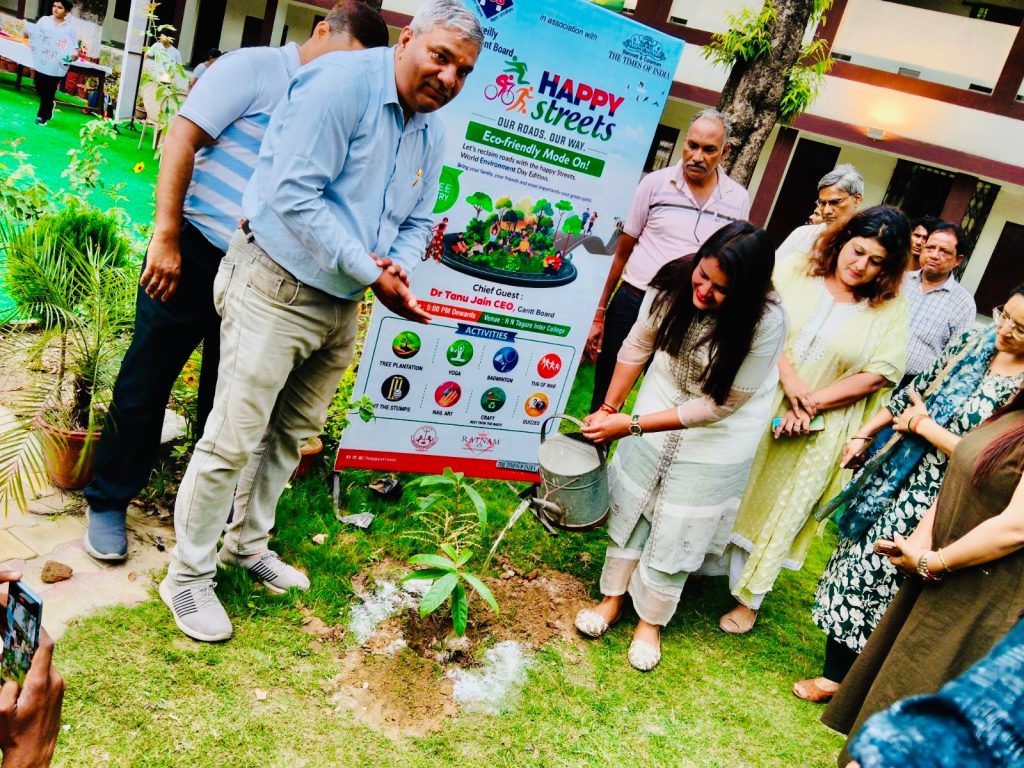
- Installation of rooftop solar power systems across Cantonment Board establishments.
- Transition towards 100 per cent solar-powered infrastructure wherever feasible.
- Adoption of energy-efficient systems.
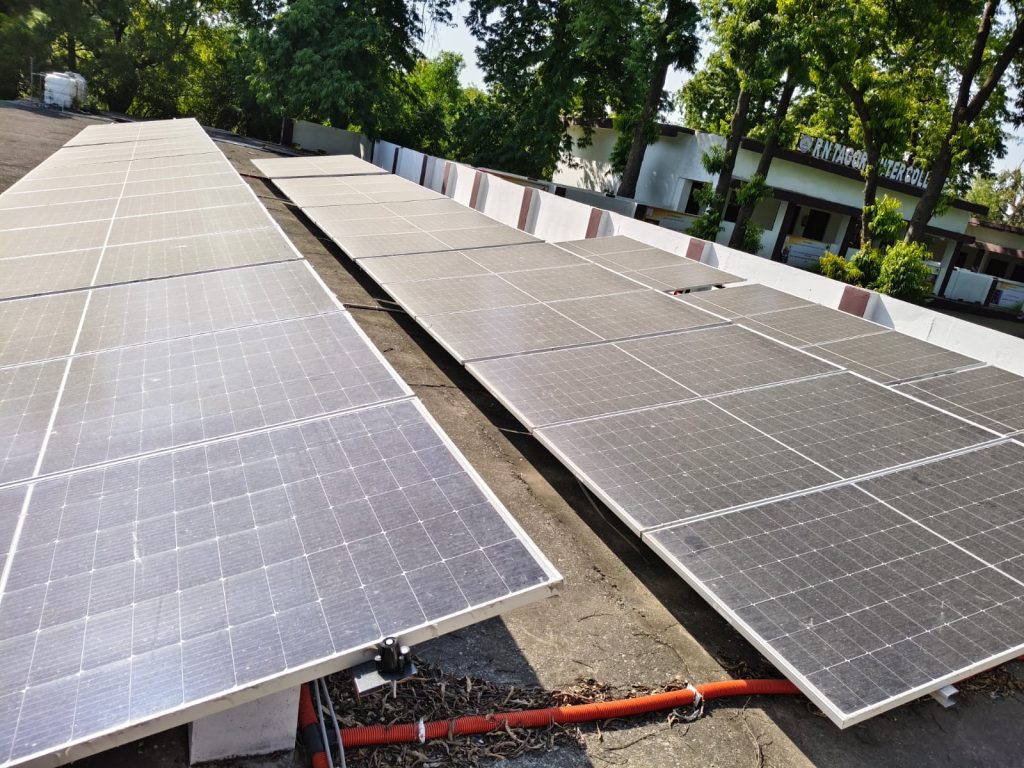
- Large-scale plantation drives.
- Protection and conservation of mature trees.
- Cleaning and rejuvenation of water bodies.
- Expansion of green cover.
- Promotion of renewable energy.
- Initiation of wind energy projects to further strengthen clean energy generation.
“The plantations are important, but they alone cannot make a place carbon negative. Along with massive plantation drives, we cleaned our water bodies, protected existing trees, shifted towards solar energy and improved energy efficiency across the cantonment,” Dr. Jain said.
Transforming Energy Consumption
One of the most significant aspects of Bareilly Cantonment’s transformation was reducing emissions from everyday energy consumption.
The Cantonment Board systematically replaced conventional systems with energy-efficient alternatives.
The initiatives included:
- Installation of solar power systems.
- Solar LED street lighting.
- Replacement of conventional lighting with LED infrastructure.
- Conversion to energy-efficient BLDC fans.
- Replacement of conventional air conditioners with five-star rated energy-efficient ACs.
These seemingly small interventions collectively contributed significantly towards lowering the cantonment’s annual carbon footprint.
“We worked extensively on energy efficiency. We installed solar lighting, replaced conventional fans with BLDC fans, introduced five-star rated air conditioners and adopted energy-efficient systems throughout the cantonment. These measures collectively helped us achieve this certification,” Dr. Jain explained.
Cleaner Fuels and Sustainable Living
The environmental transformation was not limited to government infrastructure. The Cantonment Board also encouraged residents to shift towards cleaner sources of energy.
Electric vehicles and CNG-based transportation received encouragement, while awareness campaigns were conducted in partnership with Central U.P. Gas Limited (CUGL) to promote the use of Piped Natural Gas (PNG) in households.
According to Dr. Jain, behavioural change among residents became an equally important pillar of the sustainability mission.
“We promoted cleaner fuels like EVs and CNG. Along with CUGL, we encouraged people to adopt PNG in their homes. These continuous efforts together contribute towards reducing emissions,” she said.
Science Validates the Achievement
Unlike symbolic environmental campaigns, Bareilly Cantonment’s achievement is backed by detailed scientific assessment.
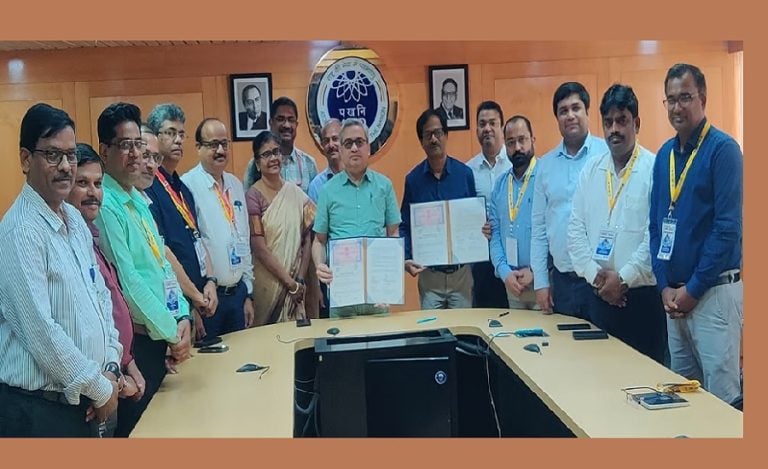
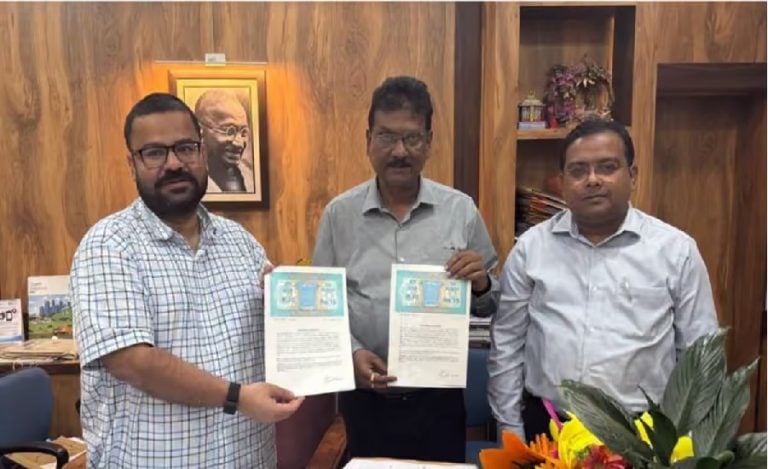
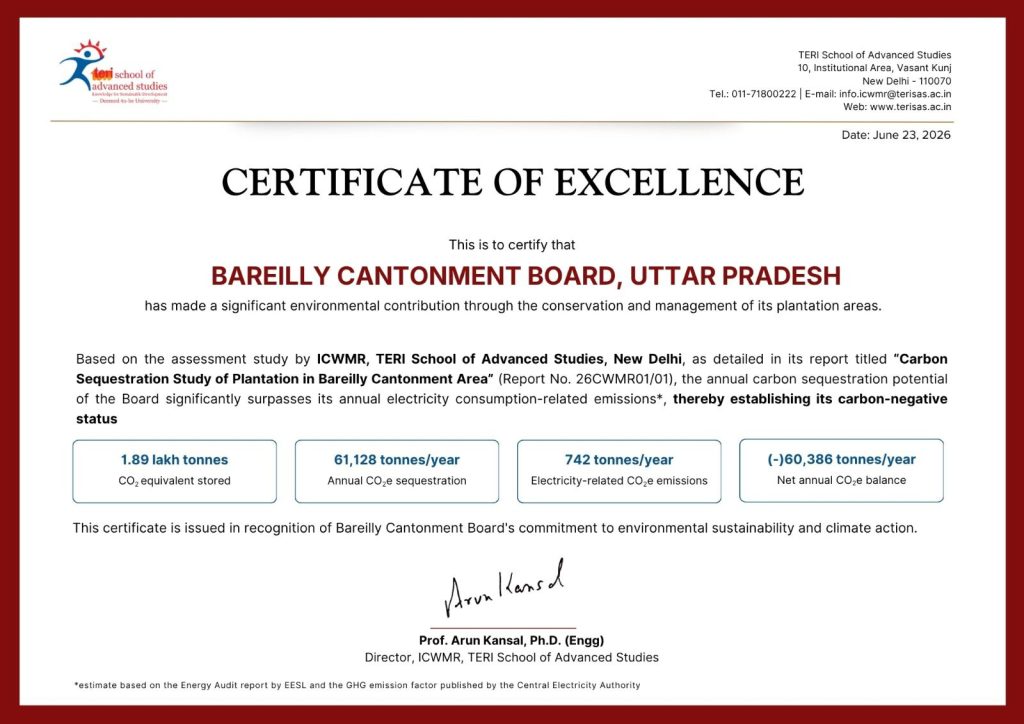
A comprehensive study titled “Carbon Sequestration Study of Plantation in Bareilly Cantonment Area” was carried out by the TERI School of Advanced Studies (TERI SAS), New Delhi, to evaluate the cantonment’s plantation-based carbon sequestration potential and overall carbon balance.
The findings established that:
- Plantation areas within Bareilly Cantonment store approximately 1.89 lakh tonnes of CO₂ equivalent.
- The annual carbon sequestration potential is approximately 61,128 tonnes of CO₂ equivalent every year.
- The cantonment records a net annual carbon balance of (-) 60,386 tonnes of CO₂ equivalent, demonstrating that it absorbs substantially more carbon than it emits.
Based on these scientific findings, TERI officially declared Bareilly Cantonment as a Carbon-Negative Cantonment.
The certification has also been recognised by TERI SAS, the Indian Pollution Control Association (IPCA) and associated scientific institutions evaluating environmental sustainability.
“The survey was conducted scientifically and after evaluating all parameters, the final results confirmed that Bareilly Cantonment is carbon negative,” Dr. Jain said.
Achieving the Goal Four Years Ahead of Schedule
What makes the accomplishment particularly noteworthy is its timing.
The original vision placed before the Cantonment Board was to achieve carbon neutrality by the year 2030.
However, sustained implementation over the past year, combined with continuous environmental initiatives already underway, enabled Bareilly Cantonment to exceed the target well before schedule.
“This has been a continuous process. Over the last year especially, we adopted multiple energy-efficient practices across the cantonment. The scientific survey evaluated these efforts and finally declared us carbon negative,” Dr. Jain explained.
The achievement reflects years of consistent planning rather than a one-time campaign.
Impact Beyond the Cantonment
For Dr. Jain, the biggest achievement is not merely a certification but the visible improvement in the local environment.
“The biggest impact is that people have clean air to breathe. The cantonment has become like the lungs of the city. Whenever people enter this area, they immediately experience cleaner and fresher air,” she said.
The extensive green cover, restored ecological balance and reduced emissions have collectively improved environmental quality within the cantonment while also benefiting the surrounding urban ecosystem.
The cantonment today functions as a green buffer for Bareilly city, contributing significantly to improved air quality.
Environmental Benefits Can Also Create Economic Value
The achievement also carries economic implications. According to Dr. Jain, carbon-negative ecosystems have the potential to generate carbon credits that can eventually be monetised.
“We are also getting carbon credits. By monetising these carbon credits, funds can be generated for the government exchequer while simultaneously protecting the environment,” she explained.
This creates an important example of how environmental sustainability and economic value can go hand in hand.
Supporting India’s Climate Commitments
Dr. Jain believes the initiative is closely aligned with India’s international climate commitments.
She pointed out that reducing greenhouse gas emissions remains one of the important goals under the Paris Agreement and the COP commitments.
“Our efforts are aligned with India’s larger climate goals. Every step towards cleaner energy, reduced emissions and greater carbon sequestration contributes towards fulfilling our national commitments under international climate agreements,” she said.
The combination of renewable energy, cleaner transportation, enhanced green cover and sustainable infrastructure demonstrates how local governance can contribute meaningfully to national climate objectives.
A Model for Urban India
The scientific assessment by TERI has gone beyond recognising Bareilly Cantonment’s achievement.
The institute has observed that the environmental management practices adopted in Bareilly can serve as a replicable model for other cantonments and urban local bodies across India.
This is perhaps the most enduring aspect of the initiative.
Rather than remaining an isolated success story, Bareilly’s experience offers a practical roadmap for cities seeking to reduce emissions while improving the quality of life for residents.
Reflecting on the achievement, Dr. Jain credited the success to collective efforts rather than individual leadership.
“This recognition belongs to everyone – the Cantonment Board, defence authorities, residents and every stakeholder who supported the mission. We will continue strengthening renewable energy initiatives and environmental stewardship so that Bareilly remains a model of sustainable development for the country.”
The Road Ahead
Bareilly Cantonment’s declaration as India’s first Carbon-Negative Cantonment marks a watershed moment in India’s journey towards sustainable urban development. It demonstrates that with visionary leadership, scientific planning and consistent implementation, ambitious environmental goals can be achieved ahead of schedule.
From turning government buildings into renewable energy hubs and replacing conventional infrastructure with energy-efficient alternatives to protecting green spaces, restoring water bodies and encouraging citizens to embrace cleaner fuels, the transformation has been comprehensive rather than cosmetic.
As India continues its march towards a greener future, Bareilly Cantonment now stands not only as a symbol of environmental excellence but also as a living blueprint for climate-resilient governance – proving that sustainable development is not merely an aspiration but an achievable reality.