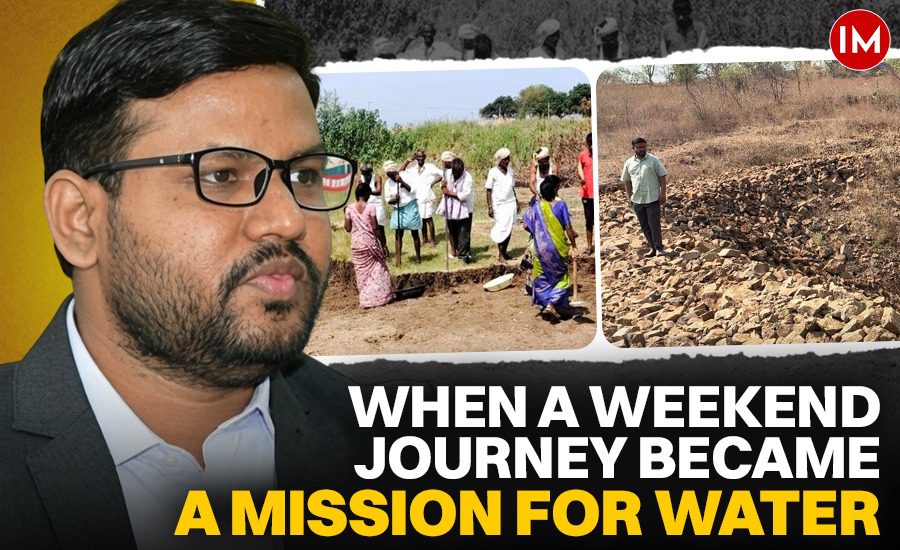
Every Friday evening, while most urban professionals prepared for a break from work, 2014 batch IRS officer Dr. P. Sudhakar Naik boarded a sleeper bus from Mumbai with a very different plan.
His destination was not a holiday retreat or a family gathering. It was Narayankhed, one of Telangana’s most drought-prone regions, where farmers had spent years battling water scarcity, failing borewells, and uncertain harvests.
By Monday morning, he would be back at his desk as Joint Commissioner in the Income Tax Department. But for seven consecutive weekends, the IRS officer traded office files for rocky farmlands, construction sites, and conversations with villagers.
Yet, as Dr. Naik himself insists, this is not merely his story.
It is equally the story of environmentalist Paladugu Gnaneshwar, local villagers, MGNREGA workers, and a community that decided to stop watching rainwater disappear and instead make every drop count. In an exclusive conversation with Indian Masterminds, he shared details about the same.
Also read: An IRS Officer’s Weekend Mission That Changed Gongloor
A CONVERSATION THAT SPARKED AN IDEA
The journey began when Paladugu Gnaneshwar, a native of Narayankhed and a passionate environmentalist, shared the realities of the region with Dr. Naik.
The area is largely rain-fed. Water sources are scarce. The terrain is rocky. Farmers often drill borewells without success, and even functioning borewells struggle to survive the summer months.
According to Gnaneshwar, the challenge was clear: if rainwater could be captured and allowed to recharge the ground instead of flowing away, the entire local water cycle could change.
Dr. Naik saw an opportunity to create something practical: a model that villages could replicate without depending on expensive infrastructure or large government budgets.
“We wanted to create a pilot model that any village could adopt. If rainwater is conserved, wells and borewells get recharged, and farming becomes more sustainable,” Dr. Naik says.
BUILDING A WATER SYSTEM INSPIRED BY NATURE
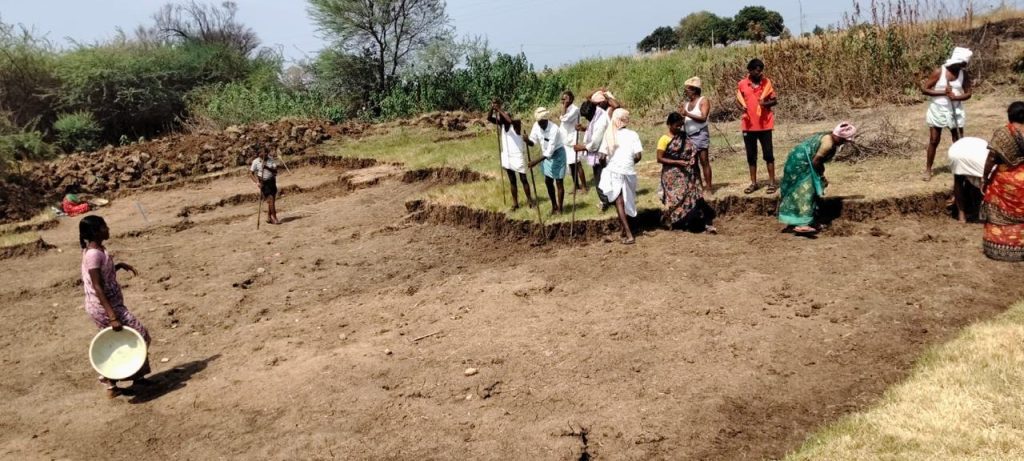
What emerged was a simple yet carefully designed water conservation system across villages such as Peerla Thanda, Muktapoor, and Pusalpad.
The idea was straightforward: prevent rainwater from escaping the catchment area and allow it to recharge the soil step by step.
The model consists of:
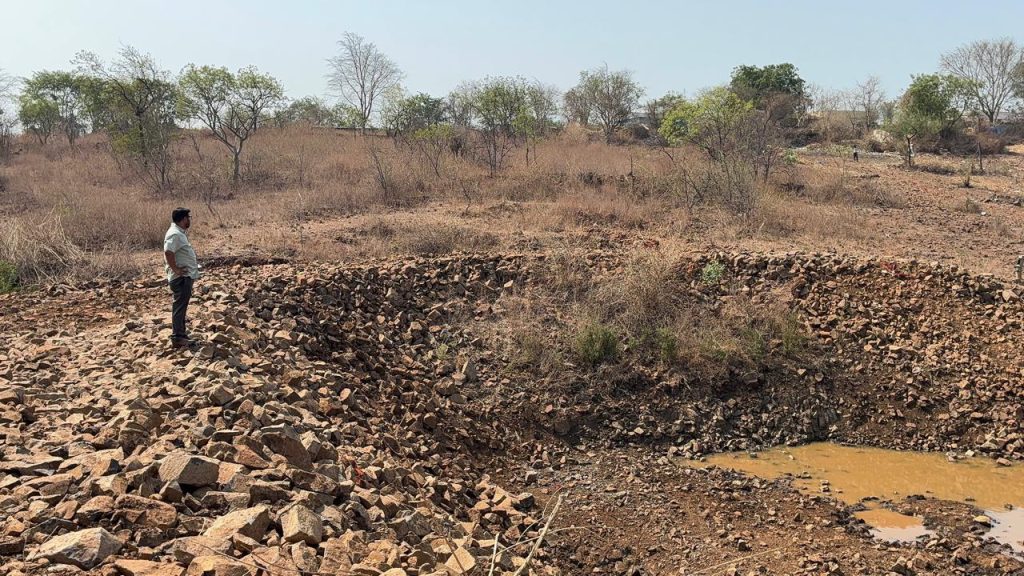
- Two large community soak pits
- Overflow channels connecting the pits
- A larger community pond or lake
- Farm ponds within agricultural fields
- Stone bunds that slow down water flow and encourage percolation
During rainfall, water first enters the community soak pits. Once one pit reaches capacity, excess water moves to the next. Any further overflow eventually reaches a larger pond.
Instead of rushing away, the rainwater remains within the landscape, gradually seeping underground and replenishing groundwater reserves.
Gnaneshwar explains that the system was designed to serve multiple villages at once by capturing water from a broader catchment area. The objective was not merely storing water but ensuring that groundwater beneath farms and settlements receives a sustained recharge.
NO CEMENT. NO STEEL. JUST EARTH AND STONE
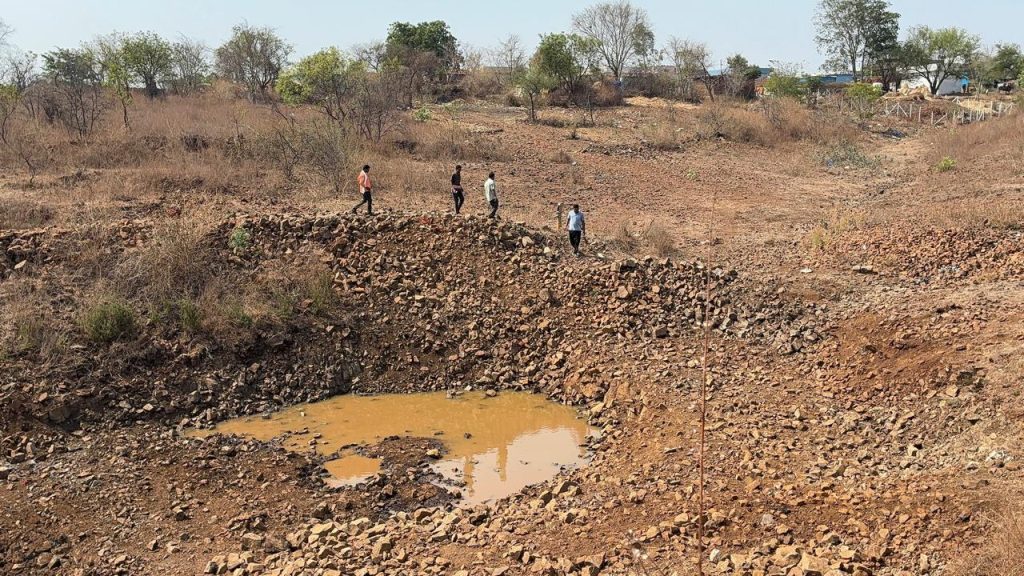
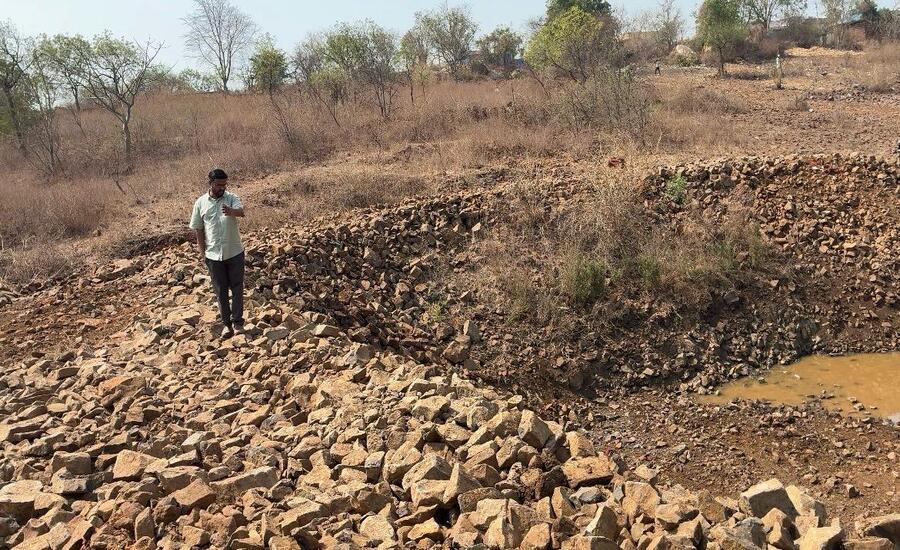
One of the most striking aspects of the project is its simplicity. Rather than relying on expensive construction materials, the structures were built using locally available stone and earth.
Stone bunds were placed strategically to slow the movement of water. As water passes through them, it percolates into the soil before moving further downstream.
The approach follows traditional water conservation practices that have existed for generations but are often overlooked in modern development projects.
“We have not used cement or steel. It is completely built with earth and rock available in the area. The entire model is very economical,” says Dr. Gnaneshwar.
The cost of the structures is estimated at around ₹2 lakh, making the model affordable for village panchayats and community groups.
WINNING TRUST BEFORE BUILDING STRUCTURES
The biggest challenge was not engineering. It was convincing people.
Many villagers initially struggled to see the immediate benefit of the project. Groundwater recharge is a long-term solution, and unlike roads or buildings, its impact is not visible overnight.
According to Gnaneshwar, considerable effort went into explaining how conserved rainwater could help keep borewells functional even during harsh summers.
“People often look for immediate benefits. It takes time to explain that if groundwater levels rise, their borewells will survive longer and farming becomes more secure,” Dr. Naik says.
Gradually, villagers came on board.
The presence of a senior government officer travelling hundreds of kilometres every weekend also created confidence among residents.
As Gnaneshwar recalls, many people felt motivated simply because someone in such a position was willing to stand beside them in the field and work with them.
SEVEN WEEKENDS, HUNDREDS OF KILOMETRES, ONE SHARED GOAL
The logistics alone were remarkable.
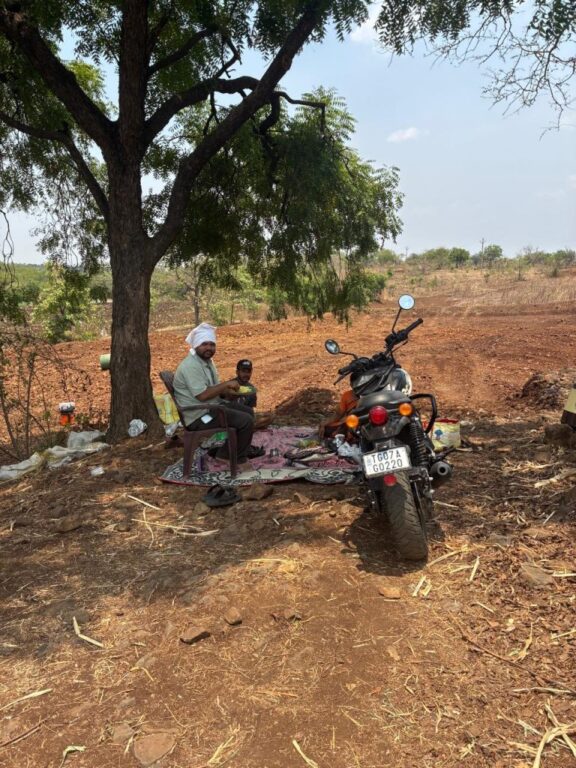
Every Friday evening, Dr. Naik travelled from Mumbai by bus. By Saturday morning, he would reach Sangareddy and continue another 100 kilometres to the project sites.
For the next two days, he worked directly with villagers, labourers, and local administrators, guiding construction activities and reviewing progress.
On Sunday night, he boarded another bus back to Mumbai, returning in time for office duties the next morning.
The effort was supported by NGOs, the Sangareddy district administration, and MGNREGA workers whose labour helped bring the project to life.
But Dr. Naik is quick to credit those working on the ground.
“Our village adoption work has inspired many youngsters, and Paladugu Gnaneshwar is one of the hidden heroes who came forward to work with us. With such young people on the ground, we are able to do much more by involving the administration and local communities,” he told Indian Masterminds.
A MODEL THAT COULD SPREAD ACROSS TELANGANA
The real success of the project will become visible after the monsoon, when groundwater levels, borewell performance, and water retention can be properly assessed.
But the larger vision already extends beyond these villages. The model has been intentionally designed to be low-cost, community-led, and easy to replicate.
Every panchayat receives funds. Every village has a catchment area. Every community can identify locations where rainwater can be captured instead of lost.
For Gnaneshwar, that is the most important lesson. This is not a project dependent on massive budgets or sophisticated technology. It is a reminder that local resources, local leadership, and community participation can create meaningful change.
As monsoon clouds gather over Narayankhed, the villagers are waiting to see how much water the new structures can hold.
But one thing is already clear: a journey that began with a conversation between an environmentalist and an IRS officer has created a model that could influence water conservation efforts far beyond these three villages.
Also read: How Dhuman Singh Kirmach Is Turning Haryana’s Floodwaters into Groundwater and Reviving a State’s Water Future