By Anshuman Sharma, IFS
In the forests of central India, tigers roam through dense jungles. In Gujarat, Asiatic lions rule the grasslands. High in the Himalayas, snow leopards move silently across snowy mountains. These magnificent predators are not just symbols of wilderness; they are guardians of entire ecosystems.
Today, however, big cats across the world face growing threats. Forests are shrinking, climate change is altering habitats, and illegal wildlife trade continues to endanger species. Recognising that no country can tackle these challenges alone, India has stepped forward with an ambitious vision—bringing nations together under the International Big Cat Alliance (IBCA).
Launched in 2023 during the celebration of 50 years of Project Tiger, the alliance aims to create a global platform for protecting some of the world’s most iconic animals. In many ways, it reflects India’s own remarkable conservation journey.
From National Success to Global Leadership
India’s conservation story is one of the most successful in the world.
Over the decades, the country has shown that wildlife can survive even in densely populated landscapes. India today hosts nearly 70 percent of the world’s wild tiger population and supports the largest leopard population globally. It has also achieved significant success in conserving Asiatic lions in Gujarat and protecting snow leopards through community-led efforts in the Himalayas.
The country has further expanded its conservation ambitions through Project Cheetah, one of the world’s most complex wildlife restoration programmes.
These achievements have given India valuable experience. Through IBCA, the country hopes to share this knowledge with the world and help other nations strengthen their conservation efforts.
Also Read – Failed Class 12, Failed BA First Year, Chose Dance, Then Cracked RAS Twice: The Story of Brijesh Parmar
Why Big Cats Matter
Conservation is often seen as protecting individual species. But the survival of big cats has much larger implications.
As apex predators, they help maintain ecological balance by regulating prey populations and preserving healthy ecosystems. Their presence indicates that forests, grasslands, mountains, wetlands, and river systems are functioning well.
Protecting big cats also helps safeguard biodiversity, water resources, climate resilience, and the livelihoods of millions of people who depend on healthy natural landscapes.
In short, saving big cats means saving ecosystems.
A Growing Global Challenge
Despite conservation successes, big cats continue to face serious threats.
Habitat fragmentation is breaking wildlife corridors and isolating populations. Climate change is altering ecosystems and reducing prey availability. Illegal wildlife trade networks operate across borders, while human-wildlife conflicts are increasing as people and animals compete for space.
Many countries that are home to big cats are developing nations with limited financial and technical resources for conservation. As a result, wildlife protection often struggles to compete with other development priorities.
These challenges cannot be solved by one country acting alone.
The Birth of the International Big Cat Alliance
The International Big Cat Alliance was created to address these global challenges through cooperation.
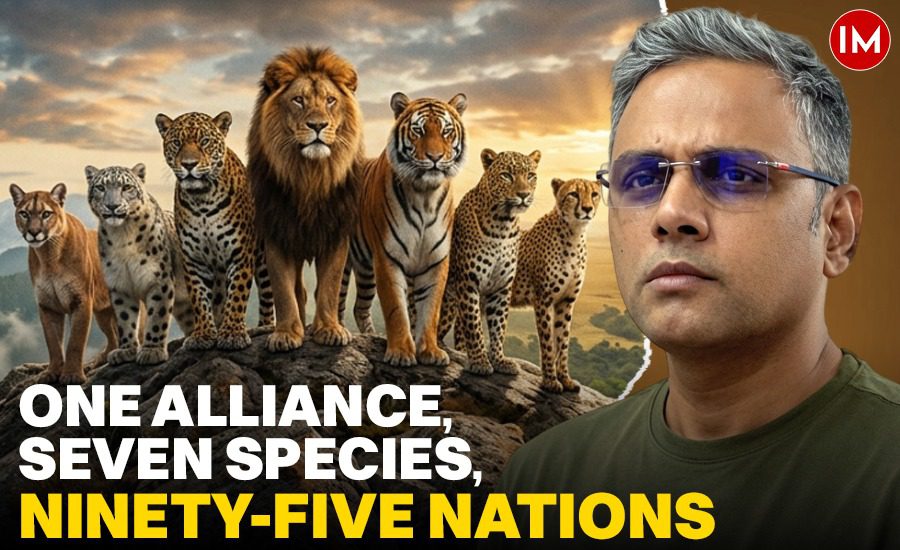
The alliance focuses on seven iconic species:
- Tiger
- Lion
- Leopard
- Snow Leopard
- Cheetah
- Jaguar
- Puma
Together, these species occupy landscapes across Asia, Africa, and the Americas.
The idea behind IBCA is simple: countries can achieve more when they work together. By sharing knowledge, technology, scientific expertise, and resources, nations can strengthen conservation efforts across borders.
The alliance marks a shift from isolated conservation projects to a coordinated global movement for protecting apex predators and the ecosystems they support.
Building Partnerships Across 95 Countries
The scale of IBCA is ambitious.
The alliance aims to engage all 95 big cat range countries around the world. It has already secured membership from 25 countries and observer participation from five others.
It is also partnering with major international organisations working in wildlife conservation and sustainable development, including the World Wide Fund for Nature, the United Nations Development Programme, the International Union for Conservation of Nature, and the Global Tiger Forum.
These partnerships help bring scientific expertise, funding opportunities, and policy support to countries working to protect wildlife.
Training the Next Generation of Conservation Leaders
One of IBCA’s most important goals is capacity building.
Successful conservation depends on trained frontline staff, strong institutions, scientific knowledge, and modern technology. Recognising this, the alliance has launched several international training programmes for wildlife managers, policymakers, and conservation practitioners.
Participants learn practical skills in:
- Anti-poaching operations
- Wildlife monitoring
- Habitat management
- Human-wildlife conflict mitigation
- Landscape governance
India’s protected areas have become living classrooms for conservation professionals from around the world.
Training programmes under the Indian Technical and Economic Cooperation (ITEC) initiative have been conducted in reserves such as Kaziranga Tiger Reserve, Bandipur Tiger Reserve, and Nagarahole Tiger Reserve.
These programmes allow participants to observe successful conservation models firsthand and take those lessons back to their own countries.
Conservation Beyond Animals
The vision behind IBCA extends far beyond protecting wildlife.
The alliance supports global goals related to biodiversity conservation, sustainable development, climate resilience, and ecosystem restoration. Its focus on knowledge exchange, community participation, technological cooperation, and resource mobilisation aligns closely with international biodiversity commitments.
Importantly, it recognises that conservation cannot succeed without people. Local communities play a critical role in protecting wildlife and managing landscapes. Their participation is central to the alliance’s approach.
A Global Future Led by Shared Responsibility
India’s conservation journey shows that wildlife protection and development can coexist. From recovering tiger populations to strengthening lion and snow leopard conservation, the country has demonstrated what sustained commitment can achieve.
With the International Big Cat Alliance, India is now taking that experience to the global stage.
The alliance is built on a powerful idea: that the future of big cats depends on collective action. By bringing countries together, sharing knowledge, and investing in conservation capacity, IBCA seeks to ensure that these majestic animals continue to thrive in the wild.
Because protecting big cats is ultimately about much more than saving a species. It is about preserving ecosystems, securing ecological stability, and creating a sustainable future for generations to come.
(About the Author : Mr. Anshuman Sharma is a Senior IFS ( Indian Forest Services) officer of 2008 batch and Gujarat cadre
Also Read – From Aravallis to Sundarbans: The Officers Fighting to Save India’s Most Fragile Ecosystems