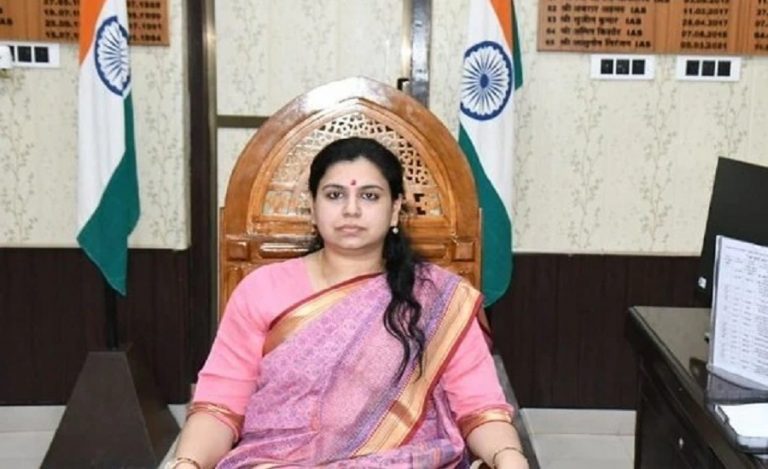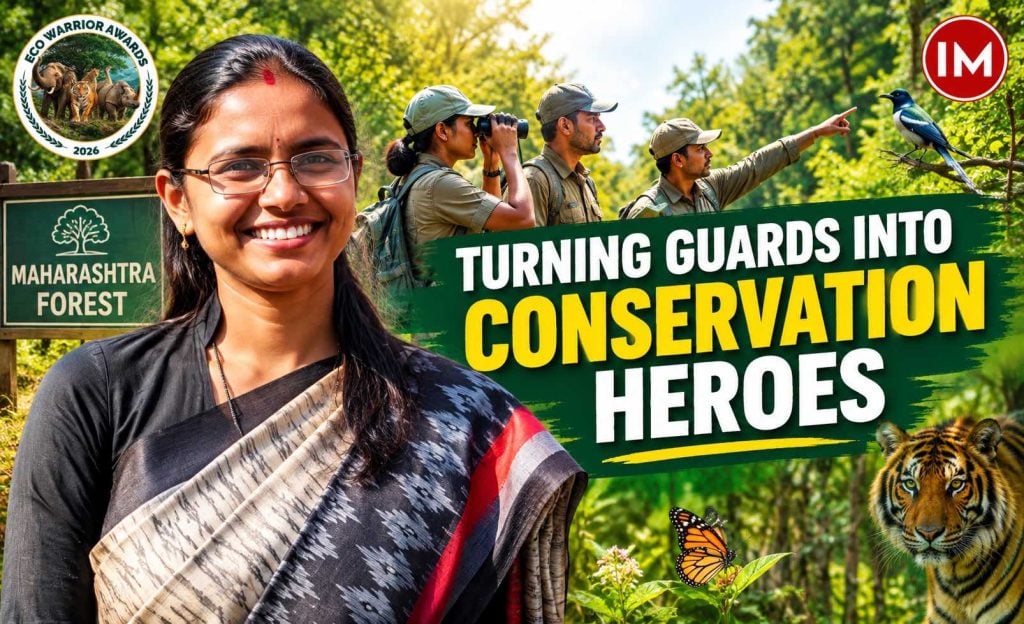
In the dense forests of Melghat, conservation is no longer limited to protecting trees and iconic wildlife. It is increasingly being driven by the people who know the forest most intimately – the frontline forest guards who patrol its trails, camp in its landscapes and encounter its smallest inhabitants every day. Recognising that these personnel could become repositories of ecological knowledge, IFS officer Divya Bharathi M. transformed capacity building into a powerful conservation tool.
Through focused training, expert-led workshops, field guides, cameras, binoculars, peer-learning groups and citizen science, she encouraged forest guards to look beyond routine patrolling and begin observing, documenting and understanding the lesser-known biodiversity around them. The results have been remarkable. More than 1,200 species and over 3,800 observations have been documented through the initiative, with one forest guard even recording a cicada that could potentially be a new species, with verification underway.
But for Ms Bharathi, the numbers tell only part of the story. The bigger achievement has been the change in attitude among the frontline staff. Guards who once saw their daily forest duties largely through the lens of protection and patrolling are now exploring, questioning and sharing their discoveries. In the process, they are becoming deeply motivated guardians of the ecosystem they protect.
Conservation Begins With Empowerment
An Indian Forest Service (IFS) officer of the 2016 batch of the Maharashtra cadre, Ms Bharathi is currently serving as Regional Manager, Forest Development Corporation of Maharashtra (FDCM), Chandrapur.
Her initiative in Melghat Tiger Reserve emerged from a simple but powerful realisation: physical resources alone cannot create effective forest protection. Forest departments already provide frontline personnel with equipment and facilities such as smart sticks, improved camping facilities, all-weather overalls and GPS trackers.
But Bharathi wanted to address another dimension – the intrinsic motivation of those working in the forest.
“The frontline staff of the forest department are the pillars of forest protection,” she explains to Indian Masterminds. “A well-traversed forest ensures solid conservation. But a key element of good forest management lies in having intrinsically motivated staff who are aware of their territory, starting from the smallest details.”
For her, passion for the job comes from involvement.
“A forester who is passionate about their work will be able to perform better. Passion for the job can come only when they are deeply involved. This involves understanding the environment they work in,” she says.
This thinking became the foundation of the initiative.
The ‘Understand, Like, Protect’ Approach
Bharathi’s conservation philosophy can be summed up in three simple words: Understand. Like. Protect.
The idea is that people are more likely to protect something when they understand it, and deeper understanding can eventually develop into genuine appreciation.
She therefore focused on a part of biodiversity that often remains invisible even within forests – the lesser-known taxa.
“A thriving ecosystem is the result of the delicate balance of its smallest inhabitants,” she says. “They are not only omnipresent but also a core part of the ecosystem value chain.”
Insects, spiders, butterflies, dragonflies, fungi and other small organisms play critical ecological roles. Yet they receive far less attention than large mammals and birds.
The initiative sought to change that perspective among forest staff.
How It Started: Turning Guards Into Observers
The first step was creating a culture of peer learning.
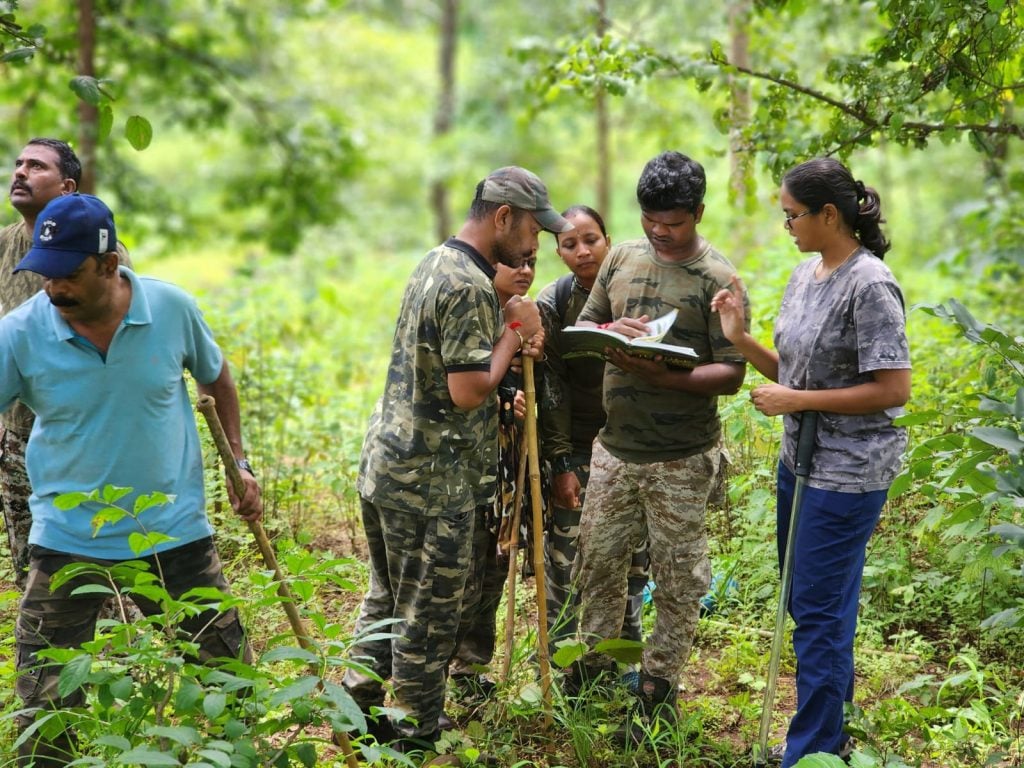
Focus groups were formed among forest personnel so that staff could share their observations and knowledge with one another. This was complemented by workshops and field sessions involving ecologists, botanists, entomologists and other experts.
Rather than restricting learning to classrooms, the programme connected scientific knowledge with the forest environment where guards actually worked.
The objective was not to turn every guard into a professional taxonomist. It was to give them enough knowledge and confidence to notice biodiversity, record it systematically and seek expert assistance when necessary.
Field guides and wildlife checklists were provided to the ranges. These included resources on insects and spiders, dragonflies and damselflies, birds, trees, snakes and mammals.
Each range was also equipped with binoculars and cameras, allowing guards to observe and photograph species they encountered during their routine duties.
The change was subtle but significant: patrolling was no longer just about looking for threats. It became an opportunity to discover something new.
Technology Meets Traditional Forest Knowledge
One of the most effective components of the initiative was the use of technology to connect field staff with experts.
WhatsApp groups were created where guards could share photographs and videos of insects, spiders, flowers, fungi and other organisms. Experts were added to these groups to help verify identifications and discuss distinguishing features.
This created a real-time bridge between field-level observation and scientific expertise.
A forest guard did not have to know the name of a species before documenting it. The photograph itself could become the starting point for identification and learning.
Staff also maintained illustrated notebooks, recording observations of butterflies, plants and other species, sometimes in Marathi. This made biodiversity documentation more accessible and personal.
From Observations to Citizen Science
The initiative then moved beyond internal documentation through the citizen-science platform iNaturalist.
The project, titled “Magical Melghat,” gave forest staff a public platform to upload their observations and contribute to a growing biodiversity database.
At the time of the initiative’s documentation, the project had recorded approximately 3,807 observations covering 1,235 species, with forest staff emerging among its leading contributors.
The results demonstrated how much ecological information was already present in the experiences of frontline personnel—waiting to be systematically documented.
One of the most exciting outcomes came when a forest guard documented a potentially new cicada species in Melghat. Scientific verification is still underway, but for Bharathi, the significance goes beyond whether the organism is eventually confirmed as a new species.
The discovery demonstrated what can happen when people who spend their lives in forests are given the tools and encouragement to look closely.
Discoveries That Built Confidence
The programme also produced other notable biodiversity records.
Among them was a new butterfly record for Melghat Tiger Reserve, while a woman forest guard documented 14 dragonfly species.
Such achievements generated a sense of pride among the staff.
For forest guards working in remote and challenging locations, recognition became an additional source of motivation. Their work began receiving attention in local and national media, including coverage by publications such as The Times of India and Lokmat.
The Forest Minister also personally called to appreciate the work being done by the staff in a remote area.
Recognition, therefore, became part of the conservation strategy—not as an end in itself, but as a way of reinforcing the idea that frontline staff possess valuable knowledge and can make meaningful contributions to biodiversity science.
Giving the Forest Guards a Voice
Bharathi did not want biodiversity documentation to remain confined to databases and WhatsApp groups.
The next step was dissemination.
Forest guards were encouraged to create short educational videos about insects and other aspects of forest life and share them on social media. A public-facing WhatsApp channel, “जंगलातील कथा” (Stories from the Jungle), was also used to share stories and videos created by the staff.
This gave the guards a new identity – as messengers of conservation.
They were no longer simply protecting a forest on behalf of society; they were explaining that forest to society.
As Bharathi puts it, the process encourages them “to move inside the forests, observe and question.”
And that, she believes, is where real passion begins.
Writing Books to Create a Passion for Forests
Bharathi has also used writing as another way of developing curiosity and passion for forests and wildlife.
She has authored engaging books including “Trees of MTR,” “What I Did When I Didn’t See a Tiger” and “Dragonflies and Damselflies.”
The books reflect the same philosophy behind her field initiative – conservation should not be limited to statistics or protection measures; people should develop a personal connection with forests and their biodiversity.
“Books written by me are for creating passion for forests and wildlife,” she says.
Whether through a book, a field guide, a photograph, a WhatsApp discussion or a citizen-science observation, the underlying objective remains the same: making people look more closely at nature.
The Real Impact: Changing the Mindset
For Bharathi, the most important outcome cannot be measured simply by the number of species recorded.
The deeper impact is the transformation in the mindset of the staff.
Routine forest duties can sometimes become repetitive. By introducing an element of discovery, learning and recognition, the initiative created a healthier mental space for field personnel to engage with nature.
A guard walking through the forest could now wonder: What is this insect? Which butterfly is this? Why is this plant flowering now? Is this species recorded here before?
Those questions create curiosity. Curiosity creates learning. Learning creates appreciation. And appreciation strengthens the desire to protect.
This is the essence of Ms Bharathi’s Understand–Like–Protect philosophy.
From Frontline Staff to Conservation Champions
The initiative in Melghat demonstrates that conservation capacity is not always about adding more manpower or expensive technology. Sometimes, it is about unlocking the knowledge and enthusiasm that already exists within the system.
By giving forest guards training, tools, expert support, recognition and a platform to share their discoveries, Bharathi has helped transform routine forest work into a journey of exploration.
“They become passionate messengers of the conservation message by bringing out the unknown and often overlooked but critical facets of the forests,” she says.
Ultimately, the initiative has created a virtuous cycle. The more the guards observe, the more they learn. The more they learn, the more they appreciate. And the more they appreciate, the stronger their commitment to protecting the forest becomes.
“In the end this translates to a protected forest where its guardians understand them, like them and protect them,” Bharathi says.
In Melghat, therefore, conservation is being strengthened not just by protecting the forest guards – but by empowering them to become scientists, storytellers, observers and passionate custodians of the forest itself.
Read Also: How One Forest Officer Used Science, Cyber Intelligence and Law to Take on Tiger Poaching