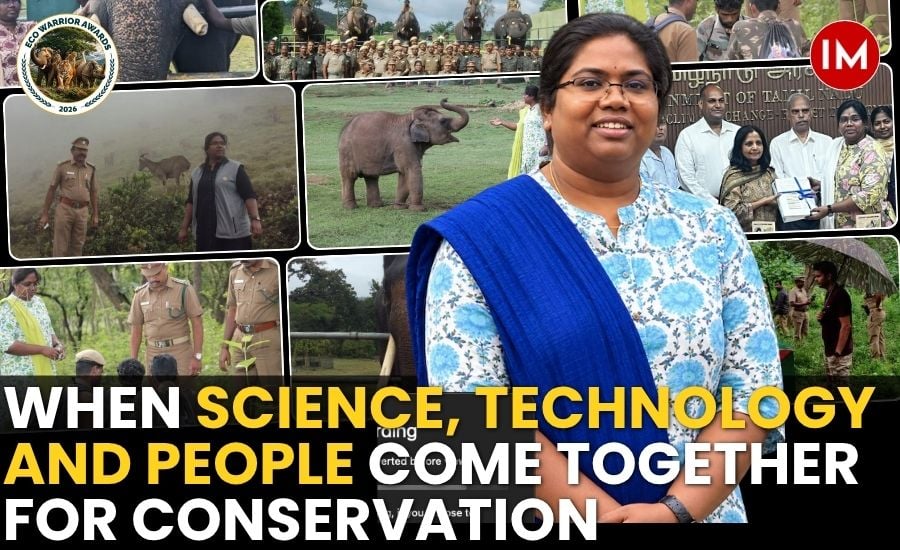
A forest officer’s work rarely fits into one role. One day may begin with a night anti-poaching operation. Another may involve tracking a tiger, managing an elephant conflict, meeting a village community or studying a threatened species. For Selvi. S. Senbagapriya, IFS, these varied experiences have shaped a clear belief: conservation succeeds when science, people and strong field enforcement work together.
A 2013-batch Indian Forest Service officer of the Tamil Nadu cadre, Senbagapriya is currently posted as DCF (Genetics), Coimbatore, and holds the additional charge of Project Nilgiri Tahr, Coimbatore. Her career has included work in wildlife crime control, tiger conservation, human-wildlife conflict management, wildlife research and institutional capacity building.
Speaking to Indian Masterminds, she reflected on the changing nature of wildlife conservation and the lessons that have emerged from her work across Tamil Nadu’s forests and wildlife landscapes.
FROM POACHING INCIDENTS TO ORGANISED WILDLIFE CRIME
Her early experience in wildlife crime control included night anti-poaching operations in Harur and later efforts to strengthen patrolling at Mudumalai Tiger Reserve. These experiences also showed how wildlife crime has changed.
Poaching is no longer always an isolated act by an individual. Behind a single hunting incident, there can be a much larger network. It may include poachers, local facilitators, transporters, financiers and illegal traders. These networks can extend across states and, in some cases, international borders.
Also Read – Dr. Sonali Ghosh Wins Eco Warrior Award 2025 for Wildlife Conservation at Kaziranga
For forest departments, this means that simply catching a poacher is not enough. Investigators must understand the entire chain.
“Organised wildlife crime has become more sophisticated. We need to move from incident-based enforcement to intelligence-led enforcement and understand the entire chain behind a crime,” Senbagapriya told Indian Masterminds.
Technology can make this approach stronger. Patrol data, camera traps, GPS-based monitoring, M-STrIPES, mobile applications, cyber intelligence and databases can help identify patterns. They can show where threats are concentrated and when illegal activity is more likely to occur.
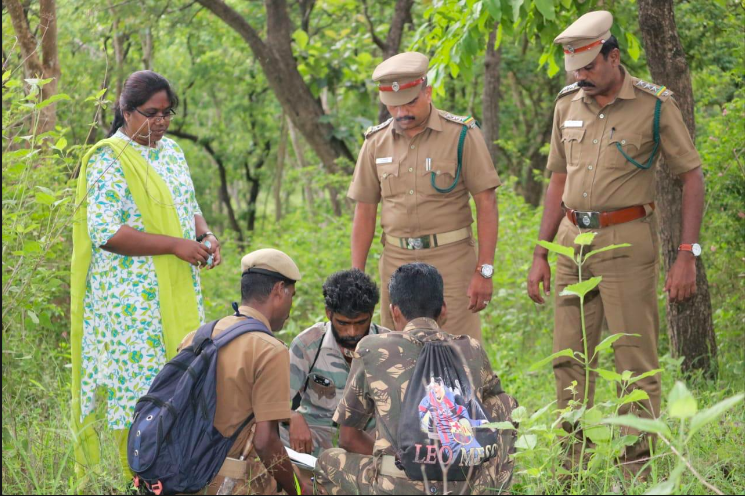
But technology cannot work alone. It needs trained personnel, reliable intelligence networks, coordination between agencies and strong investigation and prosecution.
The forest department, she believes, must work closely with police, customs, enforcement agencies and neighbouring states. The objective is to make wildlife crime a high-risk activity for organised criminals.
WHEN CONSERVATION MEETS COMMUNITY ASPIRATIONS
Wildlife protection becomes even more complex when people and animals share the same landscape. Senbagapriya experienced this directly while working at Mudumalai Tiger Reserve, where she led the relocation of 451 families under a voluntary village relocation programme.
For her, relocation was never simply about moving people outside a protected area. It was about creating a better future for both people and wildlife. The process had to be voluntary, transparent and based on informed consent. People’s rights, livelihoods, cultural connections and aspirations had to be respected.
A family that has lived in a landscape for generations cannot be treated as an obstacle to conservation. Instead, conservation has to create conditions in which families can see real benefits from relocation. This meant sustained consultation, understanding individual family needs, ensuring rehabilitation benefits reached the intended beneficiaries and creating opportunities for dignified livelihoods.
“Conservation works best when communities are treated as partners rather than obstacles. When relocation is genuinely voluntary and people’s quality of life improves, both communities and wildlife can benefit,” she said.
Importantly, the relationship did not end after relocation. Communities with strong knowledge of the landscape and wildlife were integrated into the reserve’s conservation efforts. Relocated people were provided opportunities to work in wildlife protection, patrolling and ecotourism.
The experience reinforced an important lesson: conservation becomes stronger when local communities have a stake in its success.
FROM FIELD OBSERVATION TO DATA-DRIVEN CONSERVATION
Technology has also transformed the way forest officers understand wildlife. Earlier, many management decisions depended largely on field experience and observations of officers and frontline staff. That knowledge remains valuable. But today it can be combined with scientific data and technology.
M-STrIPES, camera traps, GPS-based patrolling, radiotelemetry and scientific surveys can provide a much clearer picture of wildlife movement and threats.
A camera trap, for instance, does more than confirm that a tiger is present. Repeated photographs can help identify individual animals. They can reveal territories, breeding patterns and dispersal. Long-term patrol data can show hotspots and seasonal trends, helping officers deploy frontline personnel more effectively.
This has created a shift towards evidence-based and adaptive management. Yet Senbagapriya stresses that technology should support field knowledge, not replace it. The strongest decisions emerge when scientific evidence, technology and the experience of frontline forest staff come together.
HUMAN-WILDLIFE CONFLICT IS A LANDSCAPE ISSUE
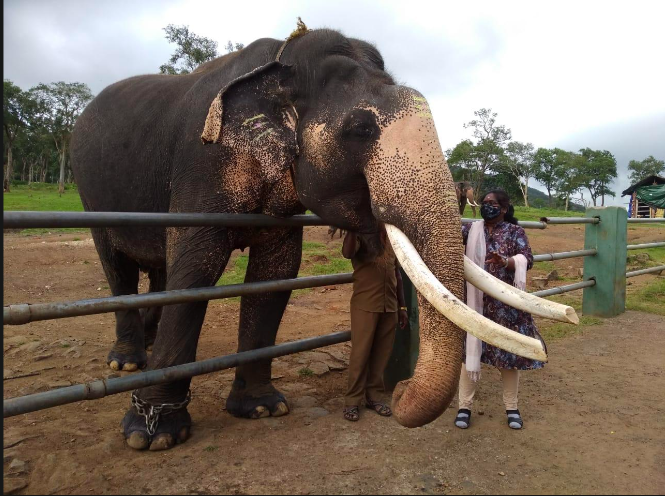
Her experience with tigers, elephants and Nilgiri Tahr has also shaped her understanding of human-wildlife conflict. Conflict, she says, is rarely just a wildlife problem. It is often connected to the larger landscape and local livelihoods.
In elephant landscapes, conflict can be influenced by land use, food and water availability, habitat fragmentation, crop patterns and traditional animal movement routes. In tiger landscapes, perceptions of risk and livestock depredation can strongly influence community attitudes. There is therefore no single formula for coexistence.
Each landscape needs a different strategy based on science and local realities. Early-warning systems, secure wildlife corridors, rapid response mechanisms and timely compensation can reduce the impact of conflict. But communities must also be involved in managing the landscape. “Coexistence does not mean accepting conflict as inevitable. Our goal should be to reduce avoidable conflict while ensuring that wildlife populations and their habitats remain ecologically viable,” Senbagapriya told Indian Masterminds.
BUILDING PEOPLE, NOT JUST SYSTEMS
Conservation also depends on the people who implement it. Over the course of her career, Senbagapriya has focused on institutional capacity building and has trained more than 1,300 professionals and frontline personnel. India has no shortage of committed forest officers and frontline staff. The bigger challenge is that conservation itself has become more complex.
A modern forest officer may need to understand wildlife biology, technology, law, investigation, data analysis, community engagement, communication and landscape planning.
These skills cannot be developed through one-time training. They require continuous learning and institutional support. Frontline personnel also need stronger skills in patrolling, evidence collection, species identification, first response, technology use and community engagement. For the next generation of conservation professionals, Senbagapriya places emphasis on field skills, scientific thinking, technological literacy, communication and collaboration. Curiosity and the willingness to keep learning are equally important.
Wildlife conservation, she believes, requires institutions that are constantly learning and adapting. It also requires close collaboration with other government departments.
BEYOND NUMBERS: MEASURING CONSERVATION SUCCESS
Her current responsibility with Project Nilgiri Tahr gives this approach particular relevance. The 2026 Nilgiri Tahr Survey estimated 1,364 animals, a 4.7% increase over the previous year. The rise is encouraging. But population numbers alone cannot define conservation success.
A healthy population must also have good recruitment, survival and distribution. Its habitat must remain suitable. Breeding populations must be secure, and young animals must survive.For the Nilgiri Tahr, the condition of montane grasslands and landscape connectivity are especially important.
Other pressures must also be tracked. These include habitat degradation, invasive species, disease, climate change and human disturbance. The larger goal is not simply to count more animals. It is to ensure that wildlife populations remain healthy and ecologically viable in functioning habitats.
For Senbagapriya, that is the real measure of conservation: not just more animals, but stronger ecosystems, informed institutions and communities that can sustain conservation gains for generations. From night patrols to intelligence-led enforcement, from village relocation to technology-driven monitoring, and from species surveys to capacity building, her career reflects how wildlife conservation is changing.
The forest officer of today is no longer only a protector of forests. The role increasingly demands the skills of an investigator, scientist, manager, communicator and community partner. And in that changing landscape, the message from Ms. Senbagapriya is clear: lasting conservation will come not from one tool or one department, but from bringing people, science, technology and field experience together.
Also Read – International Tiger Day : How Technology Is Rewriting Wildlife Conservation