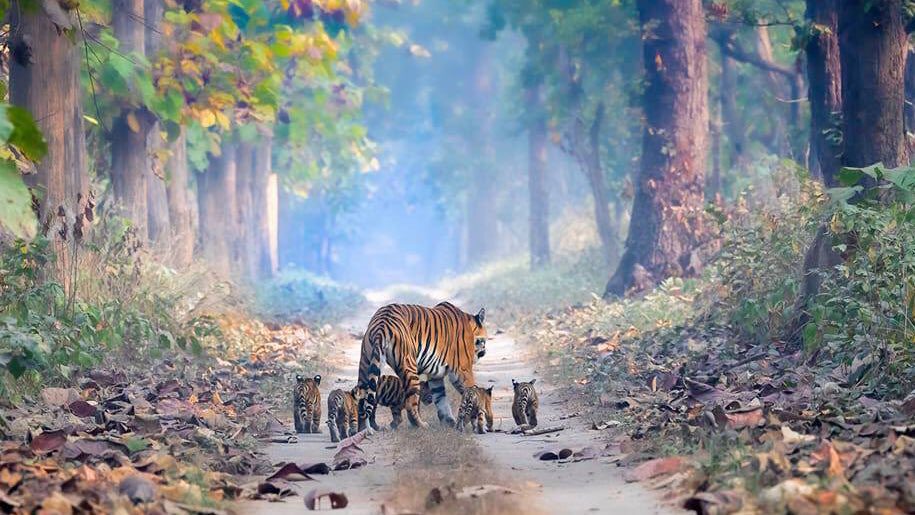
Famous American zookeeper Jack Hanna once said, “The most magnificent creature in the entire world, the tiger is.” And, today, India can proudly say it is home to about 70% of the total number of wild tigers in the world! Yes, thanks to Project Tiger, that an animal that was once about to reach the verge of extinction like the cheetah, is now thriving in the country.
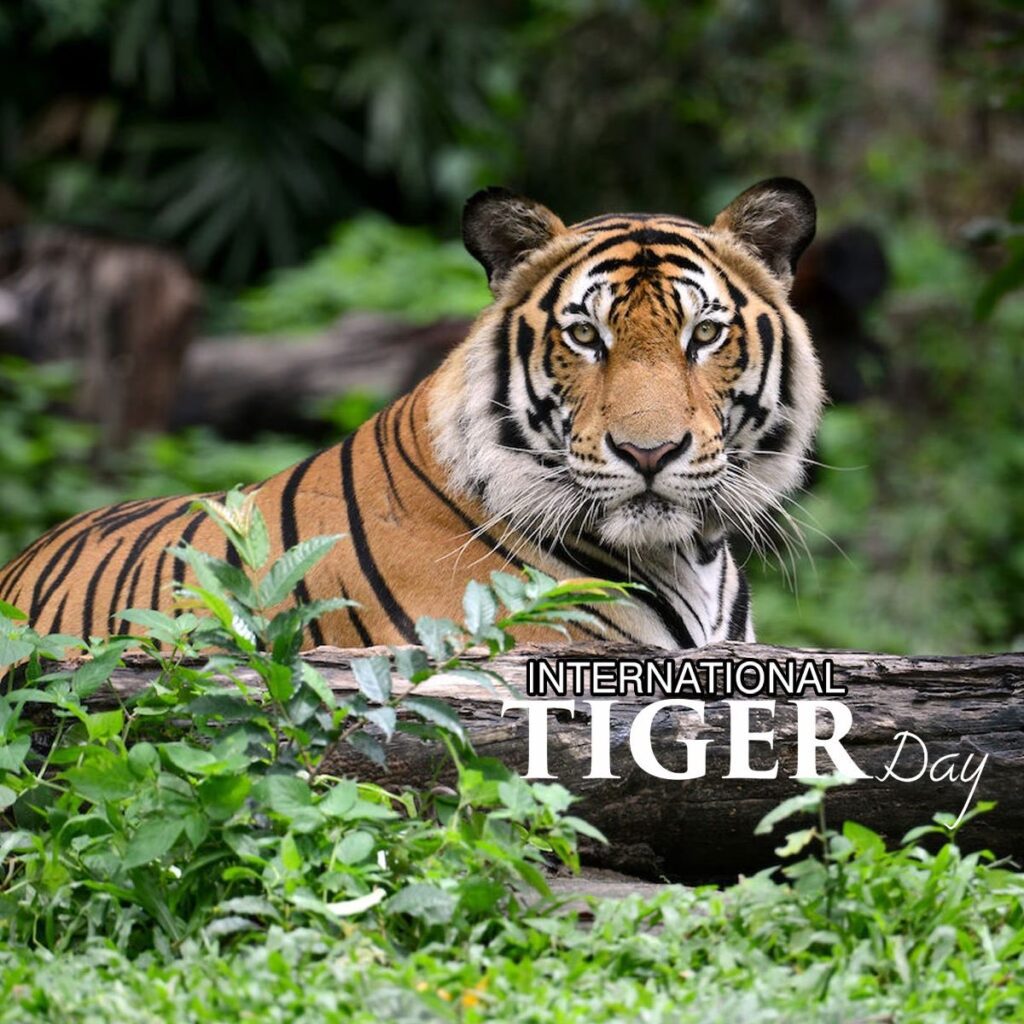
Today is Tiger Day. Every year, 29 July is celebrated as ‘Global Tiger Day’ to raise awareness about the declining population of wild cats and efforts to conserve them. Its goal is to promote a global chain or system to protect the natural habitats of tigers and to increase public awareness and support for tiger conservation issues.
This initiative started 12 year ago, but in India, awareness about tiger and efforts to save them started long before, in 1973. Keeping in mind the declining population of tigers, ‘Project Tiger’ was launched on 1 April, 1973. Since then, the country has done a lot of amazing work to protect its tigers and the results are overwhelming. India is now home to almost 3000 tigers, 2967 to be specific. The country has come a long way indeed from 1706 tigers in 2010 and only 268 in 1973, when Project Tiger was launched.

INDIA’S PROJECT TIGER
1953-batch IFS officer Kailash Sankhala, Chief Wildlife Warden, Rajasthan, was given charge to spearhead the project. In 1956, Mr. Sankhala raised his voice for the protection of tigers after the numbers were continuously decreasing due to hunting. He was chosen as the first director of Project Tiger and furing his stint there, he did some amazing work. He was awarded the Padma Shri for his work in the field of conservation. Due to his phenomenal efforts, awareness for tiger conservation increased and India was able to save her tigers. He also established the Tiger Trust in 1989.
Project Tiger was launched from Corbett’s Dhikala range in 1973. At that time, tiger population in the country stood only at 268. It has now risen to 2967. In the year 2006, there were a total of 1411 tigers in India. But that number doubled by 2018. That was a great achievement. The important thing is that the number of tigers kept increasing year after year. In the year 2010, there were a total of 1706 tigers in India. After this, the same number increased in 2014 to 2226, while in 2018 there were 2967 tigers. And now, according to the latest Tiger Census of 2018-19 conducted in 20 states across India, there are a total of 53 tiger reserves in India, and the latest addition of tiger reserve is the Guru Ghasidas National Park of Chhattisgarh. The population growth rate of tiger is 6% per annum, compared with the tiger census of 2006.

HOW THE GOAL WAS REACHED
2008 batch IFS officer Saket Badola said, “We could reach this goal because tiger conservation efforts were ensured. Commitment was shown for them to build safe habitat and conducive ecosystem. A dedicated entity, National Tiger Conservation Authority, has been constituted. Although it was already functioning as ‘Project Tiger’, making it an authorized body proved to be very beneficial. Now all the work of tiger conservation is done under its supervision and leadership.”
Another effort of India in the direction of tiger conservation was quite successful, and that is the expansion of the Tiger Reserve. In the year 1973, the Central Government started ‘Project Tiger’ with the formation of nine Tiger Reserves; today the number of Tiger Reserves has increased to 53. This has given tigers their natural habitat. “There is no doubt that we have shown a lot of political will in this matter. The top leadership here lives up to the principle by which India is intertwined, that is, unity in diversity. If any link felt weak, then the whole country united to handle it. This is the reason that a project like Project Tiger got full support from every government and we got good results from it,” Mr. Badola said.

He added that in order to save the tigers, many organizations also joined hands. The necessary resources for this were released from time to time. “The Forest Department can do a lot of work on its own, but if the resources are not available, then its work also gets tied in many types of limitations. The infrastructure for patrolling was developed in its own tiger habitat areas and many necessary facilities were provided, which made it easier to monitor tigers. There was also a lot of support from the local communities. Without their help, we might not have achieved the target of doubling the number of tigers.”
SAVING TIGER IS SAVING HUMAN
It is true that tiger conservation is a symbol of conservation of forests. Not only this, but saving tiger is saving rivers, too. Let’s take an example from the south. After Kalakkad-Mundanthurai park spread in Tirunelveli and Kanyakumari district of Tamil Nadu were declared tiger reserves in 1992, Tamirabarani River has regained its perennial status. Tamirabarani has always held a special place in the state and has ancient references. So, a move to save the tiger has become a ‘save the river’ policy, actually. A tiger reserve means human movement will be reduced in a particular area. So, declaring the area as a tiger reserve has helped to keep water sources alive and functioning throughout the year.

Apart from this, the tiger is a unique animal that plays an important role in a health ecosystem and its diversity. It is a high consumer of a food chain that is at the top of the food chain and keeps wild (mainly large mammal) populations under control. In this way, the tiger helps to maintain a balance between the herbivorous animals by hunting and the vegetation on which they depend for food. The purpose of tiger conservation is not just to save a beautiful animal. It is also helpful in ensuring that we live longer because as a result of this protection we get ecological services like clean air, water, pollination, temperature regulation etc.
The importance of tiger conservation can be seen from the report, Status of Leopards, Co-predators and Herbivores-2018 (Status of Leopards, Co-predators and Megaherbivores-2018). There is a significant increase in the forested natural habitats of 18 tiger-rich states of the country from the year 2014. This report is proof that the conservation of tigers protects the entire ecosystem.

TIGER IS FOUND ONLY IN 13 COUNTRIES
Tiger’s population is limited to 13 countries including India, Bangladesh, Bhutan, Cambodia, China, Indonesia, Lao PDR, Malaysia, Myanmar, Nepal, Russia, Thailand and Vietnam. There are many reasons due to which the number of tigers is decreasing, including increasing deforestation, poaching, reduction in their habitat, genetic diversity, and accidentally entering residential areas, tiger tourism, failed projects and global warming.
HISTORY AROUND WORLD TIGER DAY
Global Tiger Day came into existence in 2010 during the signing of the Saint Petersburg Declaration by 13 tiger range countries in Russia. The governments of these tiger range countries had pledged to encourage conservation to protect natural habitats and double the number of tigers by 2022.
Poaching and illegal trade in tiger body parts such as bone and skin are the biggest threats to wild tigers. The demand for tiger body parts has increased the poaching and smuggling of wild cats. So, although it can be said that in saving tiger, phenomenal work has been done so far, but the fact remains that still a lot needs to be done. Global cooperation for the conservation of tigers has to be increased. To deal with smugglers, cooperation has to be taken from those countries where there is a huge demand for tiger products. Clearly, saving tigers is a daily battle, and for this, all organizations working for the cause at the international level have to come on board to show relentless readiness.