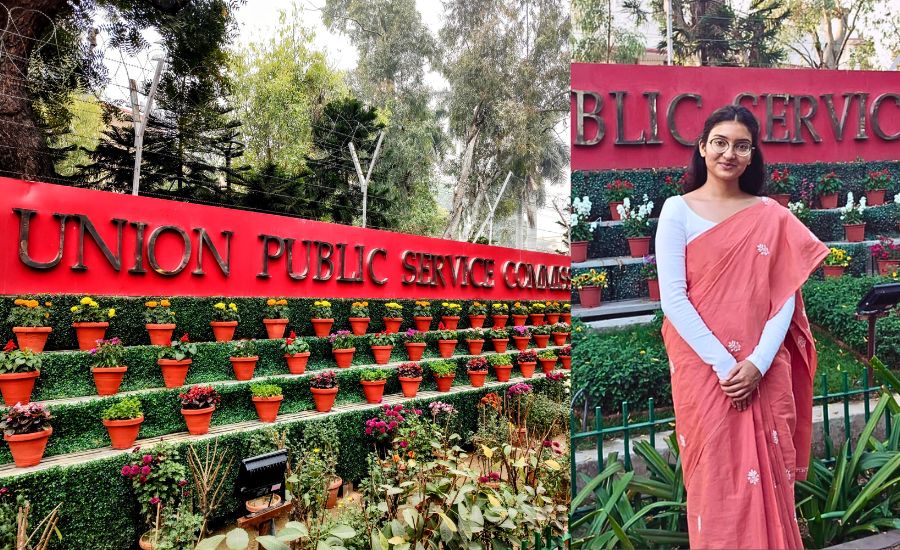
Disha Dwivedi, a determined young woman from Lucknow, Uttar Pradesh, has carved her name among the successful candidates of the 2024 UPSC Civil Services Examination, securing an All India Rank of 672. Her path to this achievement was far from easy, marked by five consecutive failures in the preliminary stage. Yet, Disha’s story is one of persistent effort, strategic adaptation, and the strength drawn from a supportive family. Unlike many who abandon their UPSC aspirations after a few setbacks, Disha’s sixth attempt in 2024 culminated in a triumph that serves as an inspiration for countless aspirants.
THE BEGINNING: A SPARK IGNITED
Disha’s journey to the UPSC began during her college years in Noida, where she pursued a B.Tech degree. It was her friends who first suggested that her personality and aptitude were well-suited for the civil services. Intrigued by the idea, Disha researched the UPSC exam and found it aligned with her ambitions. In 2018, she embarked on her preparation, diving into the vast syllabus with focus and determination.
The road ahead was challenging. Over the next five years, Disha faced repeated setbacks, failing to clear the prelims multiple times. However, she refused to let these failures define her. Her sixth attempt in 2024 proved to be a turning point, as she cleared the prelims, excelled in the mains, and performed confidently in the interview, securing her rank.
FACING FAILURE HEAD-ON
Through her YouTube channel, Disha has openly shared her experiences with failure in the UPSC Prelims, offering valuable insights for aspirants. She categorised her challenges into three key areas: strategic, practice and readiness, and emotional and support system challenges. Her reflections provide a roadmap for others navigating the complexities of UPSC preparation.
Strategic Challenges
Disha identified several strategic missteps that hindered her early attempts. “I struggled with incorporating revision into my daily routine,” she shared, noting that her inability to recall information effectively was a significant hurdle. Her notes were initially disorganised, making revision difficult. “My notes were scattered, not revision-friendly, which caused trouble,” she explained. She also admitted to over-focusing on current affairs at the expense of static portions of the syllabus. Another key issue was treating Previous Year Questions (PYQs) like quizzes rather than analysing them deeply to understand the intent behind each option.
To address these challenges, Disha adopted a structured approach. She integrated daily, weekly, and monthly revision slots into her schedule, using techniques like mnemonics and storytelling to enhance recall. She prioritised static portions to strengthen her foundation and streamlined her note-making process, creating concise, revision-friendly notes during her second or third study rounds. For PYQ analysis, she referred to resources to develop her aptitude for objective questions.
Practice and Readiness Challenges
Disha also faced hurdles in practice and readiness. One critical mistake was not practising with Optical Mark Recognition (OMR) sheets, which she later realised was essential for effective time management. “The prelims paper is lengthy, and marking the OMR sheet takes time. I didn’t recognise this initially,” she admitted. Initially, she chased high scores in test series, attempting too many questions without prioritising accuracy. In her 2023 attempt, she shifted her strategy, attempting only 69 questions with high accuracy, which helped her clear the Prelims for the first time. In 2024, she increased her attempts to around 84-86 questions, tailoring her approach to the paper’s difficulty level.
Disha advises aspirants to practise in a time-bound manner with OMR sheets and analyse their strengths and weaknesses. “Understand your accuracy level and decide how many questions to attempt based on the paper’s difficulty,” she emphasised. She also stressed the importance of solving PYQs to observe patterns and develop a strategic approach to question-solving.
EMOTIONAL AND SUPPORT SYSTEM CHALLENGES
The emotional toll of repeated failures was one of Disha’s toughest battles. As an only child for the first 15 years of her life and having lived apart from both parents for 20 years, she struggled with communication and vulnerability. “I wasn’t good at sharing my struggles, even with my parents,” she confessed on her YouTube channel. This led to suppressed emotions and increased stress, as she felt the pressure to be the “strong one” in her family. Additionally, not joining a coaching institute in her initial years left her without a peer group or mentor, making her journey isolating.
Disha overcame these challenges by fostering open communication with her family, who provided consistent support despite her mother’s health issues and her father’s role as an assistant professor. She later sought mentors, recognising their value in guiding her preparation. “A mentor helps you stay on track and avoid mistakes,” she noted. To maintain her emotional well-being, Disha focused on consistency rather than perfection. “I was chasing perfection in my routine, but this preparation needs consistency,” she explained. She encouraged aspirants to be honest with themselves, avoid over-criticism, and build a support system to navigate emotional challenges.
BALANCING RESPONSIBILITIES AND STUDIES
Disha’s journey was further complicated by her responsibilities at home due to her mother’s poor health. She took on household chores alongside her UPSC preparation, dedicating 5 to 6 hours daily to her studies. “Managing home responsibilities and studying was tough, but it taught me time management and focus,” she shared. Her ability to balance these roles while maintaining her preparation highlights her discipline and commitment.
MASTERING THE MAINS
On her YouTube channel, Disha shared a detailed strategy for excelling in the UPSC Mains, identifying seven common mistakes aspirants should avoid:
Not Understanding the Question’s Demand: Disha emphasised analysing the question to identify its core requirements, such as discussing causes, pros and cons, or evaluating success and failure.
Irrelevant Introduction: She advised writing concise introductions that set the context without using unrelated quotes or flowery language.
Lack of Flow and Structure: Disha stressed the need for a clear structure with subheadings, derived from understanding the question’s parts, to enhance readability.
Limited Dimensions: She recommended incorporating diverse perspectives—political, economic, social, and more—to make answers comprehensive.
Lack of Data and Examples: Disha enriched her answers with reports (e.g., NCRB, NITI Aayog, World Bank), case studies, and committee recommendations to add depth.
Weak Conclusion: She advocated for optimistic conclusions aligned with India’s vision, linking answers to Sustainable Development Goals (SDGs) or government schemes where relevant.
Poor Time Management: Disha highlighted the importance of completing the paper, suggesting time limits of 7 minutes for 10-mark questions and 10 minutes for 15-mark questions.
By addressing these areas, Disha crafted well-structured, evidence-based answers that aligned with the examiner’s expectations, significantly boosting her Mains performance.
OVERCOMING SMALL-MARGIN PRELIMS FAILURE
Disha also shared insights on her YouTube channel about failing the Prelims by small margins, identifying five common mistakes:
Over-Reliance on Test Series: She cautioned against chasing high scores in test series, advocating for their use as practice tools while focusing on PYQs to understand UPSC’s question patterns.
Lack of Revision Strategy: Disha emphasized the need for a structured revision plan to ensure recall and confidence during the exam.
Misuse of Elimination Techniques: She warned against random or emotional guessing, stressing the need to pair elimination techniques with strong conceptual knowledge.
Overloading on Current Affairs: Disha recommended sticking to one or two reliable sources to avoid information overload.
Lack of Focus: She highlighted the importance of sustained focus, advising aspirants to practise in distraction-free environments.
To address these issues, Disha suggested creating a personalised three-month recovery plan, starting with syllabus and PYQ mapping, followed by focused practice and addressing weak areas like CSAT early on. “Identify your major problem areas and tailor your plan accordingly,” she advised.
A MESSAGE TO ASPIRANTS
Disha’s message to UPSC aspirants is one of self-belief and strategic effort. “Surround yourself with positive people, stay motivated, and trust yourself. This exam is about proving to yourself that you can do it,” she said. She encourages aspirants to learn from their mistakes, maintain curiosity, and build a support system to navigate the emotional challenges of preparation.