Wars don’t just reshape borders. They expose illusions.
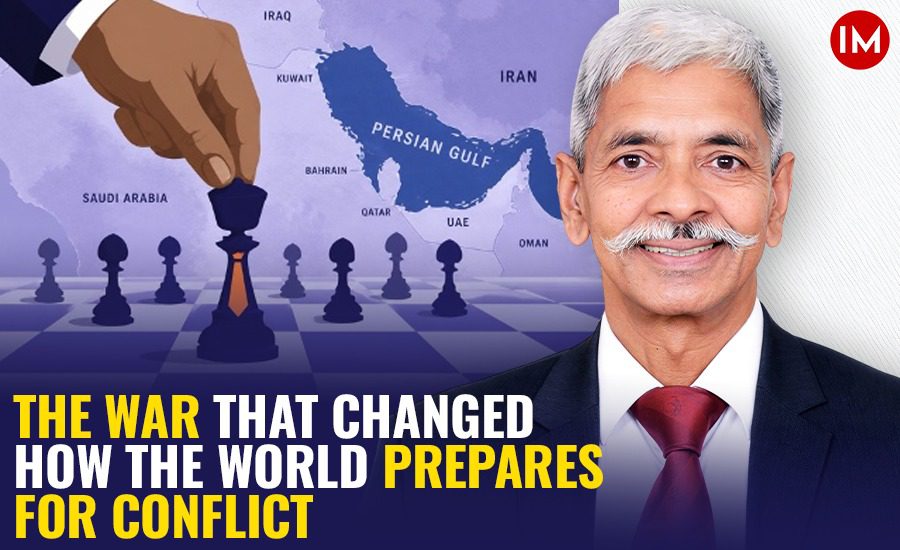
The recent U.S.–Iran confrontation did exactly that and the world is still absorbing the shock.
For nearly sixty days, this was not merely a conflict. It was a revelation, one that stripped away long-held assumptions about stability, security, and strategic dependence. Nations that once operated with quiet confidence in predictable alliances, uninterrupted energy flows, and efficient supply chains are now confronting a far harsher reality.
Strategic dependence is vulnerability.
Who exposed this more clearly: the United States, or Iran? That
Iran’s Signal: Leverage Without Dominance
Iran did not overpower the United States. That was never the objective.
What it demonstrated instead was far more consequential; strategic endurance under sustained pressure.
Despite sanctions, economic strain, and conventional military asymmetry, Iran managed to sustain regional pressure, disrupt critical maritime corridors, keep energy markets structurally volatile, and force major powers into reactive cycles.
This was not victory in conventional terms; it was leverage without dominance.
And that distinction matters.
Because modern conflict is no longer about decisive wins. It is about imposing costs, shaping behaviour, and controlling escalation without crossing thresholds that trigger full-scale war.
Iran understood that equation and executed it with precision.
Also Read – Four States Unite for Tiger Conservation: Why This Landmark Initiative Across Landscapes Was Needed
The End of Assumed Stability
For decades, globalisation fostered a quiet but dangerous illusion:
Energy would flow uninterrupted.
Sea lanes would remain secure.
Supply chains would optimise efficiency without consequence.
That illusion is now broken.
The Strait of Hormuz and the Red Sea once treated as routine transit corridors have re-emerged as strategic chokepoints. Insurance costs surged. Supply chains recalibrated in real time. Energy markets reacted with immediate volatility.
What the world realised was this:
There are no neutral corridors in geopolitics anymore.
Every route is a potential pressure point.
A Cognitive Shift in Global Strategy
The most significant shift is not military, it is cognitive.
Nations are beginning to ask harder questions:
Can energy security be outsourced?
Can supply chains remain globally dispersed without strategic risk?
Can alliances guarantee protection under all contingencies?
The answer, increasingly, is no.
In that sense, Iran’s unintended contribution is significant. By sustaining disruption under pressure, it forced nations to remove their strategic blindfolds. It accelerated a global reassessment that years of diplomacy and policy frameworks failed to achieve.
Not by offering a model to replicate but by exposing a system that had become overly dependent, overly optimistic, and underprepared.
The Fire Horse Moment
The Year of the Fire Horse symbolises forward movement, independence, and endurance.
2026 reflects that shift with unusual clarity.
The global order is not collapsing, it is hardening.
Nations are prioritising self-reliance over interdependence.
Alliances are becoming transactional rather than ideological.
Preparedness is replacing assumption.
This is not regression. It is adaptation.
Six Strategic Shifts Now Underway
The U.S.–Iran confrontation has accelerated doctrinal shifts that will shape global strategy for years to come.
Energy as Strategic Leverage
Energy is no longer an economic variable—it is a strategic weapon. Nations are diversifying sources, expanding reserves, and accelerating renewables not for optics, but for survival.
Resilient, Not Efficient, Supply Chains
Efficiency has given way to resilience. “China+1” is no longer a concept—it is baseline policy. Critical sectors such as electronics, defence, and pharmaceuticals are being diversified or localised.
Maritime Security Returns to Centre Stage
From the Strait of Hormuz to the Red Sea, sea lanes are once again contested spaces. Naval presence is no longer symbolic—it is operationally essential.
Alliances Under Recalibration
Traditional blocs are showing visible strain. Even long-standing partners are hedging, recalibrating, and preserving strategic autonomy. Diplomacy is becoming more transactional, less ideological.
Defence Indigenisation as Imperative
Dependence on external defence suppliers is now a time-critical liability—especially in an era of sanctions, supply disruptions, and prolonged conflicts. Domestic capability is no longer aspirational; it is essential.
Technology Sovereignty as Strategic High Ground
Semiconductors, artificial intelligence, and cyber capabilities define modern power. Control over these domains increasingly determines strategic outcomes. Nations are now integrating startups, academia, and military ecosystems into a unified technological architecture.
India’s Strategic Window
For India, this moment presents both opportunity and test.
India has, so far, managed its positioning with notable balance engaging the United States for technology and defence, maintaining energy ties with Russia, managing competition with China, and shaping narratives across the Global South.
But the next phase demands more than balance.
It demands decisiveness.
Energy security must be treated as core national doctrine.
Manufacturing must evolve beyond assembly into deep capability.
Defence indigenisation must accelerate with urgency.
Maritime capacity must expand across the Indian Ocean region.
Critical technologies must receive sustained, strategic investment.
The window is real—but it will not remain open indefinitely.
Beyond the Rhetoric
The U.S.–Iran confrontation did not just test strength—it revealed fragility.
It exposed how deeply the global system relied on assumptions that no longer hold.
And in doing so, it delivered a hard lesson:
Preparedness cannot be outsourced.
Resilience cannot be improvised.
Strategic autonomy cannot be delayed.
The nations that internalise these lessons will define the next global order.
Final Word
Iran did not win the war.
But it changed how the world prepares for the next one.
Also Read – How Two IAS Officers Reunited A Missing Maharashtra Grandma with Her Family After Two Years