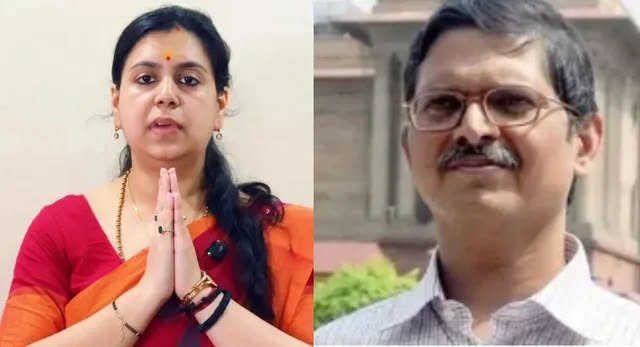
Lucknow: Ahead of the 2027 Uttar Pradesh Assembly elections, former IPS officer and Azad Adhikar Sena (AAS) president Amitabh Thakur has reached out to former IAS officer Divya Mittal, who recently entered politics after resigning from the Indian Administrative Service and launching the JanNeeti Bharat Party (JBP).
In a letter addressed to Ms Mittal, Mr Thakur welcomed her decision to establish an independent political platform and offered support for her upcoming electoral campaign. He also invited her to hold discussions on issues of common interest, raising the possibility of future political cooperation between the two parties.
The development comes as political parties and emerging political groups begin positioning themselves for the 2027 Assembly elections in Uttar Pradesh. Amid reported dissatisfaction with the ruling Bharatiya Janata Party (BJP) in certain sections, the outreach could signal an attempt by smaller political organisations to explore cooperation around governance and public accountability.
However, no formal alliance between the Azad Adhikar Sena and the JanNeeti Bharat Party has been announced.
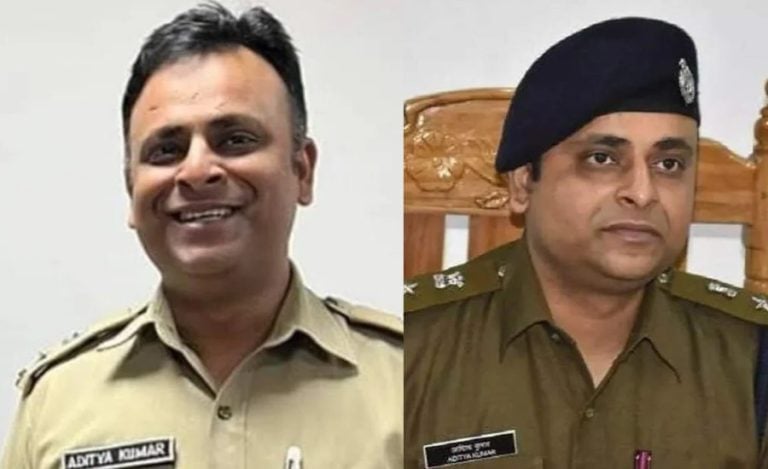
Amitabh Thakur Writes to Divya Mittal, Offers Support for Political Campaign
Mr Thakur, a former 1992-batch IPS officer of the Uttar Pradesh cadre, has welcomed Ms Mittal’s decision to enter electoral politics through her own party rather than joining an established political organisation.
In his communication, the AAS president offered assistance for her expected election campaign in Mirzapur, where she previously served as District Magistrate.
Ms Mittal is expected to contest the 2027 Uttar Pradesh Assembly elections from the Mirzapur Sadar constituency, although her candidature remains subject to a formal electoral announcement.
Mr Thakur also invited the former IAS officer for discussions to identify areas where their political and social initiatives could work together.
The outreach is being viewed as a possible first step towards cooperation between two political platforms led by former civil servants.
Possible Alliance Between Azad Adhikar Sena and JanNeeti Bharat Party?
A significant aspect of Mr Thakur’s letter is his emphasis on the similarities between the principles advocated by the Azad Adhikar Sena and the newly launched JanNeeti Bharat Party.
He highlighted issues such as citizen empowerment, public interest, transparency and accountable governance as areas of common concern.
Mr Thakur has been associated with campaigns concerning civil rights, administrative accountability, probity in public life and constitutional values.
Through his letter, he indicated that both organisations could explore working together to advance these objectives in Uttar Pradesh.
The possibility of a future partnership or electoral alliance was also left open.
However, the communication represents an offer for dialogue and cooperation rather than confirmation of any political agreement. There has been no confirmed announcement of seat-sharing arrangements, a joint electoral strategy or a formal alliance between the two parties.
Who Is Amitabh Thakur? Former IPS Officer and Azad Adhikar Sena President
Amitabh Thakur is a former Indian Police Service officer of the 1992 batch from the Uttar Pradesh cadre.
Following his career in the police service, he became associated with public campaigns focusing on civil liberties, transparency, accountability and constitutional governance.
He currently heads the Azad Adhikar Sena, a political organisation that advocates citizen rights and accountability in public administration.
His outreach to Ms Mittal reflects his interest in identifying common ground with political figures who have entered public life after serving in the civil services.
Both Mr Thakur and Ms Mittal bring administrative experience to their respective political initiatives, although their professional backgrounds differ, with Mr Thakur having served in the IPS and Ms Mittal in the IAS.
Their potential cooperation could bring together their respective platforms around governance reforms and public-interest issues.
Divya Mittal Launched JanNeeti Bharat Party on September 29
Former IAS officer Divya Mittal announced her political debut on September 29, 2026, with the launch of the JanNeeti Bharat Party.
The announcement came shortly after she left the Indian Administrative Service, ending a career spanning approximately 13 years.
Ms Mittal said her party would contest the 2027 Uttar Pradesh Assembly elections with a full-fledged political campaign.
She appealed to citizens to support a political platform built around people-centric governance, greater public participation and accountability in government functioning.
Her decision to establish a new party marked a transition from implementing government policies as a civil servant to seeking an electoral mandate to influence and formulate them.
The launch also placed her among former civil servants attempting to build an independent political identity in Uttar Pradesh.
Divya Mittal’s Political Vision: Three Promises and Greater Citizen Participation
Following the launch of the JanNeeti Bharat Party, Ms Mittal released an approximately eight-and-a-half-minute video on X explaining the ideas behind her political initiative.
In the video, she outlined her proposed approach to governance and referred to three promises she intends to present to voters during the election campaign.
A central theme of her message was that democratic participation should extend beyond voting once every five years.
She argued that citizens should have opportunities to participate in policymaking, influence government decisions and monitor the delivery of public services throughout an elected government’s tenure.
Her stated vision emphasises a more participatory political system in which citizens play a continuing role in governance.
The party’s proposed approach also focuses on strengthening accountability and ensuring that government institutions remain responsive to public needs.
These themes overlap with the issues highlighted by Amitabh Thakur in his letter, particularly transparency, public participation and accountable administration.
The detailed wording of Ms Mittal’s three electoral promises was not included in the information available for this report.
Divya Mittal Resigned from IAS in August 2026 After 13 Years of Service
Ms Mittal, a 2013-batch IAS officer of the Uttar Pradesh cadre, resigned from the civil services on August 30, 2026.
She cited personal reasons, family priorities and new goals in life while explaining her decision to leave the administrative service.
Her resignation was subsequently accepted and became effective on September 15, 2026.
Before resigning, Ms Mittal was serving as Special Secretary in the Uttar Pradesh Revenue Department.
During her administrative career, she held several important field assignments, including serving as District Magistrate in Mirzapur, Sant Kabir Nagar and Deoria.
Her experience in district administration provided her with direct exposure to governance challenges, implementation of public welfare programmes and interactions with citizens at the grassroots level.
Her subsequent entry into politics has drawn attention because of her decision to launch a separate political party within weeks of leaving the IAS.
Why Mirzapur Could Be Important for Divya Mittal’s Political Debut
Mirzapur holds particular significance in Ms Mittal’s emerging political career because she previously served as District Magistrate of the district.
She is expected to contest the 2027 Assembly elections from the Mirzapur Sadar constituency.
Her administrative association with the district could become an important element of her campaign as she seeks to establish a political connection with local voters.
However, previous service as a District Magistrate does not necessarily translate into electoral support, and her political prospects will depend on several factors, including local issues, party organisation, voter response and competition from established political parties.
Amitabh Thakur’s offer to support her expected Mirzapur campaign could provide an opportunity for coordination between the two political organisations.
The nature and extent of that support will become clearer if discussions between their leaderships progress.
Former Civil Servants Exploring a Common Political Platform in Uttar Pradesh
The possible cooperation between Amitabh Thakur and Divya Mittal is notable because both entered politics after serving in senior government positions.
While Mr Thakur’s political activities have centred on civil rights, public accountability and constitutional principles, Ms Mittal has presented her new party as a platform for citizen participation and governance reforms.
Their shared emphasis on transparency and accountable administration could provide a basis for discussions.
For smaller political organisations, cooperation can potentially help in expanding outreach, coordinating campaigns and building a wider presence among voters.
However, any such arrangement would require agreement on political priorities, electoral strategy and organisational responsibilities.
At present, the possibility of cooperation remains at the discussion stage.
UP Assembly Elections 2027: What Happens Next?
The 2027 Uttar Pradesh Assembly elections will be the first major electoral test for Divya Mittal’s newly formed JanNeeti Bharat Party.
The party will need to develop its organisational structure, identify candidates, communicate its electoral promises and establish a voter base in a state where established political parties have extensive networks.
Meanwhile, Amitabh Thakur’s offer of support has opened the possibility of discussions between the JBP and the Azad Adhikar Sena.
The next developments will depend on whether Ms Mittal responds positively to the invitation and whether the two organisations decide to pursue a formal understanding.
For now, the letter marks an initial political outreach, with no confirmed alliance or joint electoral arrangement.
As preparations for the 2027 Assembly elections gather momentum, the potential cooperation between two former civil servants could become a development to watch in Uttar Pradesh’s evolving political landscape.