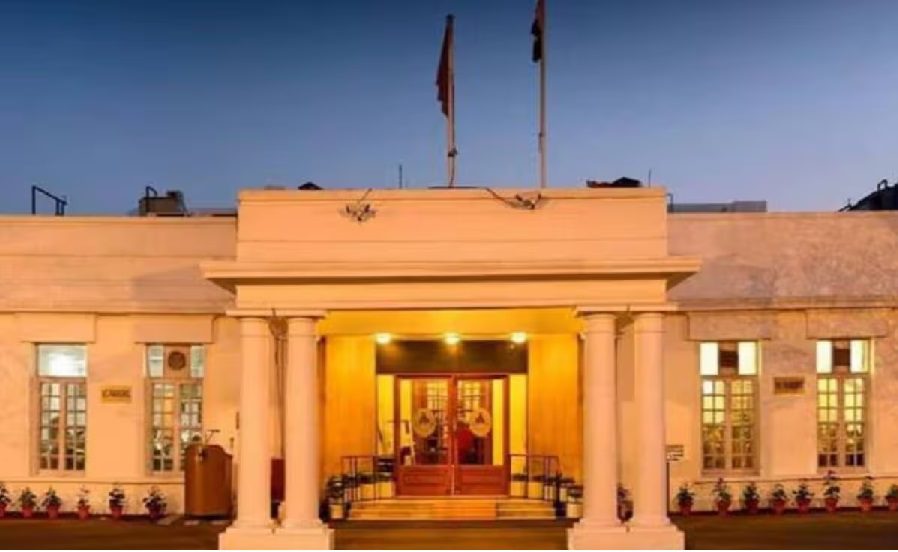
New Delhi: In a major move with far-reaching implications for elite institutions in the national capital, the Union government has directed the prestigious Delhi Gymkhana Club to hand over possession of its land by June 5, 2026, citing “public purpose”, defence infrastructure and national security considerations.
The development has triggered shockwaves across Lutyens’ Delhi and revived debates around the future of several high-profile clubs and institutions located in prime government zones near Parliament, Central Vista and key administrative establishments.
The order effectively reopens the long-running tussle between the Centre and the Delhi Gymkhana Club over the ownership, lease status and administrative control of the sprawling property situated on Safdarjung Road adjoining the Prime Minister’s residence.
Govt Cites National Security, Public Purpose
According to the government communication, the land occupied by the club is required for public purpose and defence-related infrastructure requirements linked to national security considerations.
The direction comes amid the Centre’s continued push for redevelopment and strategic restructuring of key areas in the national capital under the broader Central Vista transformation framework.
The abrupt nature of the order has surprised members and administrative circles alike, particularly given the club’s historical stature and influential membership profile.
Century-Old Elite Institution at Centre of Dispute
Spread across more than 27 acres in one of Delhi’s most sensitive and high-value zones, the Delhi Gymkhana Club has occupied its present location for nearly 108 years.
Originally established during the British era as the “Imperial Delhi Gymkhana Club”, the word “Imperial” was dropped after Independence. Over the decades, the club evolved into one of India’s most exclusive social institutions, frequented by politicians, senior bureaucrats, armed forces officers, diplomats and industrialists.
Prominent members reportedly include Congress leader Rahul Gandhi, former Union minister Smriti Irani, former minister Suresh Prabhu, senior civil servants and top corporate figures.
NCLT, NCLAT Orders and Allegations of ‘Imperial Mentality’
The latest development also traces back to prolonged legal and administrative battles involving the Ministry of Corporate Affairs (MCA) and the club’s governing structure.
In June 2020, the National Company Law Tribunal (NCLT), while hearing the matter, made sharp observations regarding the functioning of the club and remarked that its “mentality” continued to remain “imperial”.
The tribunal upheld allegations involving irregularities in construction projects, favouritism in granting memberships, exorbitant fees, out-of-turn admissions and governance-related concerns.
Subsequently, the Narendra Modi government moved to appoint an administrator to oversee the club’s functioning. The National Company Law Appellate Tribunal (NCLAT) later upheld the government’s intervention and supported the dissolution of the club’s general committee.
Following the order, Manmohan Juneja, Officer on Special Duty (OSD) in the Ministry of Corporate Affairs, was appointed administrator to manage the club’s affairs.
Focus Now on Other Clubs in Lutyens’ Delhi
The Centre’s latest move has also intensified speculation surrounding the future of several other influential clubs and institutions located in close proximity to Parliament, Central Vista and strategic government establishments.
Among the institutions now under renewed discussion are the Press Club of India (PCI), Chelmsford Club on Raisina Road, Delhi Golf Club near Lodhi Garden, and the Indian Women’s Press Corps (IWPC) on Ashoka Road.
Sources indicate that some of these institutions had earlier received notices regarding land occupation and premises-related issues, though legal and administrative processes delayed further action.
The Delhi Gymkhana development is now being viewed as a potential precedent that could influence future decisions involving land use and institutional occupation in the Lutyens’ zone.
Central Vista Push Continues Despite Earlier Opposition
The developments are also being linked to the Centre’s larger urban and administrative restructuring plans under the Central Vista redevelopment project.
Projects such as the new Parliament building, Kartavya Path redevelopment and other infrastructure initiatives were implemented despite widespread criticism and logistical challenges during the Covid-19 pandemic period.
While the projects initially triggered significant political and public debate, several completed works later witnessed broader acceptance, with criticism gradually subsiding over time.
Observers believe the government now appears determined to continue executing long-term redevelopment and security-related infrastructure plans in central Delhi with minimal deviation.
Legal Battle May Continue
Even as the latest notice has intensified uncertainty for existing stakeholders and club members, legal experts believe further litigation and negotiations cannot be ruled out given the historical nature of the property arrangements and institutional legacy associated with the Delhi Gymkhana Club.
For now, however, the government’s direction marks one of the strongest assertions yet of central authority over elite institutional spaces in the heart of the national capital.