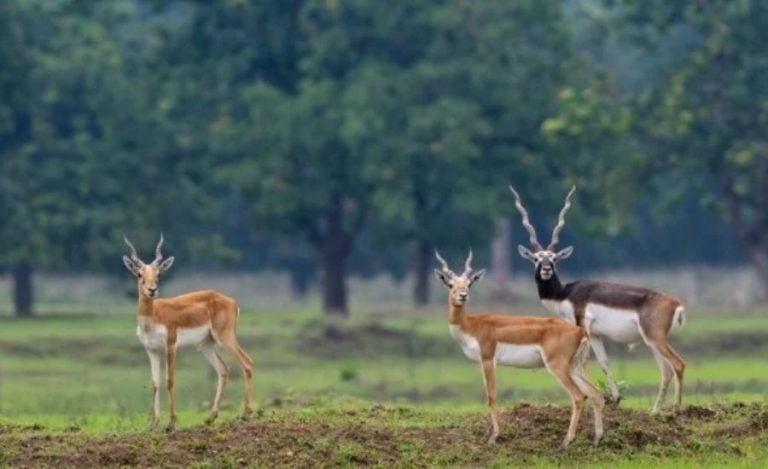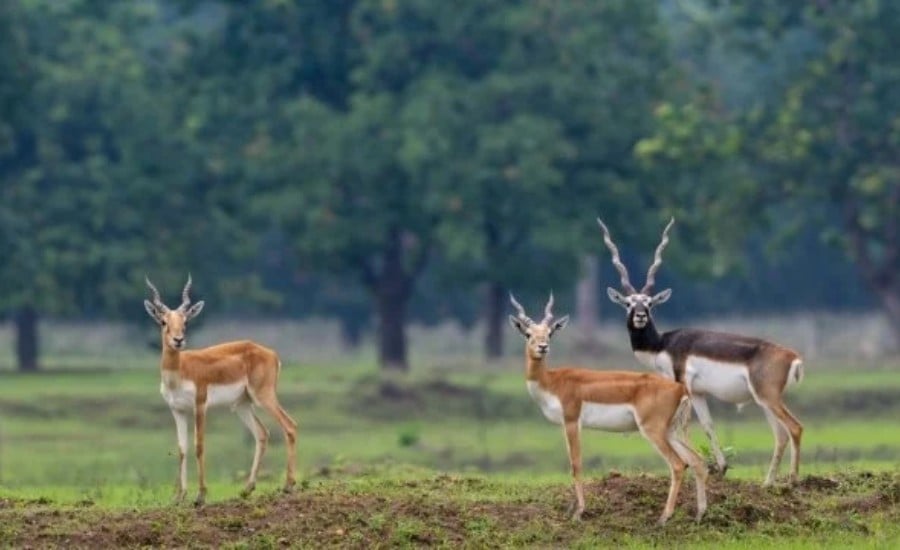
Raipur: Chhattisgarh is preparing to reintroduce blackbucks to Gomarda Wildlife Sanctuary in Sarangarh-Bilaigarh district after the species disappeared from the area more than five decades ago. The state has approved the transfer of 50 blackbucks from Barnawapara Wildlife Sanctuary as part of its wildlife conservation efforts.
The decision follows the progress of a blackbuck revival programme at Barnawapara, where conservation measures have helped the population grow since the animals were first brought in from other locations.
The proposed translocation is intended to establish a blackbuck population at Gomarda, where forest officials have identified grasslands and water availability as favourable habitat conditions for the species. The plan received approval at a meeting of the standing committee of the Chhattisgarh State Wildlife Board.
Blackbucks to Be Transferred From Barnawapara Sanctuary
The 50 blackbucks will be moved from Barnawapara Wildlife Sanctuary, located in Baloda Bazar district, to Gomarda Wildlife Sanctuary in Sarangarh-Bilaigarh district.
Read Also: Bastar Tourism Push: Chhattisgarh Focuses on Connectivity, Homestays and Tribal Culture
The transfer builds on the experience gained through the conservation programme at Barnawapara, where the animals were gradually acclimatised before being released into their natural habitat.
The relocation is part of a broader effort to strengthen wildlife conservation and restore species to suitable habitats within the state.
How Chhattisgarh Revived Its Blackbuck Population
The blackbuck population in the region declined over several decades because of factors including hunting, poaching, habitat loss, encroachment and development-related pressures. The species eventually disappeared from the wild in the area, remaining locally extinct for decades.
A revival initiative was subsequently undertaken at Barnawapara Wildlife Sanctuary.
Under the conservation programme, 77 blackbucks were translocated during the 2017–2018 period, with 50 brought from the National Zoological Park in New Delhi and 27 from Kanan Pendari Zoological Garden in Bilaspur.
The animals were introduced through a planned process that included acclimatisation, habitat management and monitoring. Their population increased over the following years, providing a foundation for extending conservation efforts to another sanctuary.
The revival programme at a glance:
- 2017–2018: A total of 77 blackbucks were brought to Barnawapara.
- 50 animals: Sourced from the National Zoological Park, New Delhi.
- 27 animals: Sourced from Kanan Pendari Zoological Garden, Bilaspur.
- Subsequent years: The animals were gradually acclimatised and released into suitable habitat.
- Next phase: Translocation of 50 blackbucks to Gomarda Wildlife Sanctuary.
The programme demonstrated the importance of habitat suitability, gradual release and continued monitoring in wildlife reintroduction efforts.
Why Gomarda Is Considered Suitable for Blackbucks
Forest officials have identified Gomarda as a promising location for the species because of its grasslands and water availability.
O. P. Yadav, Principal Chief Conservator of Forests for Wildlife Management and Biodiversity Conservation, highlighted the ecological suitability of the area.
“Just 70 kms apart, Gomarda sanctuary and Barnawapara sanctuary are part of the same landscape. Gomarda has good water availability and grasslands, making it a natural habitat for the species,” he said.
The proximity of the two sanctuaries also places them within a shared regional landscape, although the success of the translocation will depend on the animals’ adaptation to their new surroundings and effective protection of their habitat.
Conservation Efforts May Support Local Tourism
The proposed reintroduction is expected to contribute to wildlife conservation while potentially creating opportunities for nature-based tourism in and around Gomarda Wildlife Sanctuary.
According to Yadav, the initiative could also generate employment opportunities for local communities. If the programme proves successful, similar conservation measures may be considered for other suitable wildlife sanctuaries.
The potential benefits will depend on the long-term survival and establishment of the blackbuck population, alongside the protection and management of the sanctuary’s habitat.
Blackbuck Protection and Wildlife Conservation
The blackbuck (Antilope cervicapra) is an antelope native to the Indian subcontinent. In India, it receives protection under Schedule I of the Wild Life (Protection) Act, 1972.
Its conservation requires the protection of grassland habitats, prevention of poaching and management of human-related pressures on wildlife.
Chhattisgarh’s experience at Barnawapara has provided a basis for attempting the species’ return to Gomarda. The upcoming translocation will be an important step in determining whether the antelope can establish a sustainable population in the sanctuary after decades of local absence.
Read Also: Chhattisgarh Revises Land Development Rules, Restricts Polluting Industries in Residential Areas