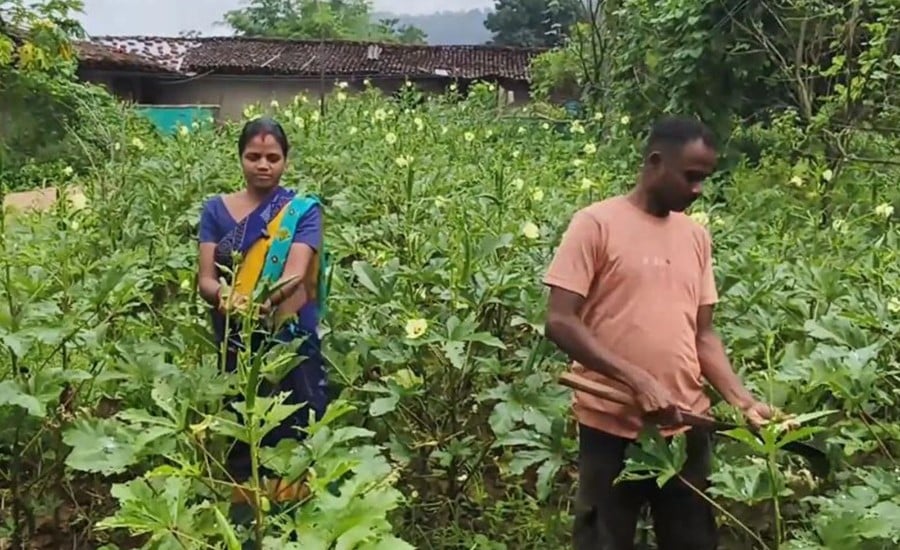
Balrampur, Chhattisgarh: Former Naxal commander Sitaram Sonwani, who surrendered before Balrampur Police in February 2021, is now living with his family in a permanent house constructed under the Pradhan Mantri Awas Yojana as part of the government’s rehabilitation efforts.
Sonwani had been associated with the Naxal organisation from 1998 to 2005. After leaving the organisation, he moved to Assam with his wife, Virajo. During the COVID-19 pandemic, he returned to his native village and subsequently surrendered before the Balrampur Police on February 26, 2021. He later spent 14 months in jail before being released.
“I was a Naxal commander before, from 1998 to 2005. After that, my wife Virajo got me to leave the Naxals. Through her, I left the Naxals, and after leaving, we went and settled in Assam,” Sonwani said.
27 Houses Sanctioned in Balrampur
Balrampur Zila Panchayat CEO Dr Ashutosh Chaturvedi said the district administration is working to bring Naxal-affected families and people who have surrendered into government welfare schemes.
Read Also: From Naxal-Affected Areas to Cyber Threats: Chhattisgarh Police Eyes New Security Challenges
According to him, 27 houses have been sanctioned in Balrampur under the initiative. Of these, 18 have been completed, while nine are under construction. Sonwani’s house is among the completed houses.
Rehabilitation Policy Links Surrendered Persons With Welfare Schemes
The development comes amid continued efforts in Balrampur to implement the Chhattisgarh Naxalwadi Atmasamarpan/Pidit Rahat Punarvas Niti-2025.
At a district-level committee meeting held on September 23, Collector Chandan Sanjay Tripathi directed officials to prioritise the welfare of surrendered persons and connect them with Central and state government schemes. The administration said 31 people had been linked with self-help groups.
The district administration also reported that, among 24 surrendered persons in Balrampur, 14 had received housing assistance, while 21 each were receiving food support and benefits under the national health scheme.
Focus on Reintegration
Sonwani said that after his release from jail, he returned to his village and received a house under the government’s rehabilitation policy. His wife also said the family had earlier been living in a kutcha house before moving into the newly constructed permanent home.
The Balrampur administration has also been working to connect surrendered persons and families affected by Naxal violence with welfare programmes, including housing, food assistance, healthcare and livelihood-related initiatives.
At the national level, the Centre has said rehabilitation of surrendered cadres remains part of its post-Left Wing Extremism approach, alongside development, governance and welfare interventions in previously affected areas.