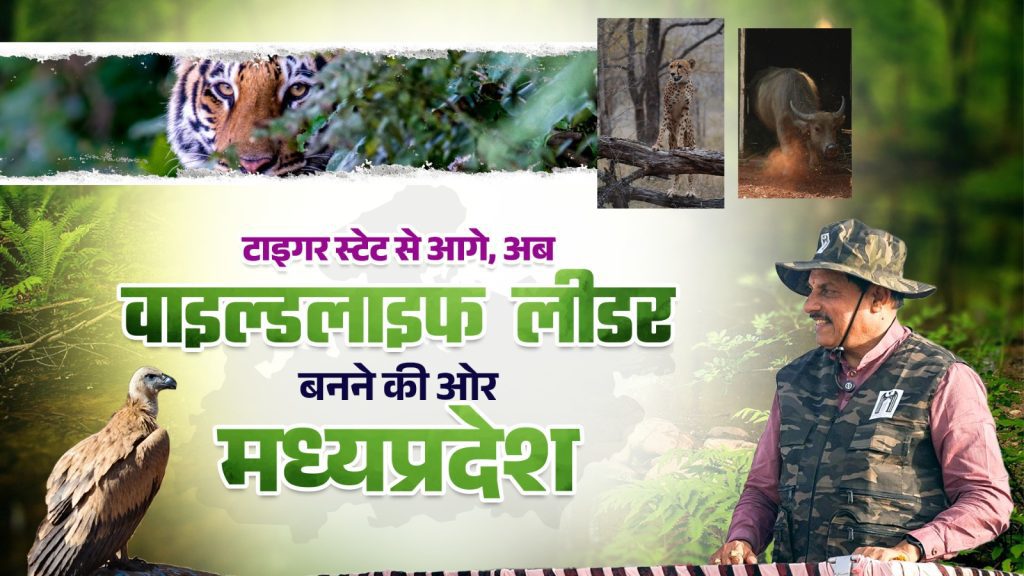
Bhopal: Madhya Pradesh is set to take another significant step in wildlife conservation as Chief Minister Dr. Mohan Yadav visits Kuno National Park in Sheopur district on May 10–11 to release two female cheetahs brought from Botswana into the open forest.
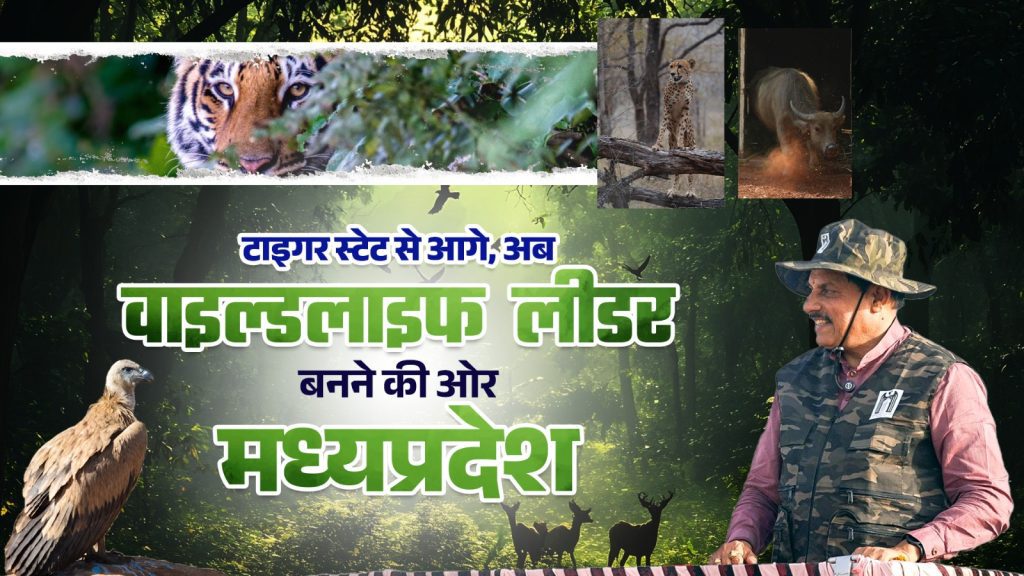
The move marks another milestone in India’s ambitious cheetah reintroduction programme and reinforces Madhya Pradesh’s growing reputation as the country’s leading wildlife conservation state. Once known primarily as the “Tiger State,” Madhya Pradesh is now emerging as a comprehensive model for biodiversity protection, eco-tourism, and community-based conservation.
Two Botswana Female Cheetahs to Be Released into the Wild
During his two-day visit to Kuno National Park, Chief Minister Dr. Mohan Yadav will release two female cheetahs from their acclimatization enclosures into the forest area.
Officials say the decision reflects the state government’s commitment to scientific wildlife management and long-term habitat restoration. The release is also expected to strengthen Kuno’s role as the centerpiece of India’s cheetah conservation efforts.
Read Also: CM Mohan Yadav Hails Shubhendu Adhikari’s Oath as West Bengal CM, Calls It Beginning of New Era
Wildlife Conservation Linked to Rural Economy
Since assuming office in December 2023, Dr. Mohan Yadav has adopted a broader approach to conservation by linking forests and wildlife with:
- Cultural heritage
- Biodiversity protection
- Eco-tourism
- Rural livelihoods
- Local employment
This integrated vision has led to a series of major policy decisions aimed at expanding protected areas and reducing human-wildlife conflict across the state.
Kuno National Park Emerges as a Global Conservation Laboratory
Following the success of Project Cheetah, Kuno National Park has become one of the world’s most closely watched wildlife restoration sites.
With the cheetah population reaching 57, Kuno is evolving beyond a single-species initiative into a global conservation laboratory. The state is also developing:
- Gandhi Sagar Wildlife Sanctuary as a secondary cheetah habitat
- Nauradehi Wildlife Sanctuary as a third major cheetah landscape
- A soft-release Boma facility at Nauradehi for future translocations
These initiatives are aimed at creating a robust, long-term breeding and dispersal network for cheetahs in India.
Ratapani and Madhav Tiger Reserves Expand Protected Landscape
Under Dr. Yadav’s leadership, Madhya Pradesh has significantly expanded its network of tiger reserves.
Ratapani Tiger Reserve
Ratapani was declared the state’s newest tiger reserve after a proposal pending for nearly 17 years. Named after archaeologist Vishnu Shridhar Wakankar, the reserve combines conservation with cultural heritage and is notable for being located close to Bhopal.
Madhav Tiger Reserve
In March 2025, Madhav Tiger Reserve became the state’s ninth tiger reserve. A 13-km protective wall is being developed to reduce human-wildlife conflict and improve habitat security.
MP Leads India in Vulture Conservation
Madhya Pradesh now hosts more than 14,000 vultures, the highest population in the country.
A dedicated rescue centre in Kerwa, Bhopal, operated in collaboration with the Bombay Natural History Society and Van Vihar National Park, has become a national model for vulture recovery. One rehabilitated vulture recently flew as far as Uzbekistan after release.
New Wildlife Sanctuaries and Conservation Reserve
To strengthen biodiversity protection, the state has recently approved several new protected areas.
Baba Saheb Dr. Bhimrao Ambedkar Wildlife Sanctuary
A 258.64 sq km area in Sagar district was notified as a new sanctuary in April 2025.
Omkareshwar and Jahangarh Sanctuaries
Two additional sanctuaries have been approved to protect ecologically sensitive regions and future wildlife corridors.
Tapti Conservation Reserve
Declared in Betul district, this is Madhya Pradesh’s first Conservation Reserve and supports species such as tigers, leopards, gaur, and wild dogs.
Focus on Gharials, Crocodiles and Turtles
The state is also intensifying conservation efforts for aquatic reptiles.
The National Chambal Sanctuary continues to be the world’s most important habitat for gharials. Recently, gharials and turtles were released into the Kuno River, while crocodile restoration programmes are underway in the Narmada River and Omkareshwar region.
Wild Buffaloes Return to Kanha
In a landmark biodiversity restoration initiative, wild buffaloes brought from Assam’s Kaziranga National Park have been reintroduced into Kanha Tiger Reserve.
The project aims to restore species that had disappeared from the state’s forests.
₹47-Crore Elephant Conservation Plan Approved
To address rising human-elephant conflict, the state has approved a conservation package worth more than ₹47 crore.
Key components include:
- Hathi Mitra scheme
- Radio collaring and tracking
- Solar fencing
- State-level Elephant Task Force
Compensation increase from ₹8 lakh to ₹25 lakh in fatal cases
₹5,500-Crore Tiger Corridor Project Underway
Madhya Pradesh is implementing a mega tiger corridor project worth over ₹5,500 crore to connect major tiger habitats, including:
- Kanha
- Bandhavgarh
- Panna
- Pench
Wildlife-friendly infrastructure such as underpasses, overpasses, soundproof corridors, and traffic-calming “Red Blocks” are being developed to reduce roadkill and maintain habitat connectivity.
Conservation Driving Employment and Eco-Tourism
The expansion of tiger reserves, the cheetah project, and eco-tourism initiatives are creating substantial employment opportunities in rural areas.
Communities near protected areas are increasingly benefiting from tourism, guiding services, hospitality, and conservation-linked enterprises.
Madhya Pradesh Redefines Itself as India’s Wildlife Capital
With scientific planning, strong political commitment, and community participation, Madhya Pradesh is broadening its identity beyond the “Tiger State.”
Under Chief Minister Dr. Mohan Yadav, the state is emerging as a national and global model for wildlife conservation – where biodiversity protection, economic development, and cultural heritage are advancing together.