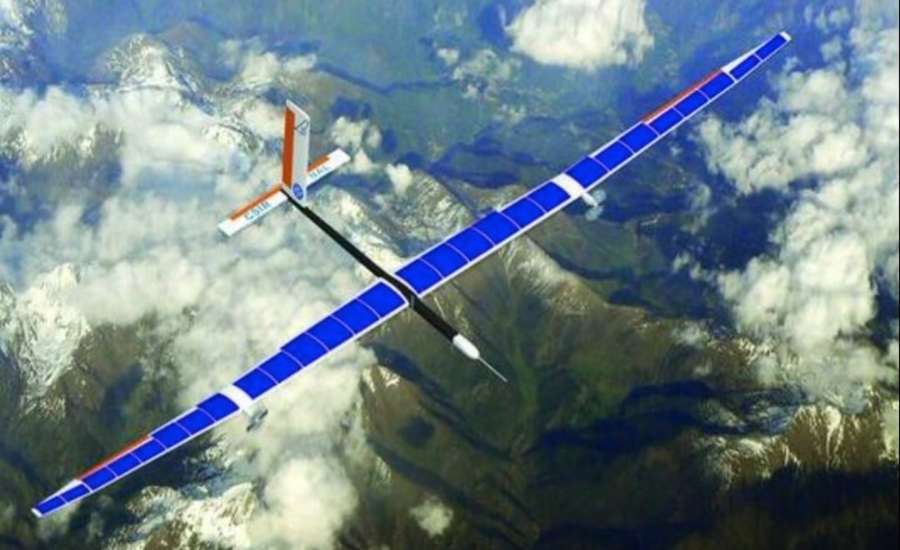
Bengaluru: India has taken a major leap in advanced aerospace and long-endurance unmanned systems with the inauguration of a dedicated manufacturing facility for High-Altitude Pseudo Satellites (HAPS).
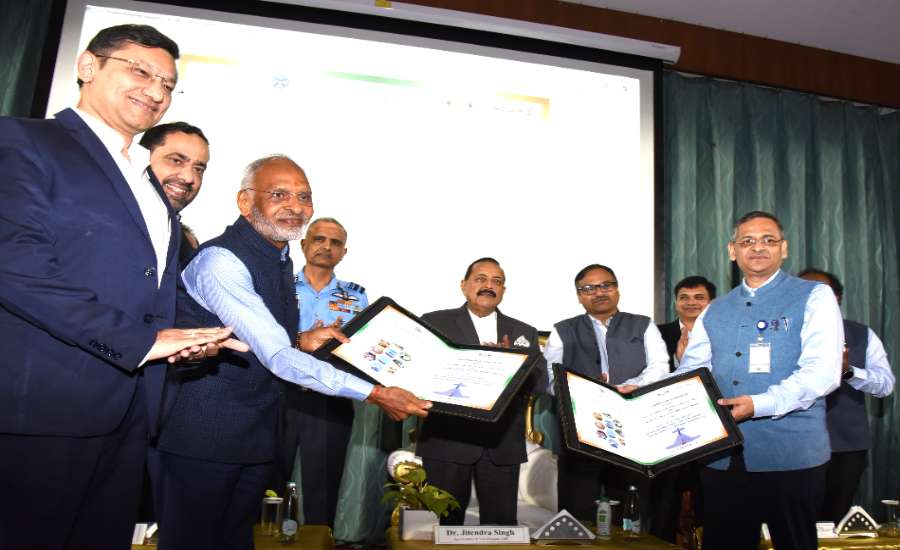
The state-of-the-art unit was launched by Union Minister Dr. Jitendra Singh at the Council of Scientific and Industrial Research – National Aerospace Laboratories (CSIR-NAL) campus in Bengaluru.
This milestone strengthens India’s mission of achieving strategic self-reliance (Atmanirbhar Bharat) in next-generation defence and surveillance technologies.
What Are High-Altitude Pseudo Satellites (HAPS)
High-Altitude Pseudo Satellites—also known as High-Altitude Platform Stations—are solar-powered, ultra-light, unmanned aerial systems capable of flying in the stratosphere at altitudes of 18–20 km.
They operate far above commercial aircraft routes and below traditional satellites, enabling:
- Continuous surveillance
- High-bandwidth communication capability
- Environmental and climate monitoring
- Border and maritime security
- Disaster management support
HAPS fills the critical gap between UAVs and satellites, providing months or even years of uninterrupted operations at a fraction of satellite launch costs.
India’s Growing Focus on Stratospheric Defence Technologies
India has been intensifying its investments in unmanned systems, AI-enabled defence platforms, and aerospace innovation.
The launch of this HAPS manufacturing facility marks:
- India’s first dedicated industrial-scale HAPS production unit
- A major step toward indigenous stratospheric surveillance platforms
- Enhanced capabilities for long-duration intelligence, telecommunication, and climate studies
This development aligns with the government’s broader strategy under Atmanirbhar Bharat, prioritizing domestic manufacturing and reducing dependency on foreign aerospace systems.
Achievements of CSIR-NAL HAPS
Before this full-scale production unit was established, CSIR-NAL had already demonstrated notable progress in HAPS technology, including:
- Subscale Prototype Flights
- Achieved 7.5 km altitude
- Recorded over 10 hours of flight endurance
- Demonstrated stability in stratospheric conditions
These successes validated India’s capability to design high-efficiency solar-powered, lightweight airframes with extended endurance.
The New CSIR-NAL HAPS Facility: Capabilities and Infrastructure
The newly inaugurated dedicated CSIR-NAL HAPS manufacturing centre includes:
1. Specialized Composite Material Labs: HAPS vehicles require ultra-light yet high-strength materials. The facility integrates advanced composite fabrication units and structural testing systems.
2. Solar Integration & Power Management Systems: Given that HAPS missions depend primarily on solar energy, the unit features high-efficiency solar panel integration zones and battery optimization labs.
3. Full-Scale Airframe Assembly Line: Designed for scalable production of complete HAPS platforms capable of long-duration stratospheric missions.
4. Advanced Flight Testing & Simulation Centre: Simulations of extreme stratospheric conditions such as:
- low temperature
- low atmospheric density
- high UV radiation
5. Payload Integration Bay: Allows for installation of mission-specific equipment including:
- Electro-optical sensors
- Surveillance and reconnaissance packages
- Communication relay systems
- Environmental sensors
Strategic and Commercial Advantages of CSIR-NAL HAPS
1. Persistent Surveillance at Low Cost: Unlike satellites that require high launch expenses, HAPS platforms can be deployed and retrieved at minimal operational costs.
2. Ideal for Border and Maritime Monitoring: Continuous, long-duration, and localized surveillance is crucial for:
- India-China border
- Line of Control (LoC)
- Indian Ocean Region (IOR)
3**. Revolutionizing Telecommunications**: HAPS can function as temporary mobile towers in the sky, providing:
- 5G/6G connectivity
- Emergency communication during natural disasters
4. Environmental & Climate Applications: Stratospheric drones are ideal for long-term:
- Pollution monitoring
- Atmospheric research
- Greenhouse gas measurement
Strategic Importance for India’s Defence Ecosystem
The inauguration significantly strengthens India’s asymmetric warfare capabilities by enabling:
- Real-time intelligence, surveillance, and reconnaissance (ISR)
- Faster decision-making during security operations
- Improved situational awareness for armed forces
- Enhanced maritime domain awareness
This positions India alongside leading nations such as the USA, UK, Japan, and China, who are developing next-generation stratospheric drone systems.
Future Roadmap: India’s Vision for HAPS Technology
CSIR-NAL aims to develop:
1. Full-Scale HAPS Platforms: Capable of multi-month endurance at 20 km altitude.
2. AI-Based Autonomous Mission Management: For intelligent flight planning and navigation.
3. Modular Mission Payloads Supporting:
- Defence
- Disaster relief
- Communication companies
- Environmental agencies
4. Industry Partnerships: Collaborations with Indian aerospace startups and private defence manufacturers to accelerate commercial adoption.