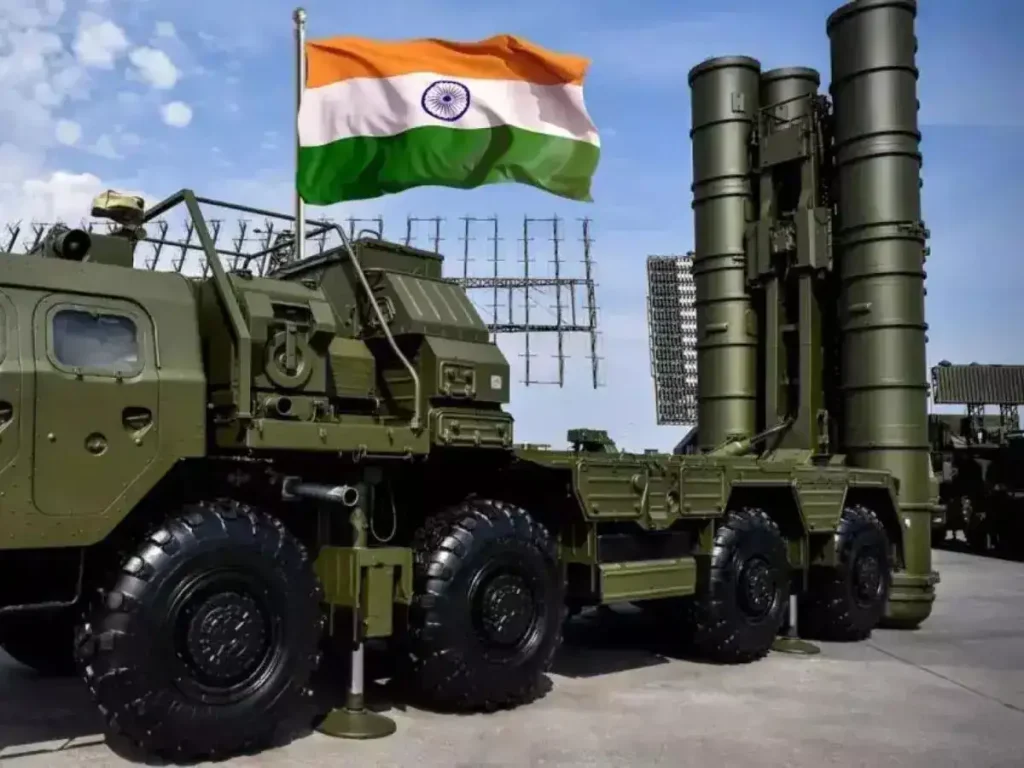
New Delhi: India’s ballistic missile defence programme has gained significant momentum after Operation Sindoor, with the Defence Research and Development Organisation (DRDO) intensifying testing of the AD-1 interceptor, AD-2 interceptor, and Project Kusha air defence system. These advanced missile defence projects are designed to create a multi-layered shield against ballistic missiles, cruise missiles, fighter aircraft, drones, and other aerial threats. The latest developments highlight India’s growing focus on self-reliance in defence technology and strengthening national security through indigenous air and missile defence capabilities.
What Is India’s Ballistic Missile Defence Programme?
India’s Ballistic Missile Defence (BMD) programme is designed to detect, track and destroy enemy missiles before they can reach their targets. The system uses multiple interceptor missiles operating at different altitudes and ranges.
Read also: Project Kusha: DRDO Reveals How India Will Reduce Dependence on Imported Air Defence Systems
This layered approach ensures that if one defensive layer fails, another can engage the incoming threat. The programme aims to defend against:
- Ballistic missiles
- Cruise missiles
- Fighter aircraft
- Armed drones
- Long-range aerial threats
- Hypersonic and emerging missile systems
India Ballistic Missile Defence Programme Strengthens Multi-Layered Air Defence Shield
India is rapidly building one of the most advanced indigenous air defence networks in Asia. Recent trials of the AD-1 interceptor, progress on the AD-2 interceptor, and advancements in Project Kusha demonstrate the country’s commitment to protecting its airspace from emerging threats.
The programme is being led by the Defence Research and Development Organisation (DRDO) and forms a critical part of India’s long-term security strategy.
AD-1 Interceptor Successfully Strengthens India’s First Defence Layer
One of the biggest achievements in 2026 has been the successful testing of the AD-1 interceptor missile. Developed by DRDO, AD-1 is a two-stage, solid-fuel interceptor designed to engage hostile ballistic missiles.
The missile is capable of intercepting threats within the atmosphere and at the edge of space, making it a key component of India’s missile defence architecture.
What are the Features Of AD-1
- Two-stage solid-fuel interceptor
- Advanced navigation and tracking systems
- Capable of engaging long-range ballistic missiles
- Operates in both endo-atmospheric and low exo-atmospheric regions
- Important pillar of Phase-I BMD architecture
The successful flight test validates India’s growing capability in missile interception technology.
AD-2 Interceptor Represents The Next Generation Of Missile Defence
Building on the success of AD-1, India is also advancing the AD-2 interceptor programme. The AD-2 interceptor is designed to engage highly sophisticated ballistic missile threats at greater altitudes and higher speeds.
According to DRDO’s missile defence roadmap, AD-2 will provide protection against longer-range and more complex ballistic missile attacks.
Why AD-2 Is Important
The AD-2 interceptor is expected to:
- Intercept threats at much higher altitudes
- Counter intercontinental-class ballistic missile threats
- Strengthen India’s strategic deterrence
- Expand the country’s missile defence envelope
Defence analysts consider AD-2 one of the most ambitious missile defence projects currently under development in India.
India Ballistic Missile Defence Programme: Project Kusha Emerges As India’s Long-Range Air Defence System
Alongside ballistic missile defence programmes, DRDO is making significant progress on Project Kusha. Project Kusha is a long-range surface-to-air missile (LR-SAM) system designed to provide wide-area protection against multiple aerial threats.
The system is often compared with advanced international air defence platforms due to its long-range interception capability.
Project Kusha will defend against the following;
- Fighter aircraft
- Cruise missiles
- Stealth aircraft
- Armed drones
- Precision-guided weapons
The project is expected to become one of India’s most important indigenous air defence assets.
Project Kusha Range And Capabilities
Project Kusha is being developed with multiple interceptor missiles to create layered protection. Reports indicate the system could eventually field interceptors with ranges between 150 km and 400 km.
Planned Kusha Interceptor Variants
| Variant | Estimated Range |
| Kusha M1 | Around 150+ km |
| Kusha M2 | Around 250 km |
| Kusha M3 | Up To 350-400 km |
These variants will allow India to engage threats at different distances and altitudes.
India Ballistic Missile Defence Programme: How AD-1, AD-2 And Project Kusha Work Together
The true strength of India’s air defence strategy lies in integration. Each system is designed to perform a specific role while supporting the others.
Layer 1: Project Kusha
Protects against aircraft, cruise missiles, drones and other aerial threats at long range.
Layer 2: AD-1
Intercepts incoming ballistic missiles at lower exo-atmospheric and atmospheric altitudes.
Layer 3: AD-2
Engages advanced and longer-range ballistic missile threats at greater altitudes.
Together, these systems create overlapping defensive layers that reduce vulnerabilities and increase interception opportunities.
Operation Sindoor Highlights Need For Stronger Air Defence
The push for faster testing and deployment comes after lessons learned from recent regional security challenges. Operation Sindoor highlighted the importance of maintaining a robust and modern air defence network capable of responding to multiple simultaneous threats.
As missile technology becomes more advanced worldwide, nations are increasingly investing in layered air defence systems to protect critical infrastructure and strategic assets.
Why India Ballistic Missile Defence Programme Important For India
The continued progress of AD-1, AD-2 and Project Kusha supports India’s broader goal of defence self-reliance.
Key benefits include:
- Reduced dependence on foreign systems
- Indigenous missile technology development
- Enhanced national security
- Stronger deterrence capability
- Growth of India’s defence manufacturing ecosystem
- Greater operational flexibility for armed forces
The programme also aligns with the government’s Aatmanirbhar Bharat and Make In India initiatives.
Expert Analysis of India Ballistic Missile Defence Programme
The simultaneous advancement of AD-1, AD-2 and Project Kusha indicates that India is moving towards a fully indigenous and layered missile defence architecture.
Instead of relying on a single defence system, India is creating multiple overlapping protection layers capable of handling a wide variety of threats.
This approach follows global best practices adopted by major military powers and significantly improves survivability against modern missile attacks.
If development timelines continue successfully, India could emerge as one of the few nations with a comprehensive indigenous missile defence ecosystem spanning tactical, operational and strategic levels.
Read also: Beyond BrahMos: How Drones And Smart Weapons Are Driving India’s Next Defence Export Revolution