New Delhi/Kochi: Demonstrating its operational readiness, technical expertise, and commitment to maritime safety, the Indian Navy successfully carried out a complex and high-risk Explosive Ordnance Disposal (EOD) operation to recover an unexploded missile warhead from a foreign-flagged crude oil tanker approaching the Indian coast.
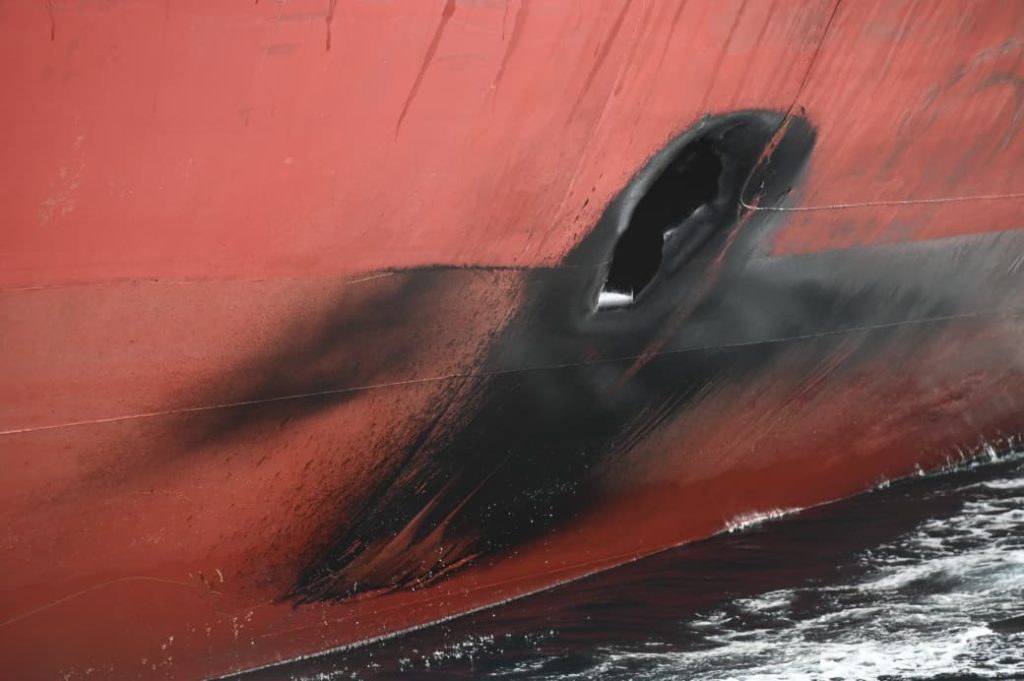
The operation involved the Marshall Islands-flagged tanker MT Olympic Life, which had reported an explosion in its hull while sailing off the coast of Oman on May 26, 2026. The vessel, carrying no Indian nationals onboard, was en route from Fujairah in the United Arab Emirates to Kochi when the incident occurred.
Despite the explosion, the vessel continued its voyage toward Kochi and subsequently reported the presence of an unexploded ordnance onboard, triggering an emergency maritime response.
Information Received Through IFC-IOR
The Indian Navy received information about the incident through the Information Fusion Centre – Indian Ocean Region (IFC-IOR), the country’s maritime security information-sharing hub.
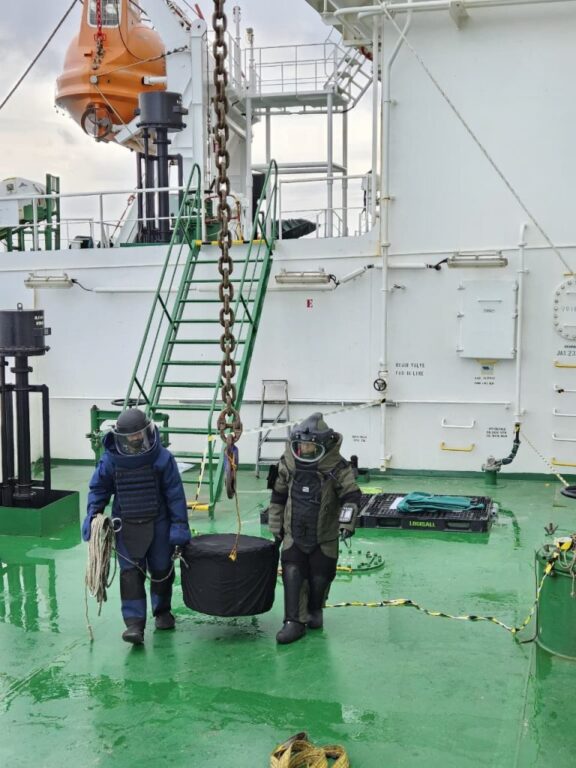
Recognising the potential threat posed by the unexploded ordnance, the Southern Naval Command, headquartered in Kochi, immediately initiated a coordinated response and deployed a specialist Explosive Ordnance Disposal team to assess the situation.
Projectile Penetrated Multiple Compartments
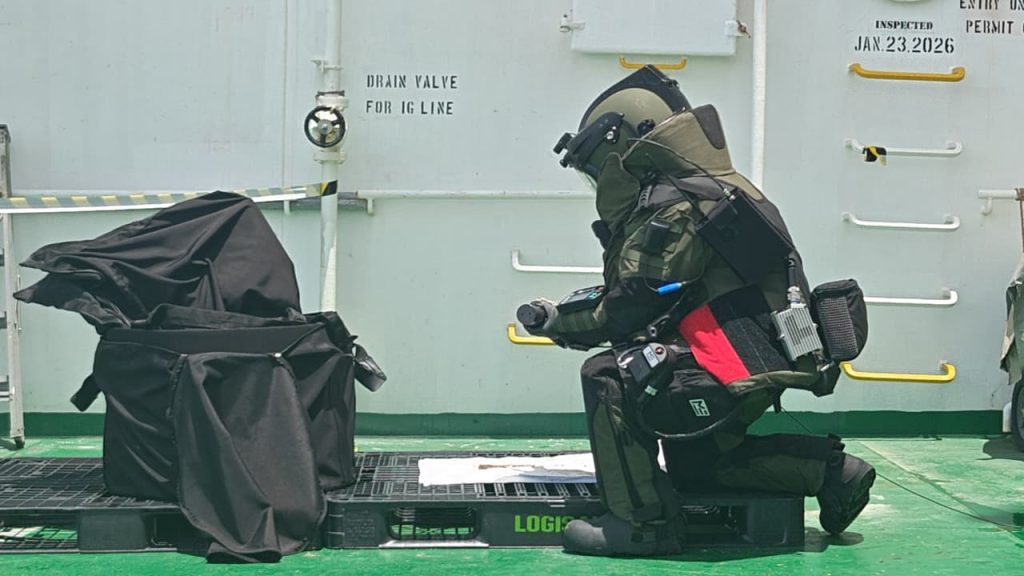
Upon boarding and conducting a detailed technical inspection, the EOD specialists discovered that a projectile had penetrated the ship’s hull and passed through multiple structural sections before becoming lodged inside one of the vessel’s fuel storage tanks.
The discovery significantly elevated the risk level of the operation, as any accidental detonation inside a fuel compartment could have resulted in catastrophic consequences for the vessel, crew, port infrastructure, and the surrounding maritime environment.
Deliberate and Phased Approach Adopted
Given the extreme sensitivity of the situation, the Indian Navy adopted a carefully planned and phased approach to neutralise the threat.
Naval experts carried out extensive safety assessments and implemented prescribed precautionary measures before initiating the extraction process. The operation required meticulous planning due to the location of the unexploded missile warhead inside a fuel tank.
The primary objective was to ensure complete safety of the ship, its crew, nearby maritime assets, and critical infrastructure at Kochi Port.
Advanced Diagnostic Techniques Used
Following the implementation of safety protocols, the EOD team employed advanced diagnostic technologies to determine the condition of the unexploded ordnance.
Specialists carefully identified and isolated the detonation mechanism before proceeding with the extraction operation. The warhead, along with associated debris, was then safely removed from the vessel without any incident.
The successful recovery highlighted the Indian Navy’s capability to handle highly technical and hazardous explosive disposal missions in challenging maritime environments.
Warhead Moved to Secure Facility
Following its extraction, the recovered missile warhead was transported to a secure facility where it will be safely stored and subjected to detailed forensic and technical examination.
The examination is expected to help authorities determine the nature, origin, and characteristics of the projectile that struck the vessel.
Demonstration of Maritime Security Capabilities
The operation is being viewed as a significant demonstration of the Indian Navy’s expertise in explosive ordnance disposal and maritime emergency response.
Officials noted that the successful mission required close coordination among multiple agencies, technical precision, and sustained operational effort over an extended period.
The incident also highlighted the growing importance of maritime domain awareness and rapid response mechanisms in ensuring the safety of international shipping lanes across the Indian Ocean Region.
Commitment to Global Maritime Safety
The Indian Navy emphasized that its response was guided by the principles of maritime safety and humanitarian assistance, irrespective of the nationality of the vessel or its crew.
By responding promptly to the emergency involving MT Olympic Life, the Navy reaffirmed its role as a responsible maritime force and a trusted security partner in the Indian Ocean Region.
The successful completion of the operation further strengthens India’s reputation as a key provider of maritime security and emergency assistance in one of the world’s busiest shipping corridors.
Read Also: India May Get Custom-Built Su-57E Jets as Russia Makes Major Stealth Fighter Offer