New Delhi: India’s fighter aircraft modernization plans have received fresh attention after Swedish defence company Saab confirmed that it is holding continuous discussions with India regarding the supply and local production of the Gripen E fighter jets.
The development comes at a time when the Indian Air Force (IAF) is looking to strengthen its combat fleet while supporting the government’s “Make in India” and defence self-reliance goals.
Saab Confirms Ongoing Discussions With India
According to statements made by Saab officials, discussions with India are ongoing around a proposal that goes far beyond the sale of fighter aircraft.
Read also: Make in India Gets Major Boost as India Plans $2 Billion Military Drone Orders
Key highlights of Saab’s proposal include:
- Supply of advanced Gripen E fighter jets.
- Extensive technology transfer to India.
- Local manufacturing and maintenance ecosystem.
- Integration of Indian companies into the supply chain.
- Long-term design, upgrade, and support capabilities within India.
- Potential use of artificial intelligence and next-generation technologies in future upgrades.
Saab reportedly describes the offer as one of its most comprehensive industrial cooperation proposals ever presented to India.
Why India Needs New Fighter Jets like Gripen E Fighter Jets
The Indian Air Force currently faces a shortage of fighter squadrons compared to its sanctioned strength.
To address this gap, India has been pursuing the Multi-Role Fighter Aircraft (MRFA) program, which aims to acquire around 114 fighter aircraft through a mix of imports and domestic production. Saab’s Gripen E is among the major contenders for this requirement.
India is also balancing several parallel objectives:
- Strengthening air combat capability.
- Reducing dependence on foreign suppliers.
- Building indigenous aerospace manufacturing.
- Supporting future programs such as AMCA and other advanced aircraft initiatives.
Details of Gripen E Fighter Jets
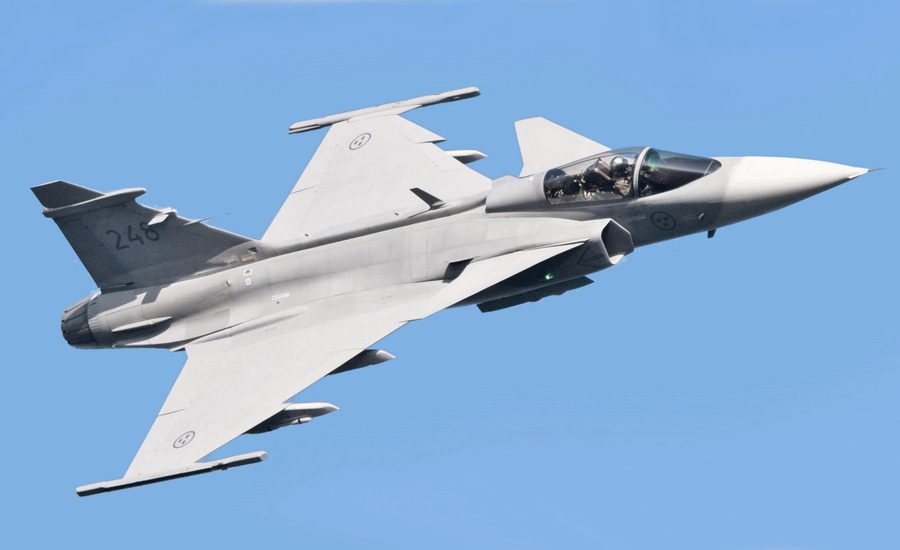
The Gripen E fighter jets are the latest version of Sweden’s Gripen fighter family.
What are the Features of Gripen E Fighter Jets
- Single-engine multirole fighter.
- Advanced radar and electronic warfare systems.
- Beyond-Visual-Range (BVR) combat capability.
- Network-centric warfare support.
- Ability to carry multiple weapon systems.
- Lower operating costs compared to many competing fighters.
- Designed for rapid maintenance and high operational availability.
The aircraft is currently operated or ordered by countries including Sweden and Brazil, while other nations continue evaluating the platform.
Saab’s Biggest Offer: Technology Transfer
One of the most significant aspects of Saab’s proposal is its willingness to provide extensive technology transfer.
Saab has publicly stated that its offer includes:
- Aircraft production capability.
- Design and development know-how.
- Maintenance and lifecycle support expertise.
- Indigenous manufacturing ecosystem creation.
- Export-oriented aerospace opportunities for India.
The company has previously said that it is prepared to hand over full capabilities rather than merely establish an assembly line operation.
This point is particularly important because India increasingly prefers defence deals that contribute to domestic manufacturing and skill development.
Gripen E vs India’s Existing Fighter Fleet
If selected, the Gripen E would likely complement rather than replace existing aircraft.
The Indian Air Force currently operates or is inducting:
- Su-30MKI
- Rafale
- Tejas Mk1A
- Mirage 2000
- MiG-29
Saab has positioned the Gripen E as a fighter that could work alongside Rafale and Tejas while helping fill squadron shortages.
Gripen E Fighter Jets: Delivery Timeline
Saab claims that the first aircraft could be delivered within approximately three years after contract signing, making it one of the faster delivery options available to India.
Fast delivery is a major factor because the IAF needs additional combat aircraft in the near term while indigenous programs continue to mature.
Strategic Significance for India and Sweden
The fighter jet proposal reflects growing defence cooperation between India and Sweden.
Recent years have already seen increased collaboration between the two countries in defence manufacturing. Saab has also established defence-industrial projects in India, including production-related investments and partnerships.
For India, the deal could provide:
- Modern fighter aircraft.
- Greater technology access.
- Aerospace manufacturing growth.
- Export opportunities.
- Long-term industrial benefits.
For Sweden and Saab, India represents one of the world’s largest defence markets and a potential long-term strategic partner.