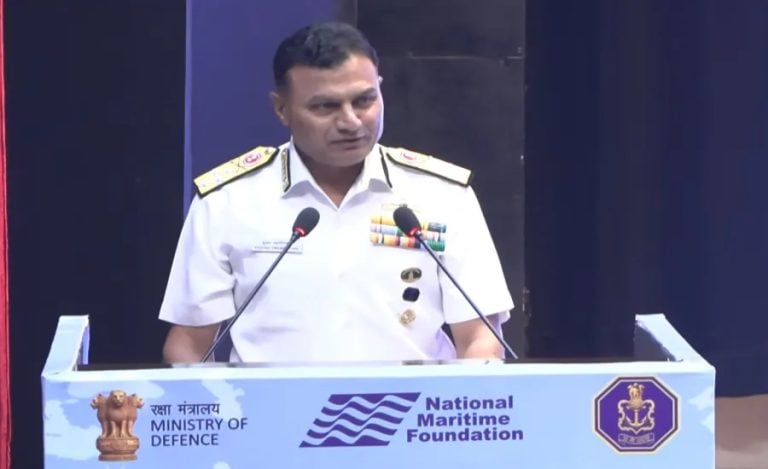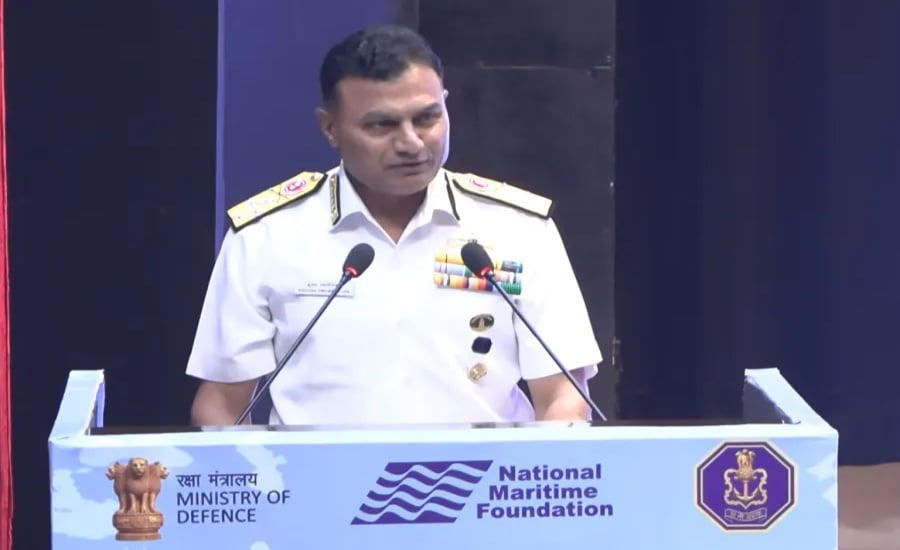
New Delhi: India has called for greater investment in ocean sciences and stronger regional cooperation to address growing maritime and environmental challenges. Navy Chief Admiral Krishna Swaminathan highlighted the issue at the Indo-Pacific Regional Dialogue (IPRD) 2026 in New Delhi on November 4, 2026.
He said that investment in ocean science remains very low despite rising sea levels, warming oceans, extreme weather events and marine pollution. He also stressed the need for joint research, better technology sharing and stronger scientific cooperation among Indo-Pacific countries.
Indo Pacific Regional Dialogue 2026: Navy Chief Highlights Low Investment In Ocean Sciences
Speaking at the Indo-Pacific Regional Dialogue 2026, Admiral Krishna Swaminathan pointed out that global investment in ocean research is not sufficient to meet today’s challenges.
Read also: Indo-Pacific Dialogue 2026: India Highlights Maritime Security And Academic Partnerships
According to the Navy Chief, the annual median share of national research budgets allocated to ocean sciences remains below 1%.
He also highlighted that only 10 countries operate around two-thirds of the world’s research vessels. This shows the major gap in scientific resources and research capabilities between different countries.
The Admiral said that some regions have fewer than 100 researchers per million people, while others have more than 4,000.
He explained that this unequal distribution of scientific knowledge and research facilities makes international cooperation more important.
Climate Change And Marine Pollution Are Growing Concerns
Admiral Swaminathan highlighted several environmental challenges that are affecting countries across the Indo-Pacific region. These include:
- Warming Oceans: Rising ocean temperatures are affecting marine ecosystems and weather patterns.
- Rising Sea Levels: Coastal communities and low-lying island nations face growing risks from rising sea levels.
- Erratic Rainfall: Changing climate conditions are making rainfall patterns less predictable.
- Intense Cyclones: Several countries are facing increasing risks from powerful tropical storms.
- Marine Pollution: Pollution can travel across national borders and affect distant marine ecosystems.
The Navy Chief also highlighted the effects of El Niño, which can influence rainfall patterns and increase climate-related challenges in different parts of the world.
He stressed that marine pollution does not remain limited to the waters where it originates. Therefore, countries need to work together to protect the oceans.
Why Regional Cooperation Is Important For Ocean Research
The oceans connect different countries through water currents, weather systems, marine ecosystems and international trade.
Environmental problems in one part of the ocean can affect other regions. This makes it difficult for a single country to manage every maritime challenge independently.
Admiral Swaminathan called for stronger cooperation between countries to improve scientific research and share important information. He highlighted the importance of:
- Joint scientific research projects.
- Sharing oceanographic data and technology.
- Collaborative scientific expeditions.
- Stronger research partnerships between universities.
- Better cooperation between maritime institutions.
Such initiatives can help countries understand ocean conditions, improve weather forecasting and prepare for environmental emergencies.
Indo Pacific Regional Dialogue 2026: Navy Chief Highlights Problems In Technology Transfer
Admiral Swaminathan also raised concerns about the way technology is transferred between countries.
He explained that technology transfer often focuses more on purchasing equipment than developing long-term technical capabilities. As a result, countries receiving advanced equipment may remain dependent on external partners for operation, maintenance and upgrades.
He called for a stronger focus on developing local skills, research capabilities and technical knowledge. This approach can help countries become more independent in managing their maritime technology and infrastructure.
Navy Chief Calls For A Broader STEAM Education Framework
Another important point raised by Admiral Swaminathan was the need to move beyond the traditional STEM education framework. STEM stands for Science, Technology, Engineering and Mathematics.
He called for a broader STEAM approach that also includes Arts, along with life sciences, social sciences and humanities. According to him, combining different subjects can encourage creativity, innovation and better problem-solving.
For example, understanding maritime challenges requires more than engineering and technology. It also involves environmental studies, social sciences, design and human understanding. This broader approach can help develop skilled researchers and professionals who can address complex ocean-related problems.
FAQs
Admiral Krishna Swaminathan said that the annual median share of national research budgets allocated to ocean sciences remains below 1%. He called for greater investment, joint research and stronger regional cooperation.
Investment in ocean sciences helps countries understand climate change, rising sea levels, marine pollution and extreme weather events. It also improves ocean research, weather forecasting and maritime safety.
The Indo-Pacific Regional Dialogue 2026 is an annual international strategic conference organised by the Indian Navy with the National Maritime Foundation. It is being held in New Delhi from November 3 to 5, 2026, focusing on science, technology and academic cooperation in the Indo-Pacific.