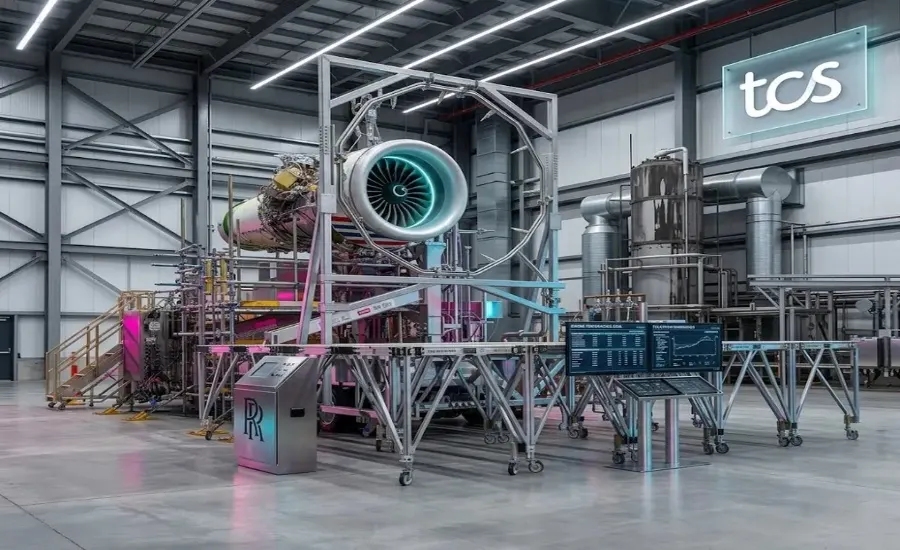
New Delhi: TCS and Rolls-Royce hydrogen propulsion technology has achieved a major breakthrough after the two companies successfully demonstrated a modern aero gas turbine engine operating entirely on 100% hydrogen fuel. The achievement marks a significant step toward zero-emission aviation and strengthens confidence in hydrogen as a future fuel for commercial aircraft.
The announcement was made jointly by Tata Consultancy Services (TCS) and Rolls-Royce, highlighting the successful completion of a full simulated flight cycle powered exclusively by hydrogen.
TCS-Rolls-Royce Hydrogen Propulsion Achievement: Successful Full Flight Simulation on Hydrogen
According to the official announcement, the modified engine operated entirely on hydrogen and completed a full simulated flight profile.
The test included key flight phases such as:
- Take-off
- Cruise
- Landing
The engine successfully validated critical propulsion systems, fuel systems, combustion processes, and engine controls while running solely on hydrogen fuel.
Why TCS-Rolls-Royce Hydrogen Propulsion Achievement Matters
Aviation is responsible for around 2–3% of global carbon dioxide emissions. Hydrogen propulsion is widely viewed as one of the most promising technologies for reducing emissions from air travel because it produces no carbon emissions at the point of use.
This successful demonstration provides strong evidence that hydrogen can be a viable fuel for future aircraft engines.
How TCS Contributed
TCS joined the hydrogen demonstrator program in 2024 to provide engineering and technology expertise. The company supported multiple areas, including:
- Fuel system integration
- Engine controls integration
- Hydrogen combustion analysis
- Test preparation
- Data analytics
- Risk management
- Validation and design support
TCS said its engineering capabilities helped accelerate the development and validation process.
Rolls-Royce Highlights Future Potential
Adam Newman, Chief Engineer of the Hydrogen Demonstrator Program at Rolls-Royce, said the project has provided valuable insights into how hydrogen behaves inside a modern aero gas turbine engine.
According to Rolls-Royce, lessons learned from the program will support future propulsion innovations, including next-generation aircraft engines.
TCS-Rolls-Royce Hydrogen Propulsion Achievement: Industry-Wide Collaboration
The project involved collaboration across the aviation ecosystem. Key partners included:
- Rolls-Royce
- Tata Consultancy Services (TCS)
- easyJet
- NASA
- UK Health and Safety Executive (HSE)
The companies said the collective effort will help accelerate the aviation industry’s transition toward lower-carbon and sustainable air travel.
A Big Step Toward Sustainable Aviation
The demonstration is one of the strongest validations so far of hydrogen’s potential as an aviation fuel. Industry experts believe hydrogen propulsion could play an important role in helping airlines reduce emissions and meet long-term climate goals.
While commercial deployment will require further testing and certification, the successful hydrogen-powered flight simulation marks a major milestone for the future of sustainable aviation.