Delhi: The Delhi government, in coordination with the central government, has announced a series of large-scale infrastructure projects aimed at transforming the capital’s transport network and easing chronic traffic congestion across Delhi-NCR. The initiative focuses on building expressways, tunnels, elevated corridors, and service roads to create a faster, safer, and signal-free mobility system.
Chief Minister Rekha Gupta stated that the joint “double-engine government” approach is accelerating the development of modern road infrastructure designed to make Delhi-NCR traffic-free, efficient, and future-ready.
Mega Push for Modern Road Infrastructure in Delhi-NCR
The government is actively working on multiple connectivity projects to reduce congestion at key traffic choke points, including IGI Airport, Mukarba Chowk, Ashram-Badarpur Road, and Kalindi Kunj.
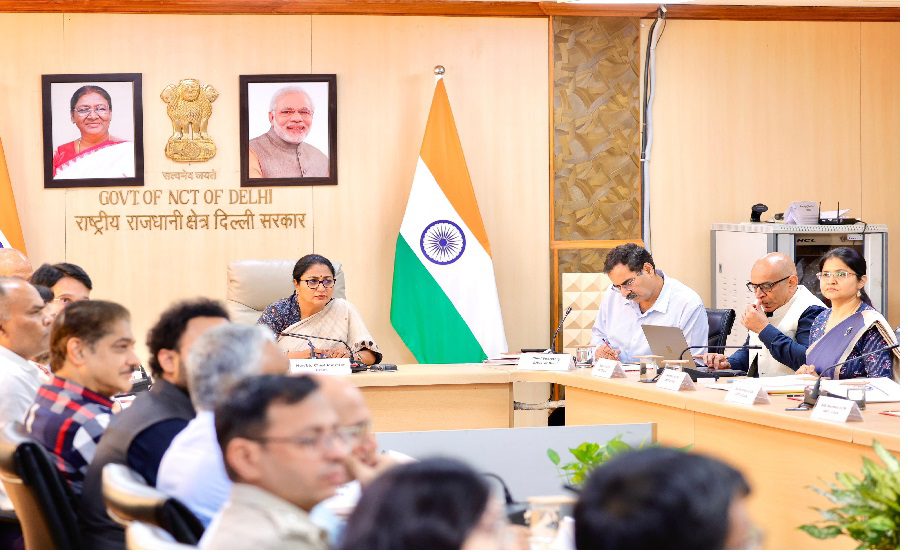
Union Road Transport and Highways Minister Nitin Gadkari recently held a review meeting on Delhi-NCR road projects, where he confirmed that several expressways, tunnels, elevated corridors, and link roads are being developed to improve regional connectivity and reduce traffic pressure.
Officials said the projects are designed with long-term urban mobility needs in mind.
Delhi-Dehradun Expressway Link via UER-2 Extension
A key project involves a 17-km, six-lane connectivity link connecting the Delhi-Dehradun Expressway with Urban Extension Road-2 (UER-2), with an estimated cost of around ₹3,500 crore.
This corridor will connect the expressway near Tronica City and is expected to significantly reduce traffic on major routes such as:
- IGI Airport corridor
- Barapula Nala
- Mukarba Chowk
- Singhu Border
- Ashram-Badarpur Road
It will also provide direct connectivity to Dwarka, Rohini, Punjabi Bagh, and Gurugram.
The project is currently in the alignment finalization stage and is targeted to begin construction by December 2026.
65-Km Delhi-Dehradun–Noida–Faridabad Connectivity Corridor
Another major project is a 65-km, six-lane corridor estimated at ₹7,500 crore, which will link multiple expressways including:
- Delhi-Dehradun Expressway
- Delhi-Meerut Expressway
- DND Flyway
- Faridabad road network
- Yamuna Expressway
This project will improve connectivity for Loni, Baghpat, Ghaziabad, Noida, and Faridabad while easing congestion at Kalindi Kunj, Sarai Kale Khan, and Outer Ring Road.
The corridor is expected to provide an alternative controlled route for intercity and freight traffic.
UER-2 Integration with Delhi-Amritsar-Katra Route
A 17-km, six-lane link road will connect the Delhi-Katra Expressway with UER-2, improving access toward Dwarka Expressway, Gurugram, and IGI Airport.
With an estimated cost of ₹1,500 crore, this project aims to:
- Divert heavy vehicle traffic efficiently
- Reduce congestion across Delhi-NCR
- Improve freight movement and logistics flow
Construction is planned to begin by March 2027.
Service Roads Along UER-2 for Better Local Connectivity
A major upgrade plan includes developing secondary service roads along UER-2 over a 26-km stretch, with a total investment of around ₹6,500 crore.
Additionally, 19 km of two-lane service roads have already been approved at a cost of ₹121 crore.
These service roads will benefit:
- Local commuters
- Industrial zones such as Mundka
- Logistics and business hubs
They will also help decongest the main expressway and improve safety and accessibility.
Shiv Murti–Nelson Mandela Road Tunnel Project
One of the most ambitious projects is an 8-km, six-lane underground tunnel connecting Dwarka Expressway to Vasant Kunj, with an estimated cost of ₹7,000 crore.
This tunnel will provide signal-free movement and is expected to significantly reduce congestion in:
- Mahipalpur
- Rangpuri
- Dhaula Kuan
It will also ease traffic on routes leading to the airport and strengthen connectivity between South Delhi and Gurugram.
The project has received approval from the Public-Private Partnership Appraisal Committee and will proceed after Cabinet clearance.
AIIMS–Gurugram Elevated Corridor for Signal-Free Travel
A 20-km, six-lane elevated corridor between AIIMS and Gurugram, costing around ₹5,000 crore, is planned to improve connectivity between Delhi and Haryana.
Key benefits include:
- Signal-free travel between AIIMS, INA, and Gurugram
- Reduced congestion at Dhaula Kuan and RTR Marg
- Better traffic distribution towards Noida and Ghaziabad
The project will also improve access to areas like Vasant Kunj, Mahipalpur, and Aerocity.
Construction is expected to begin by April 2027.
Kalindi Kunj Interchange to Ease Delhi–Noida–Faridabad Traffic
A 500-meter, six-lane interchange project near Okhla Barrage at Kalindi Kunj will significantly improve traffic flow between Delhi, Noida, and Faridabad.
With an estimated cost of ₹300 crore, the project includes:
- Flyovers and interchange upgrades
- Signal-free movement across key routes
- Reduced congestion at Kalindi Kunj
The project is based on feasibility studies by the Central Road Research Institute (CRRI) and is expected to begin by October 2026.
Vision: A Smart, Green and Seamless Transport Network
Chief Minister Rekha Gupta emphasized that the government’s long-term vision is to develop Delhi as a world-class, sustainable, and pollution-free transport hub.
The combined infrastructure push aims to:
- Reduce travel time across NCR
- Improve road safety
- Cut fuel consumption and emissions
- Provide seamless intercity connectivity
With multiple mega projects in the pipeline, Delhi-NCR is set for a major transformation in urban mobility over the next few years.