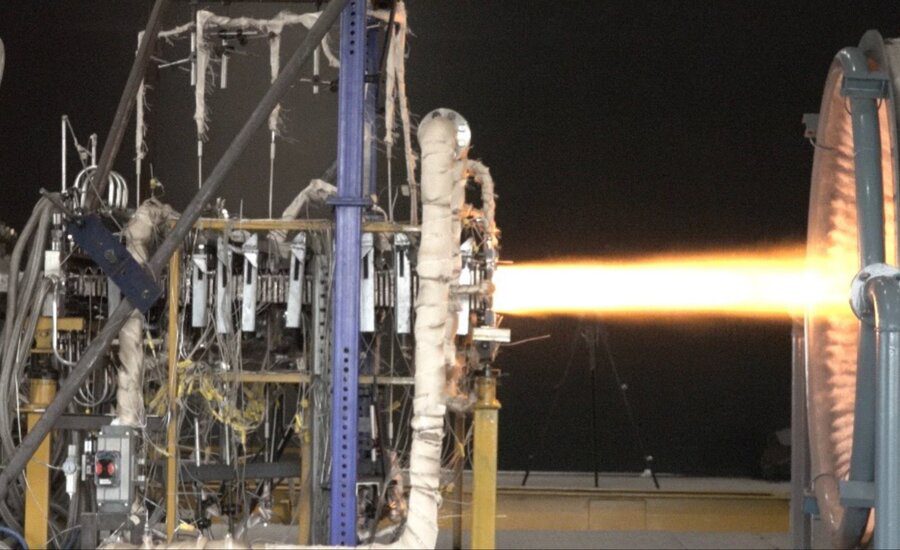
Hyderabad: In a significant advancement for India’s hypersonic weapons programme, the Defence Research and Development Organisation (DRDO) has successfully conducted a long-duration test of its Actively Cooled Full-Scale Scramjet Combustor at a state-of-the-art facility in Hyderabad.
The test marks a major milestone in India’s aerospace and missile technology capabilities, reinforcing its position in next-generation defence systems.
Over 1,200-Second Scramjet Test Achieved
The ground test was carried out at the Scramjet Connect Pipe Test (SCPT) facility at the Defence Research and Development Laboratory (DRDL), Hyderabad.
According to the Ministry of Defence, the combustor successfully achieved a runtime exceeding 1,200 seconds, significantly surpassing the earlier 700-second test conducted in January 2026.
This extended performance validates both the design efficiency and operational stability of the scramjet system under long-duration conditions.
Boost for India’s Hypersonic Missile Programme
The successful trial is a crucial step forward in India’s hypersonic cruise missile development programme, which aims to build weapons capable of travelling at speeds exceeding Mach 5 (over 6,100 km/h).
Scramjet engines enable sustained hypersonic flight by using atmospheric oxygen for combustion, eliminating the need to carry oxidizer onboard.
Officials stated that the breakthrough places India among a select group of nations advancing in air-breathing hypersonic propulsion technology.
Indigenous Technology and Advanced Engineering
The scramjet combustor has been developed by the Defence Research and Development Laboratory (DRDL) under DRDO, with support from Indian industry partners.
Key technological highlights include:
- Indigenously developed liquid hydrocarbon endothermic fuel
- Advanced thermal barrier coating systems
- High-end manufacturing technologies
- Actively cooled combustor design for sustained high-temperature performance
These innovations collectively ensure efficient combustion at extreme supersonic conditions.
DRDL Hyderabad has conducted second successful extensive long-duration test of Actively Cooled Full Scale Scramjet Combustor, achieving a run time of over 1200 seconds at its state-of-the-art Scramjet Connect Pipe Test (SCPT) Facility on May 09, 2026. This is major advancement… pic.twitter.com/btMU473E8n
— DRDO (@DRDO_India) May 9, 2026
Validation of Advanced Test Infrastructure
The Ministry of Defence confirmed that the successful test not only validates the combustor design but also demonstrates the capability of India’s state-of-the-art SCPT testing facility.
The facility played a critical role in simulating real-world hypersonic flight conditions for long-duration evaluation.
Defence Minister and DRDO Leadership React
Defence Minister Rajnath Singh congratulated DRDO, industry partners, and academia, describing the achievement as a “solid foundation for India’s hypersonic cruise missile development programme.”
DRDO Chairman Samir V Kamat also praised the teams involved in the successful trial, highlighting it as a collective achievement of Indian scientific and industrial collaboration.
Strategic Importance for National Defence
Experts note that scramjet technology is critical for:
- Next-generation missile systems
- Rapid strike capabilities
- Enhanced national security preparedness
- Advanced aerospace research
The latest success strengthens India’s long-term goal of developing fully operational hypersonic cruise missile systems.
Future Warfare Capabilities
The successful long-duration scramjet combustor test marks a historic leap in India’s defence technology ecosystem, showcasing indigenous innovation and strengthening the country’s position in global hypersonic research.
With this achievement, DRDO has moved a step closer to operationalising advanced hypersonic systems that could redefine future warfare capabilities.
Read Also: DRDO Develops High-Tech Guidance Package To Make Indian Missiles Deadlier And More Accurate