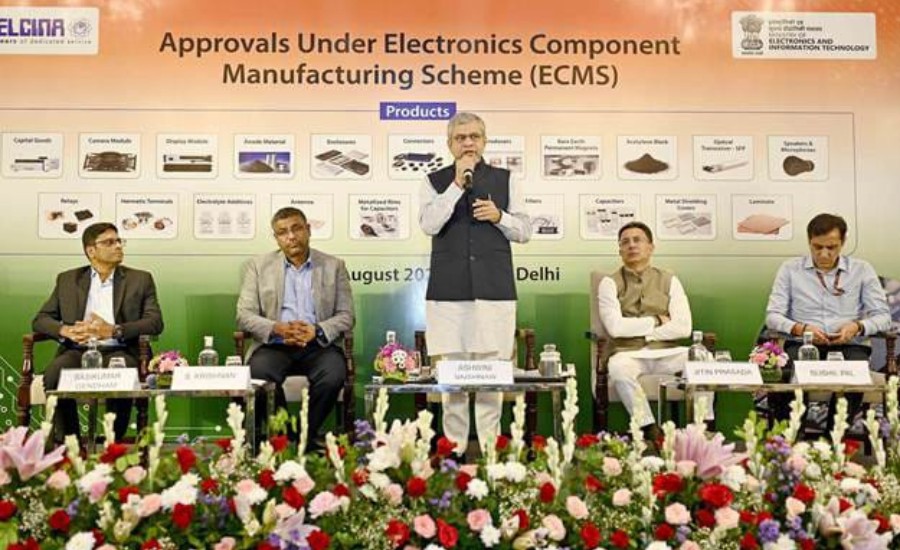
New Delhi: India’s electronics manufacturing ecosystem is gaining momentum under the Electronics Components Manufacturing Scheme (ECMS), with 106 projects now approved involving a total investment of ₹69,548 crore.
According to the Ministry of Electronics and Information Technology (MeitY), 38 plants have already started manufacturing, while another 16 projects are at advanced stages of construction or machinery installation.
The latest approvals are aimed at moving India’s electronics sector beyond assembly and towards a deeper domestic supply chain for critical components, raw materials and manufacturing equipment.
31 More ECMS Projects Approved
MeitY has approved 31 additional proposals under ECMS with projected investment of ₹6,844 crore. Including an additional ₹1,033-crore investment proposal from an existing applicant, the current approvals involve ₹7,877 crore in investment, projected production of ₹82,243 crore and 9,588 direct jobs.
The 31 new projects cover 20 target-segment products across sub-assemblies, components, supply-chain products and capital goods.
Key numbers at a glance:
- 106: Total ECMS projects approved
- ₹69,548 crore: Total approved investment
- ₹5.34 lakh crore: Projected production
- 74,628: Expected direct jobs
- 2.5 lakh: Expected indirect employment
- 38: Plants already manufacturing
- 16: Projects at advanced construction or installation stages
- 15: States covered by the approved projects
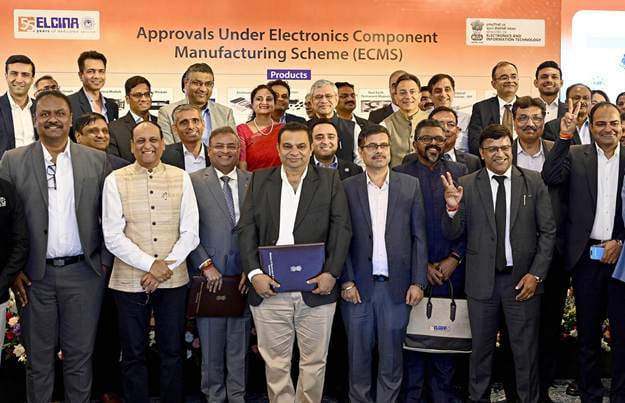
From Assembly to ‘Swadeshi’ Electronics Manufacturing
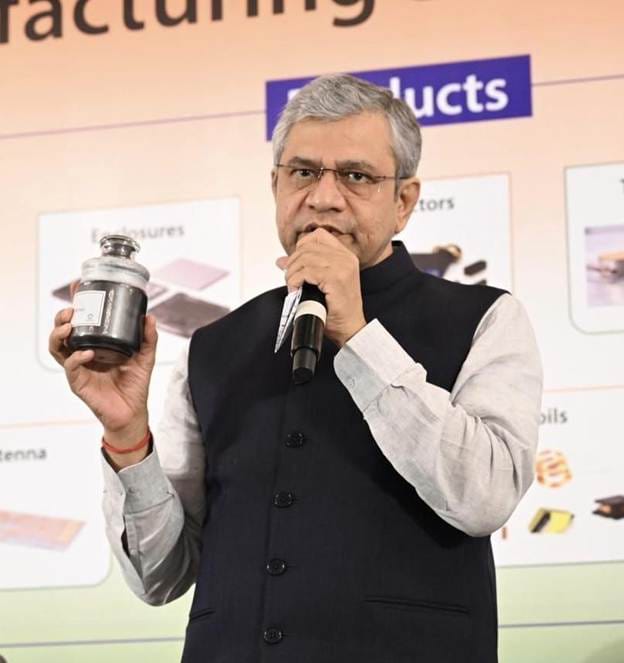
Union Electronics and IT Minister Ashwini Vaishnaw said ECMS is helping create a deeper domestic electronics value chain by encouraging manufacturing of critical components and essential raw materials within India.
The latest approvals include what the government describes as first-ever domestic manufacturing of several products, including filters, coils, speakers and certain raw materials used in electronics and battery supply chains.
The scheme is therefore aimed at increasing domestic value addition, reducing import dependence and strengthening India’s position as a global electronics manufacturing hub.
What Products Are Being Manufactured?
The latest approvals span several segments of the electronics ecosystem.
Major product categories include:
- Sub-assemblies: Camera modules, display modules and optical transceivers
- Components: Connectors, relays, transducers, speakers, microphones, antennas, coils, filters, capacitors and enclosures
- Supply-chain products: Anode materials, rare-earth permanent magnets, acetylene black, electrolyte additives, metallised films and hermetic terminals
- Capital goods: Manufacturing equipment and related components
Production Capacity Begins to Meet Domestic Demand
The government said ECMS-supported capacities are increasingly approaching or exceeding domestic demand in several product categories.
Some of the reported capacity levels include:
- Anode material: Around 110% of domestic demand
- Optical Transceiver-SFP: Around 350%
- Relays: Around 200%
- Enclosures: Around 100%
These capacities could help India strengthen domestic availability while also creating potential for exports as manufacturing scales up.
15 States to Benefit From Electronics Investments
The 106 approved projects are spread across 15 states, expanding the geographical footprint of India’s electronics component manufacturing ecosystem.
The latest batch of approvals covers:
Goa, Gujarat, Haryana, Himachal Pradesh, Karnataka, Maharashtra, Tamil Nadu, Telangana, Uttar Pradesh and Uttarakhand, while the overall ECMS portfolio spans 15 states.
Some companies have proposed investments across multiple locations.
Jobs and Manufacturing Capacity to Get Major Push
The 106 approved projects are expected to generate 74,628 direct employment opportunities and around 2.5 lakh indirect jobs.
The projects are also expected to generate a projected ₹5,34,101 crore in production, creating opportunities across manufacturing, supply chains, logistics, technology and associated services.
Strengthening India’s Electronics Value Chain
The ECMS was introduced to build a robust domestic ecosystem for electronics components and attract investments across areas such as printed circuit boards, passive components, electro-mechanical components, camera modules, optical transceivers and capital goods.
The latest approvals are intended to:
- Increase domestic manufacturing of critical components
- Reduce dependence on imported inputs
- Increase domestic value addition
- Strengthen electronics supply chains
- Create skilled and direct employment
- Develop advanced manufacturing capabilities
- Support India’s emergence as a global electronics manufacturing hub
ECMS Pushes Atmanirbhar Electronics
The government said the scheme is helping build a deep-rooted domestic electronics value chain, with the focus shifting from final assembly towards manufacturing components and raw materials.
With 106 projects approved and ₹69,548 crore committed, ECMS is emerging as a major instrument in India’s drive for electronics self-reliance and a stronger position in global electronics manufacturing.
Read Also: IAS Officer Mohammed Y Safirulla Appointed Director in MeitY; IRAS Nivedita Swain Named IFA in SSB